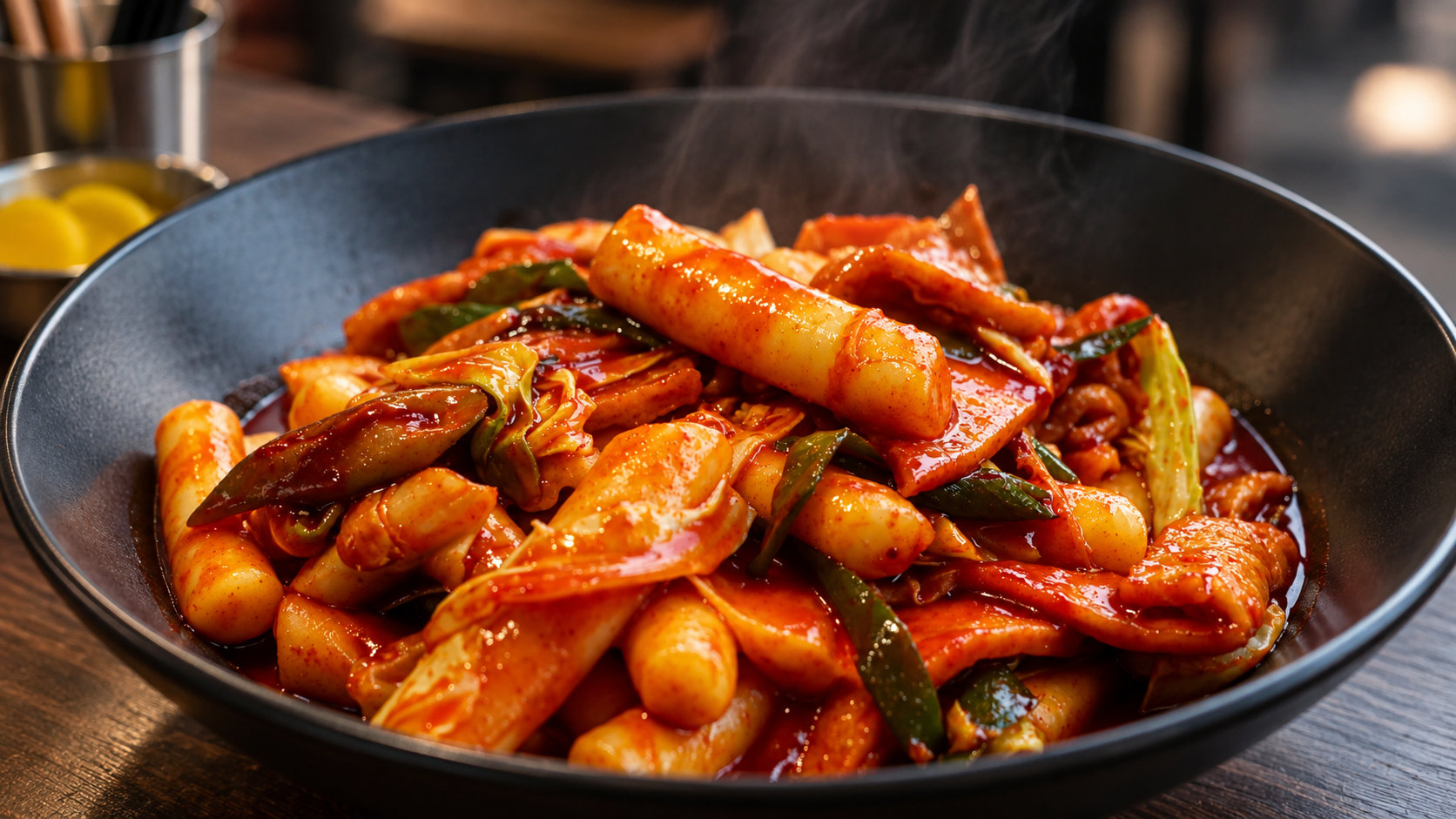
Few Korean street foods are as instantly recognizable as tteokbokki. The dish is built around chewy rice cakes simmered in a rich red sauce, usually made with gochujang. Sweet, spicy and deeply comforting, it is one of Korea’s best-known street foods and a familiar sight at markets, snack shops and casual restaurants.
Simple Ingredients, Big Flavor
The heart of tteokbokki is tteok — Korean rice cake. The cylindrical rice cakes commonly used today have a dense, pleasantly chewy texture that holds up well as they simmer in sauce.
A typical spicy tteokbokki may also include fish cake, spring onions, cabbage or boiled eggs. The sauce varies from shop to shop, but gochujang usually provides its characteristic red color, heat and savory sweetness.
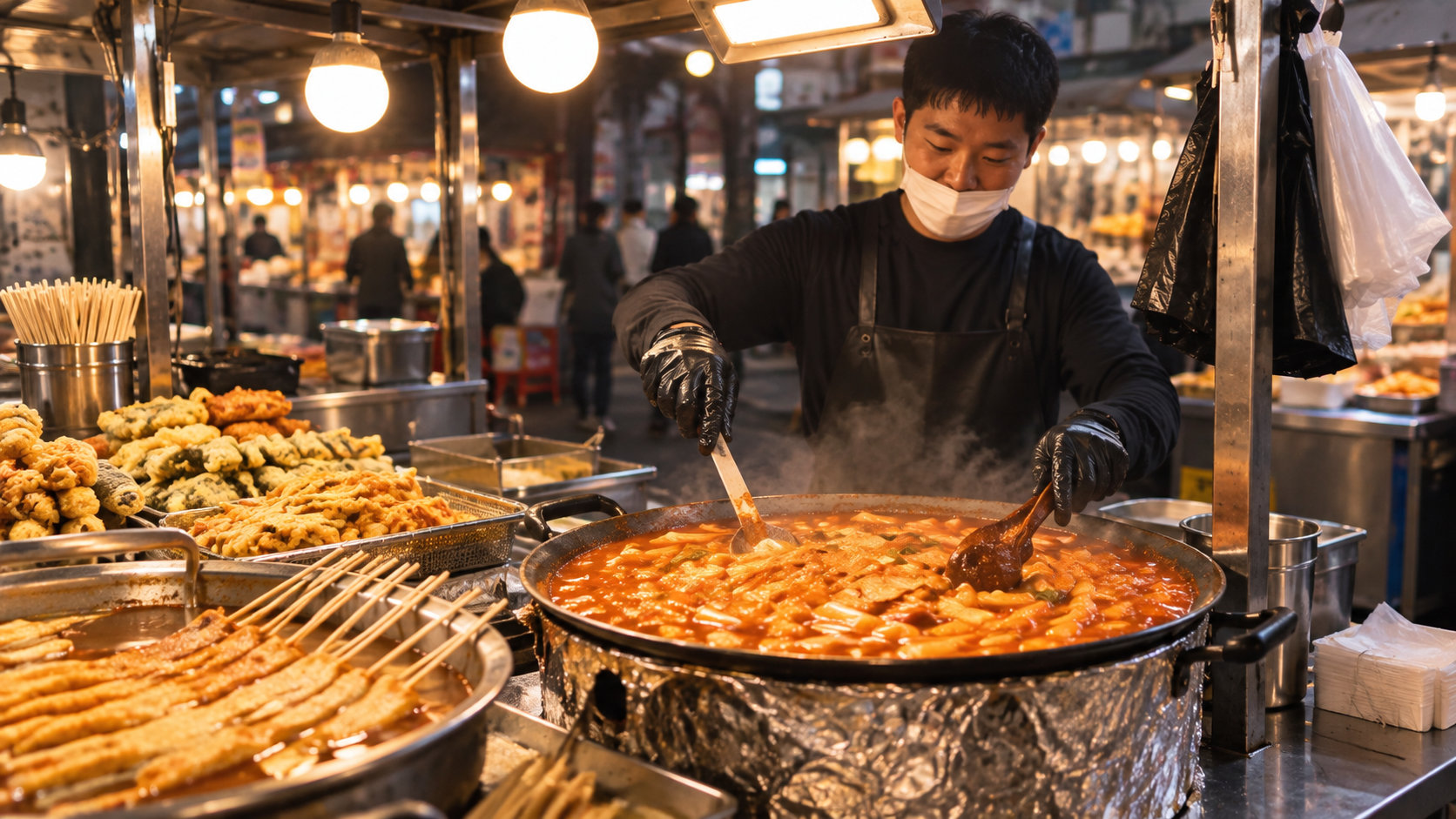
Street Food in Everyday Korea
Tteokbokki is closely connected with Korea’s casual snack-food culture. At traditional street stalls, large pans of rice cakes simmer in sauce and portions are served directly from the pan.
It is also commonly found in bunsik restaurants — inexpensive casual eateries associated with dishes such as gimbap, fried snacks and fish cake.
That combination is part of the experience. Fried foods can be dipped into the tteokbokki sauce, while fish cake and other snacks make a simple serving feel like a shared meal.
From Street Stall to Sindang-dong
One of Seoul’s most famous places associated with tteokbokki is Sindang-dong Tteokbokki Town.
The area became particularly well known for tteokbokki restaurants during the 1970s and 1980s, although local accounts trace its story back to the 1950s. Today, the neighborhood remains strongly associated with jeukseok tteokbokki — a version prepared in a large pan and cooked directly at the table.
Unlike a ready-to-serve street-stall portion, jeukseok tteokbokki can include additional ingredients such as fish cake, noodles, dumplings, vegetables and eggs.
More Than One Kind of Tteokbokki
The bright red version may be the most familiar today, but tteokbokki is not a single fixed recipe.
Gungjung tteokbokki, often translated as royal court tteokbokki, is a milder soy-sauce-based variation rather than a spicy gochujang dish.
Modern versions continue to expand the idea. Ramyeon noodles can turn the dish into rabokki, while cheese, seafood and creamy sauces have become common contemporary variations.
The texture of the rice cakes remains one of the defining elements, even when the sauce and additional ingredients change.
How Tteokbokki Is Usually Eaten
Tteokbokki is best eaten while it is hot, when the rice cakes are soft and chewy and the sauce is still loose enough to coat the other ingredients.
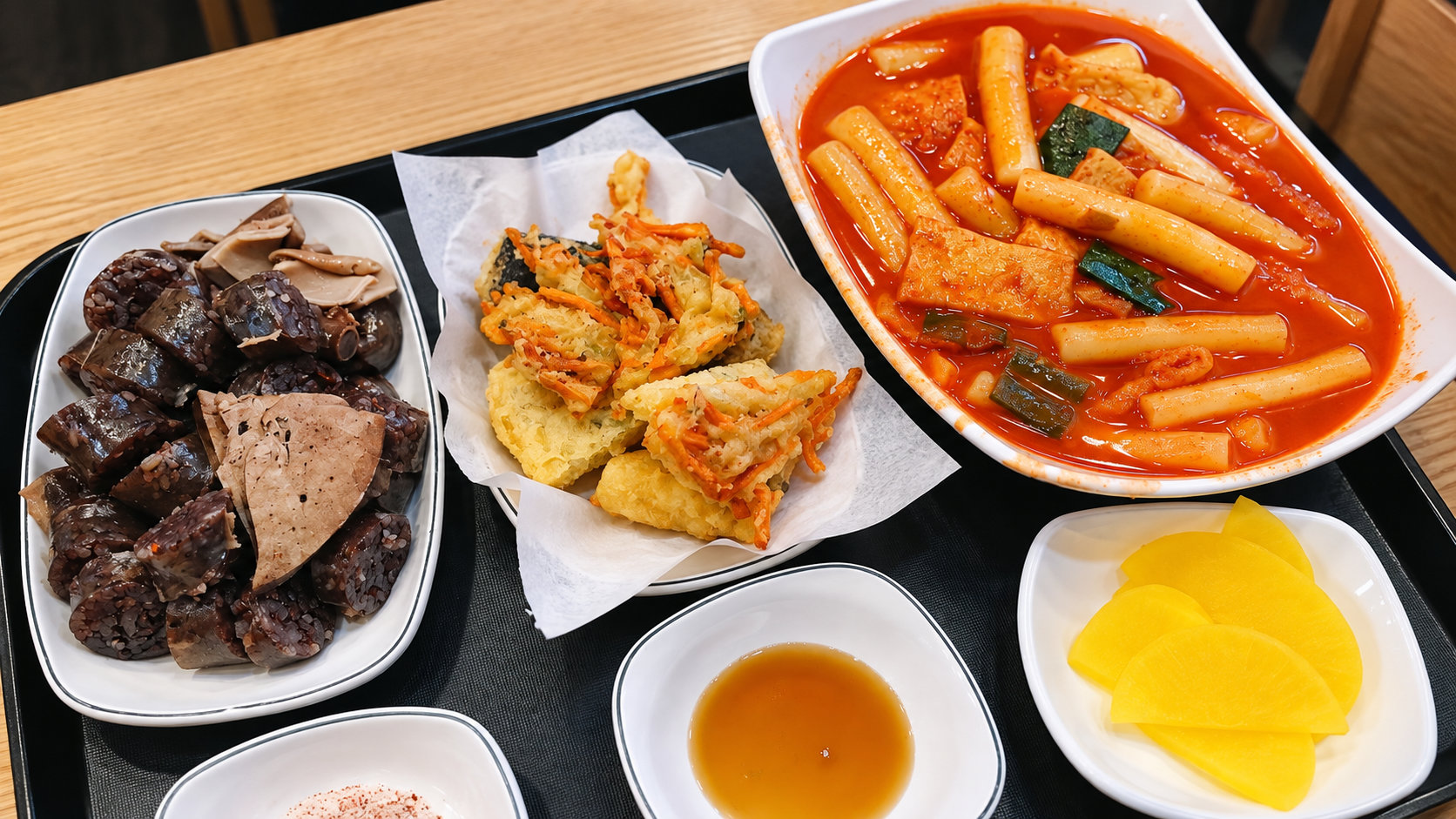
At a street-food stall or bunsik restaurant, it is common to order it alongside fried snacks, fish cake or gimbap. The combination of chewy rice cakes, spicy sauce and crisp fried food creates the contrast that makes this kind of meal so satisfying.
For visitors trying Korean street food for the first time, the spice level can vary considerably. A deep red sauce does not always mean extreme heat, but some versions can still be noticeably spicy.
A Korean Street-Food Classic
Tteokbokki has changed with Korean food culture while remaining unmistakably familiar.
It can be a quick snack from a market stall, a casual meal shared at a table in Sindang-dong or a modern restaurant version with completely different toppings. What connects them is the combination of chewy rice cakes, bold sauce and an informal way of eating that has made tteokbokki one of Korea’s enduring street-food classics.