Korean barbecue is as much about the table as it is about the food. Instead of arriving fully cooked from the kitchen, meat is often grilled in front of you and eaten piece by piece with sauces, vegetables and small side dishes.
Restaurants vary widely, from casual neighborhood spots serving pork belly to specialist restaurants built around premium cuts of beef. The details change, but sharing the grill is a familiar part of Korean dining culture.
What Is Korean Barbecue?
Korean barbecue is a broad term rather than a single dish. It covers different cuts of pork and beef cooked on a grill at the table or, depending on the restaurant, grilled for diners by staff.
One of the best-known choices is samgyeopsal, or pork belly. Its alternating layers of meat and fat become browned and crisp at the edges as they cook.
Beef is another major part of Korean barbecue. Galbi uses beef short ribs and may be served plain or marinated, while other restaurants specialize in individual cuts with little seasoning so that the meat remains the focus.
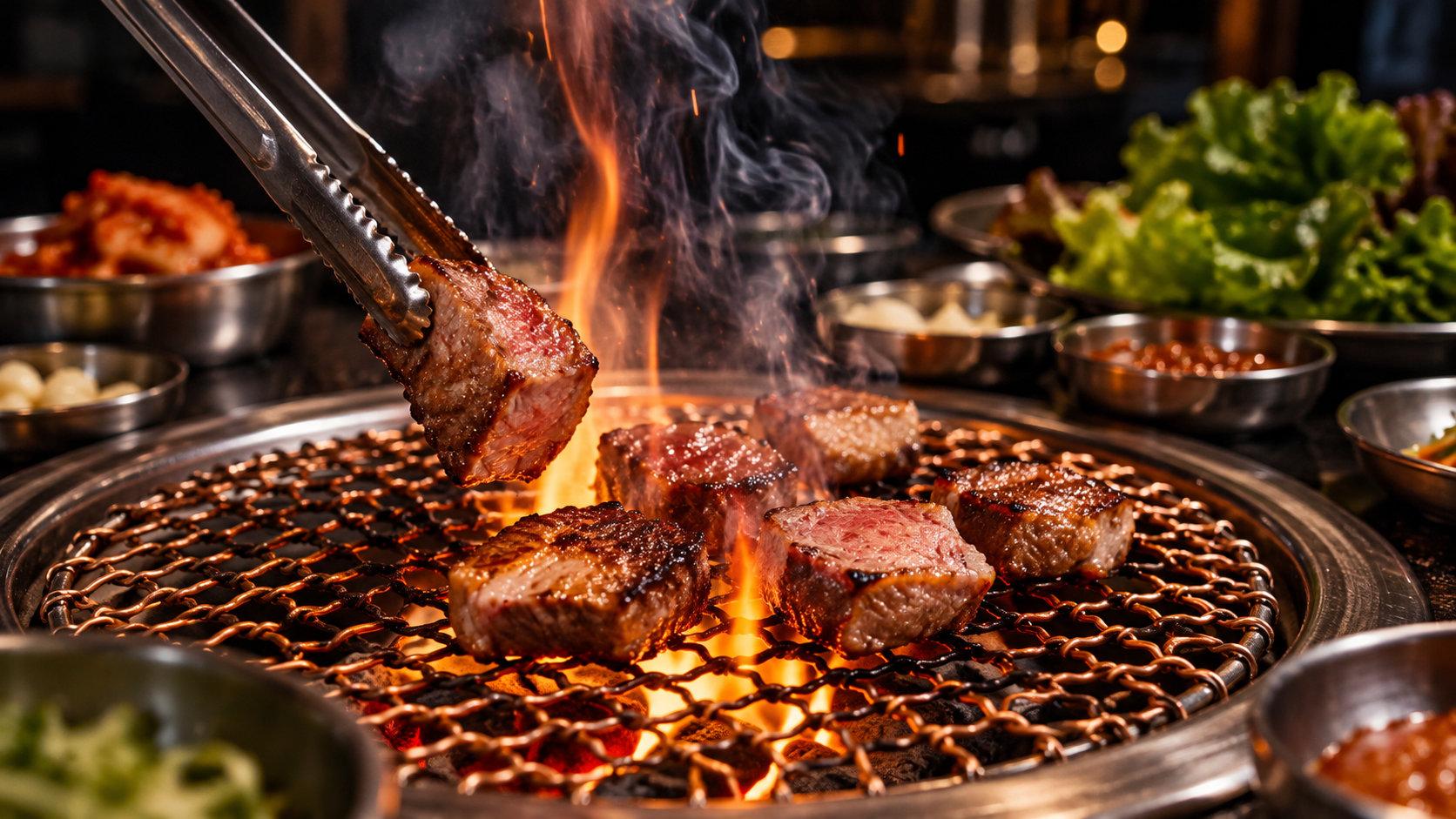
The type of grill also varies. Restaurants may use gas, charcoal or other tabletop grilling systems.
The Table Comes Together
A Korean barbecue meal rarely consists of grilled meat alone.
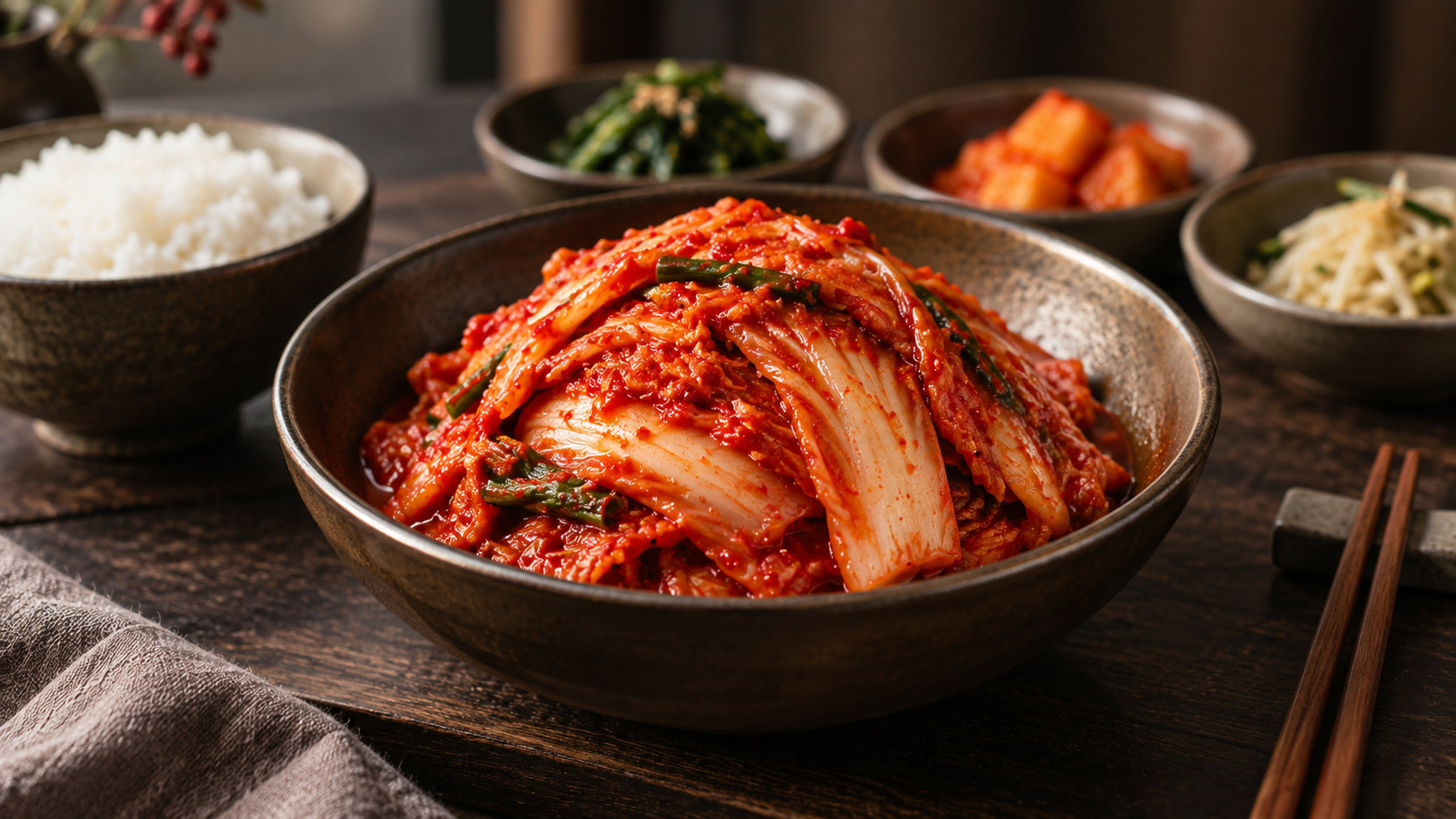
The table usually includes a selection of banchan, the small side dishes served with Korean meals. Kimchi is common, along with vegetables, pickles and other dishes that vary between restaurants.
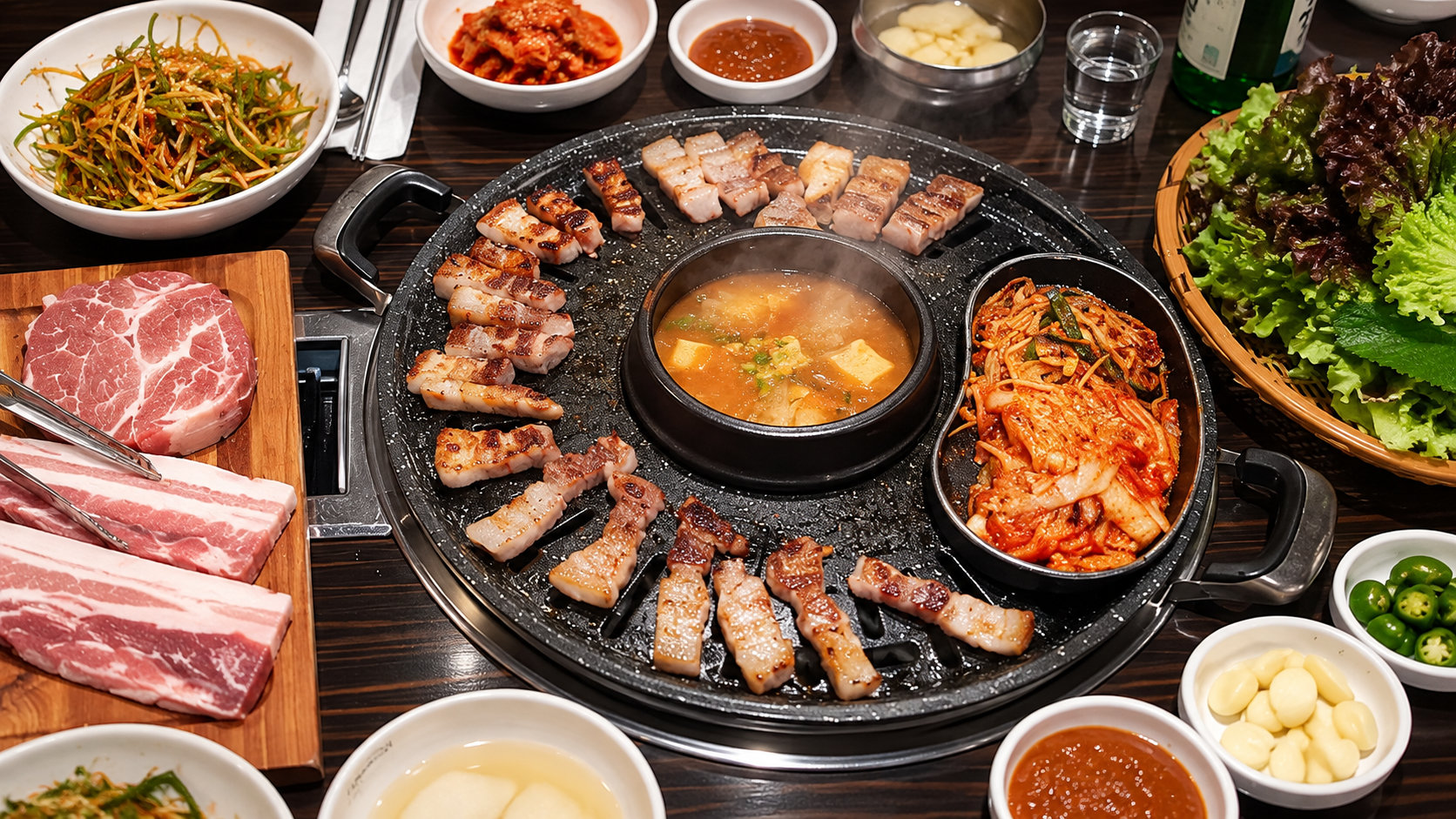
Fresh lettuce or perilla leaves may be provided for wrapping the meat. Garlic, sliced chili peppers and dipping sauces are also common accompaniments.
Ssamjang is especially closely associated with grilled meat. The savory paste is typically made with fermented soybean paste and red chili paste, with recipes differing by restaurant or household.
Because many of these dishes are placed in the middle of the table, everyone can combine the meat and accompaniments differently.
How the Grill Works
At many Korean barbecue restaurants, the raw meat arrives at the table and is cooked on the central grill.
Depending on the restaurant, diners may grill the meat themselves or staff may handle some or all of the cooking.
Larger pieces of meat can be cut into smaller portions as they cook, often using kitchen scissors. Tongs are used to turn and move the meat around the grill.
It is worth following the restaurant's lead. Grill styles and service differ, and staff will often step in when a particular cut needs attention.
Once cooked, the meat can be eaten directly, dipped into sauce or combined with vegetables and other ingredients.
Making a Ssam
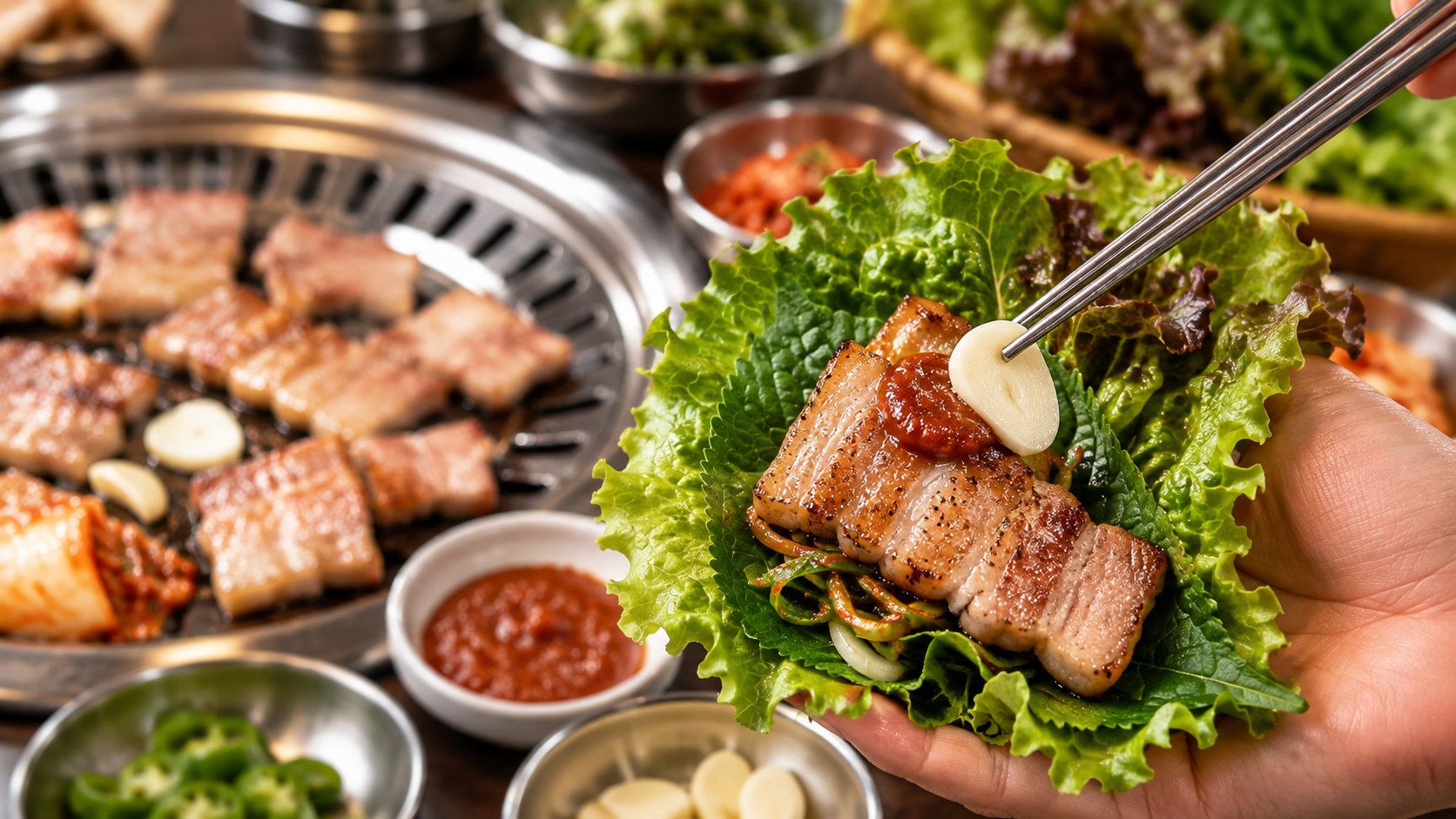
One of the most recognizable ways to eat Korean barbecue is as ssam, a leafy wrap assembled at the table.
Start with a lettuce or perilla leaf and add a piece of grilled meat. A small amount of ssamjang can be added along with ingredients such as garlic or chili.
Fold the leaf around the filling and eat the wrap together.
There is no need to build every bite this way. Grilled meat is also commonly eaten on its own or simply dipped into sauce. Ssam is one option among several ways to combine the ingredients on the table.
Samgyeopsal, Galbi and Other Popular Choices
Samgyeopsal is one of the most familiar Korean barbecue dishes. The pork belly is generally grilled without a heavy marinade and paired with sauces and vegetables after cooking.
Galbi refers to ribs and is commonly associated with beef short ribs. Marinated versions often use a soy-sauce-based mixture with ingredients such as sugar and garlic, giving the meat a balance of savory and sweet flavors.
Other restaurants may serve pork neck, different beef cuts or marinated meats.
This variety is one reason there is no single Korean barbecue experience. The grill, meat, marinades and side dishes can change considerably from one restaurant to another.
Sharing the Meal
The central grill naturally makes Korean barbecue a communal meal.
Rather than ordering an individual finished plate, diners share meat from the grill and take side dishes from the table while the meal develops over several rounds of cooking.
That slower rhythm is part of the experience. Meat comes off the grill gradually, side dishes are eaten between servings, and each bite can be combined differently.
For first-time visitors, the easiest approach is simply to watch how the restaurant operates. There are variations in service and etiquette, and there is no need to treat Korean barbecue as a complicated set of rules.
A Different Kind of Dining Experience
Korean barbecue brings cooking and eating together at the same table.
The appeal comes from the contrast between freshly grilled meat, crisp vegetables, fermented side dishes and savory sauces, but also from the shared process of preparing the meal.
From a straightforward plate of samgyeopsal to carefully selected beef cuts, Korean barbecue can take many forms. What remains consistent is the grill at the center of the meal and the combinations diners create around it.