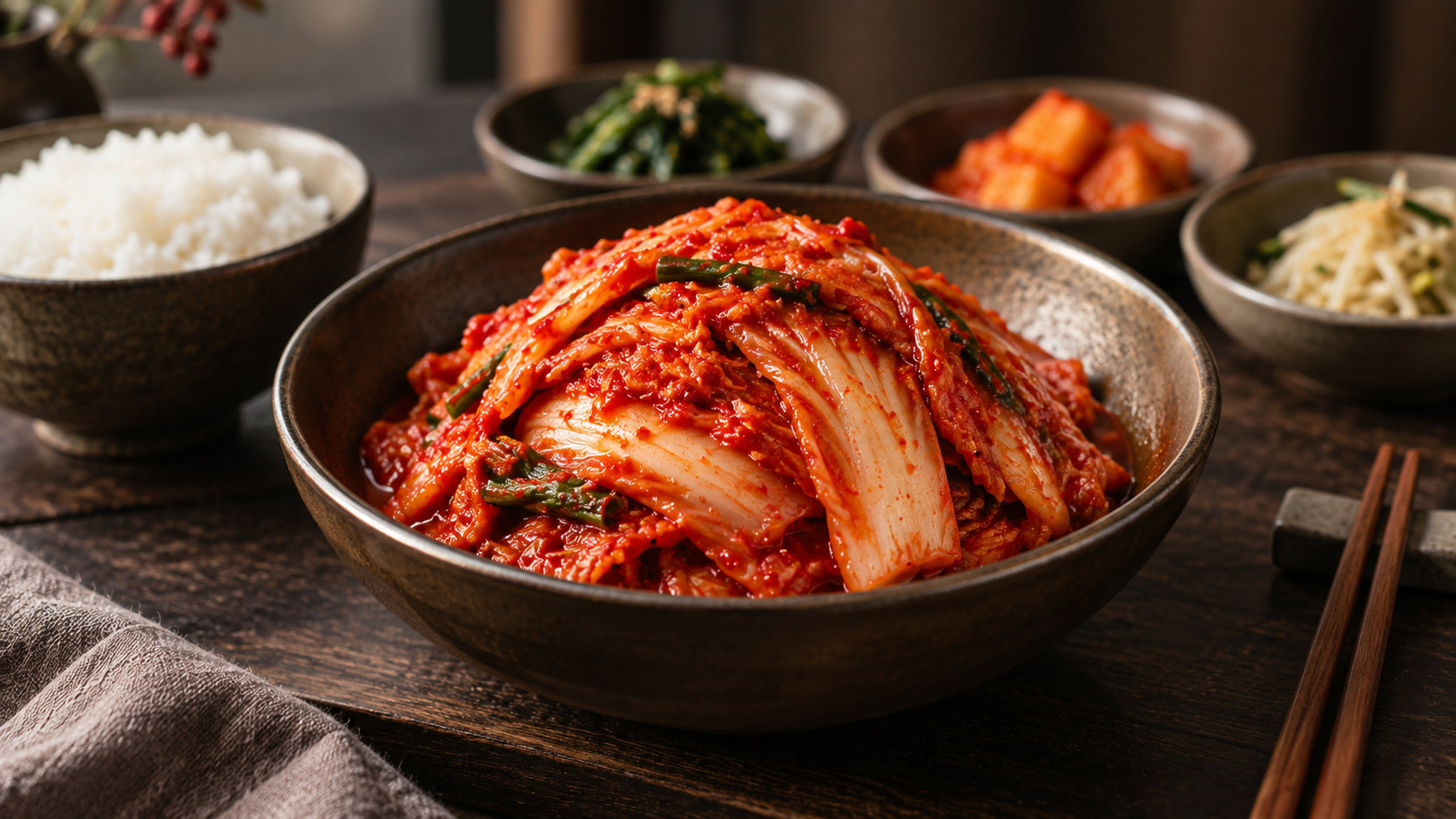
Kimchi is difficult to separate from everyday Korean food culture. Served alongside rice, soups, grilled meat and countless other dishes, the fermented vegetable side dish is a familiar presence at Korean tables.
The version most people recognise is baechu kimchi , made with napa cabbage, but kimchi is not a single recipe. Many variations have developed across Korea, shaped by regional ingredients, seasons and family traditions.
More Than Cabbage and Chili
A typical baechu kimchi begins with napa cabbage that is salted before being combined with a seasoned mixture. Common ingredients include Korean red pepper powder, garlic, ginger and fermented seafood, although recipes vary considerably.
Other familiar varieties include kkakdugi , made from diced radish; oi-sobagi , made with cucumber; and pa kimchi , made with green onions. Some varieties are fiery and strongly fermented, while others can be comparatively mild and refreshing.
Kimjang: Making Kimchi Together
Kimchi is not only about what ends up on the plate. The tradition surrounding its preparation is an important part of Korean food culture.
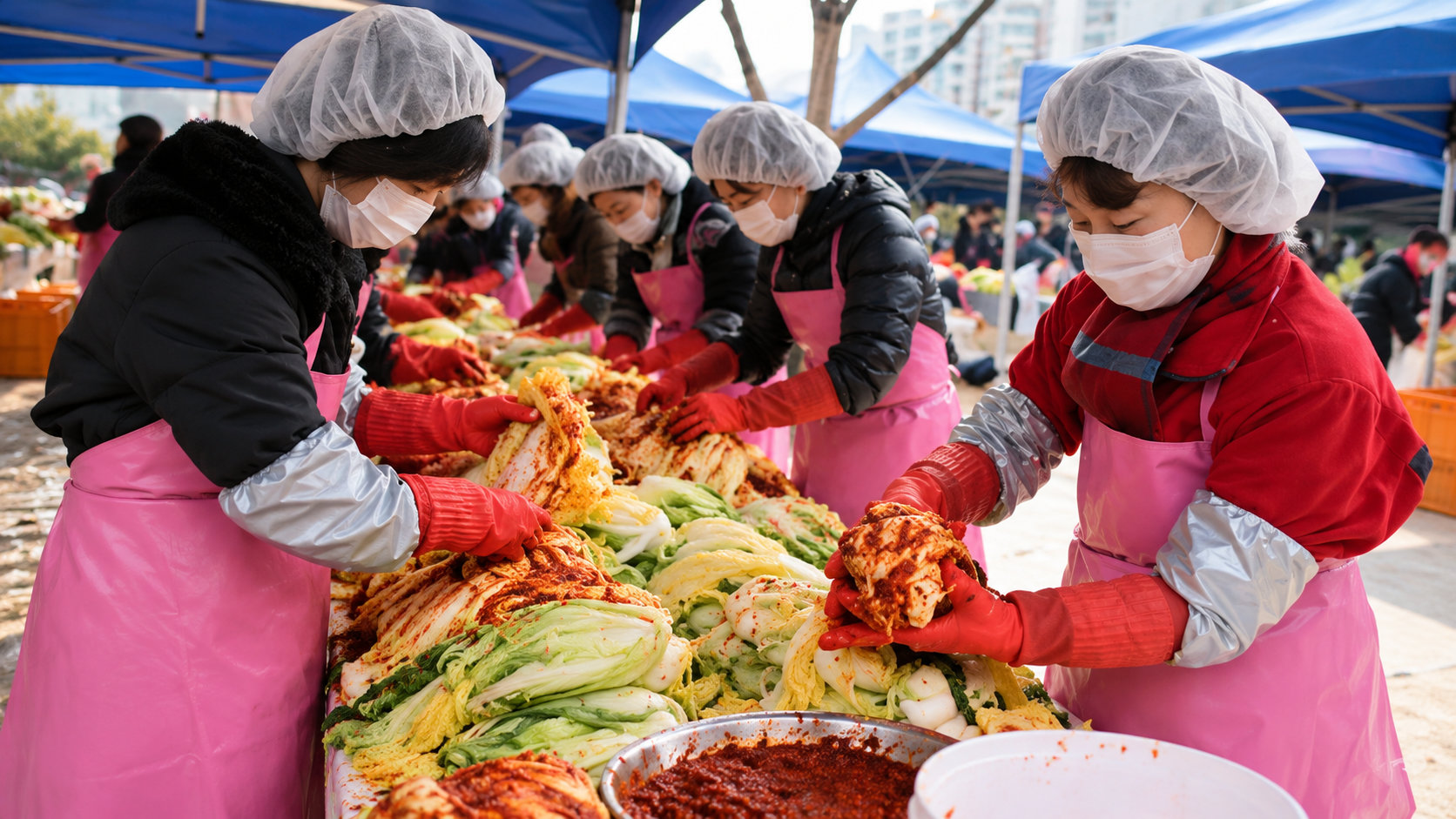
Kimjang is the practice of families and communities preparing and sharing large quantities of kimchi, traditionally in late autumn in preparation for winter. Knowledge, recipes and techniques have been passed between generations, with regional and family variations forming part of that tradition.
In 2013, UNESCO inscribed “Kimjang, making and sharing kimchi in the Republic of Korea” on its Representative List of the Intangible Cultural Heritage of Humanity. The recognition concerns the communal practice of making and sharing kimchi, rather than kimchi as a World Heritage food.
What Fermentation Does
Kimchi undergoes fermentation driven largely by microorganisms naturally associated with its ingredients. Lactic acid bacteria become an important part of the microbial community as fermentation progresses.
Their activity produces organic acids and other compounds that help create kimchi’s characteristic sourness, aroma and changing flavour as it matures. Freshly prepared kimchi and well-fermented kimchi can therefore taste noticeably different. Kimchi is a changing fermented food rather than one fixed flavour.
Is Kimchi Healthy?
Kimchi combines vegetables with fermentation, and researchers have increasingly investigated whether its composition and microorganisms may have effects beyond flavour.
Recent research has explored possible relationships between fermented kimchi and cardiometabolic health, including blood glucose, triglycerides and blood pressure. Some studies have reported potentially beneficial changes, but the available intervention evidence remains limited.
Researchers have also investigated the probiotic potential of lactic acid bacteria associated with kimchi. That does not make every kimchi product a clinically proven probiotic food, and it should not be treated as a cure or treatment for disease.
An Unexpected Area of Research: Nanoplastics
One particularly interesting Korean study published in 2026 investigated Leuconostoc mesenteroides CBA3656, a lactic acid bacterium isolated from kimchi. Researchers at the World Institute of Kimchi found that this specific strain could bind nanoplastic particles under laboratory conditions. It continued to show biosorption under simulated intestinal conditions, and experiments in mice showed increased excretion of nanoplastics.
This does not demonstrate that eating kimchi removes, neutralises or detoxifies microplastics or nanoplastics from the human body. The research involved a specific strain isolated from kimchi, laboratory experiments and in-vivo evidence from mice. Human clinical evidence would be needed before drawing conclusions about eating kimchi and plastics in the human body.
Kimchi at the Korean Table
For all the science surrounding fermentation, kimchi’s importance is easiest to understand at the table. It is commonly served as a side dish alongside other parts of a Korean meal, providing acidity, spice and fermented flavour.
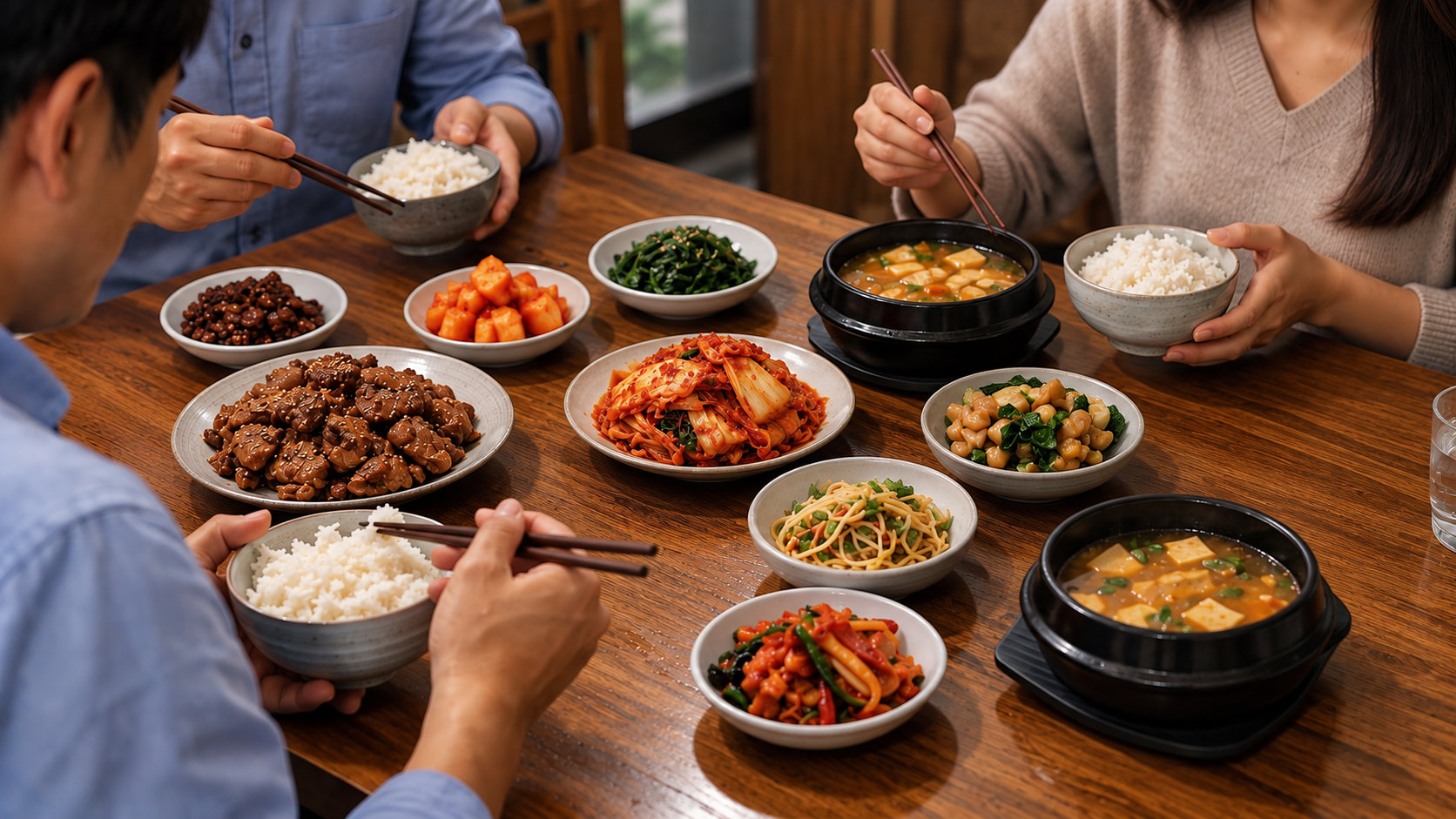
Kimchi also extends beyond the side-dish plate. Mature kimchi can become an ingredient in dishes such as kimchi jjigae or kimchi fried rice, giving older, more strongly fermented kimchi another role in everyday cooking.
A Food That Continues to Change
There is no single taste, recipe or moment that defines kimchi. It can be fresh or deeply fermented, mild or spicy, made from cabbage, radish, cucumber or other vegetables.
And behind the familiar red cabbage on the table is something larger: fermentation, regional traditions, family recipes and the communal practice of kimjang. That combination helps explain why kimchi remains much more than a side dish. It is one of the foods most closely connected with everyday Korean food culture.