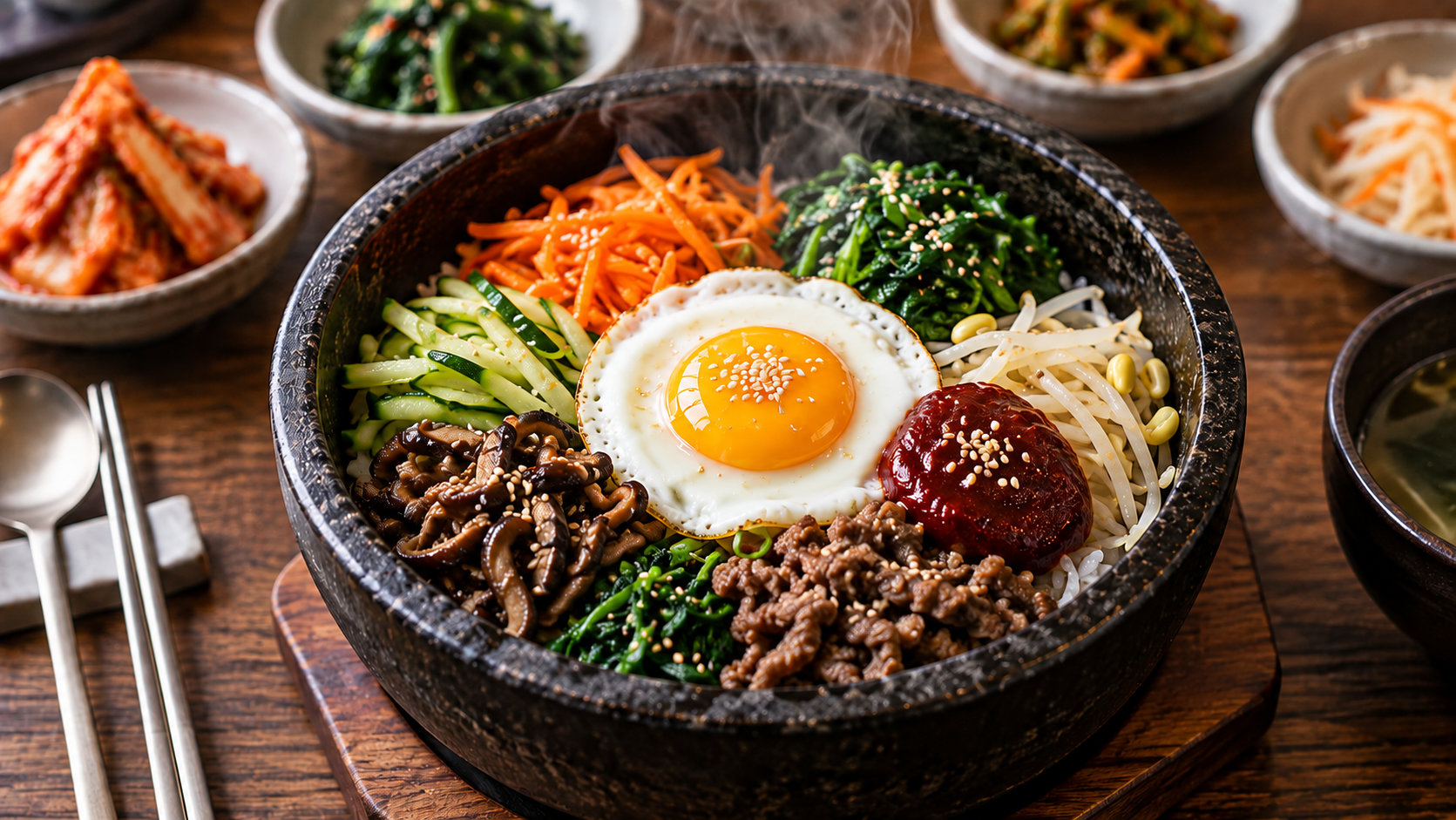
Bibimbap is one of the most recognizable Korean rice dishes. A bowl of rice is topped with vegetables and other ingredients arranged separately, then mixed together just before eating.
The name reflects that simple idea: bibim refers to mixing, while bap means cooked rice. What begins as a carefully arranged bowl becomes a completely different dish once the ingredients, sauce and rice are combined.
A Bowl Built Around Rice
Rice forms the base of bibimbap, with a selection of ingredients arranged over the top.
Common additions include seasoned spinach, bean sprouts, carrots, mushrooms and other vegetables. Beef and egg are also frequently used, although the exact combination varies considerably.
Rather than requiring one fixed list of toppings, bibimbap works with different vegetables and ingredients according to season, region and personal preference.
Gochujang is commonly served with the dish, adding a savory, sweet and spicy element when mixed through the rice.
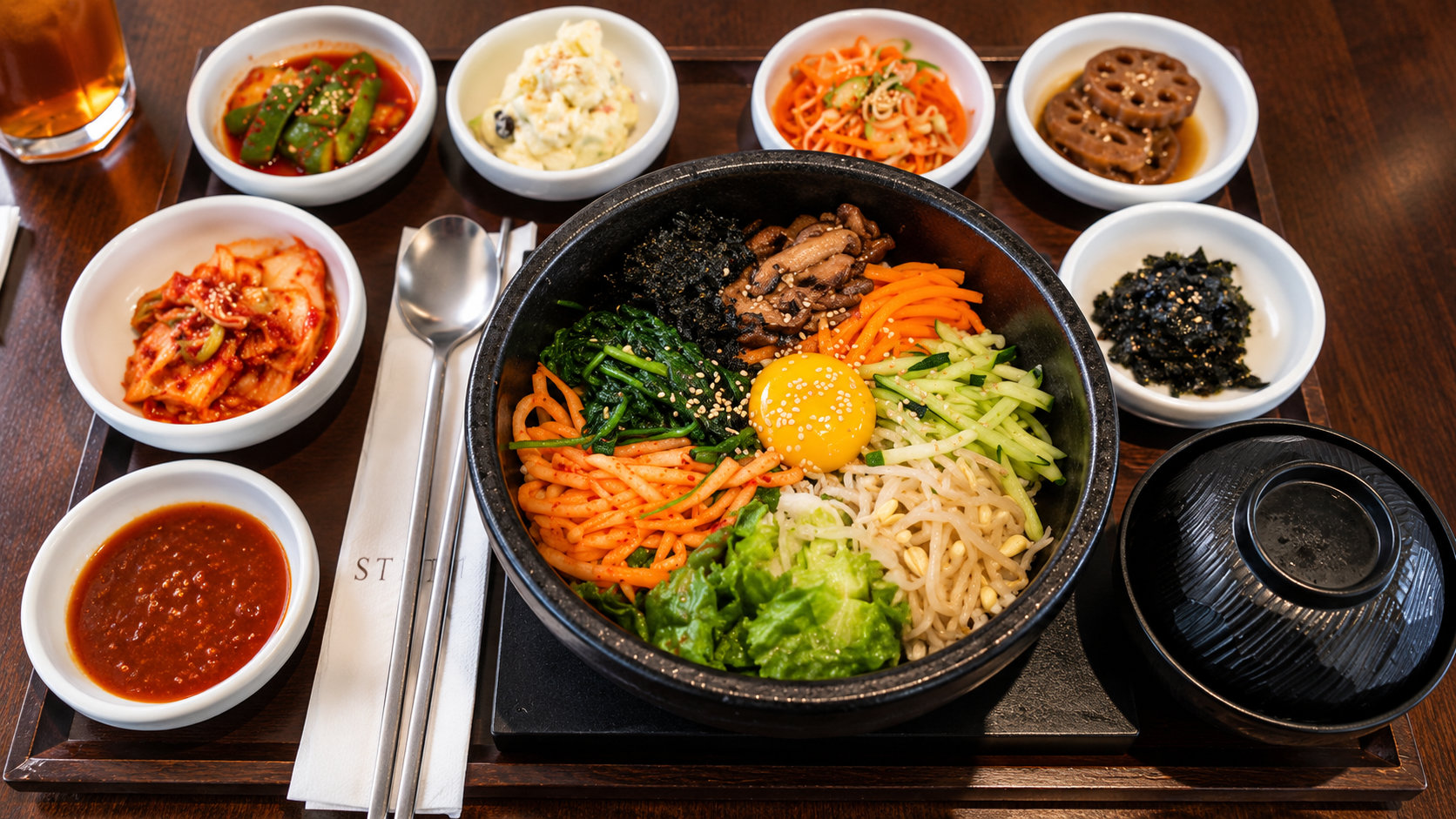
Dolsot Bibimbap
One of the best-known variations is dolsot bibimbap, served in a heated stone bowl.
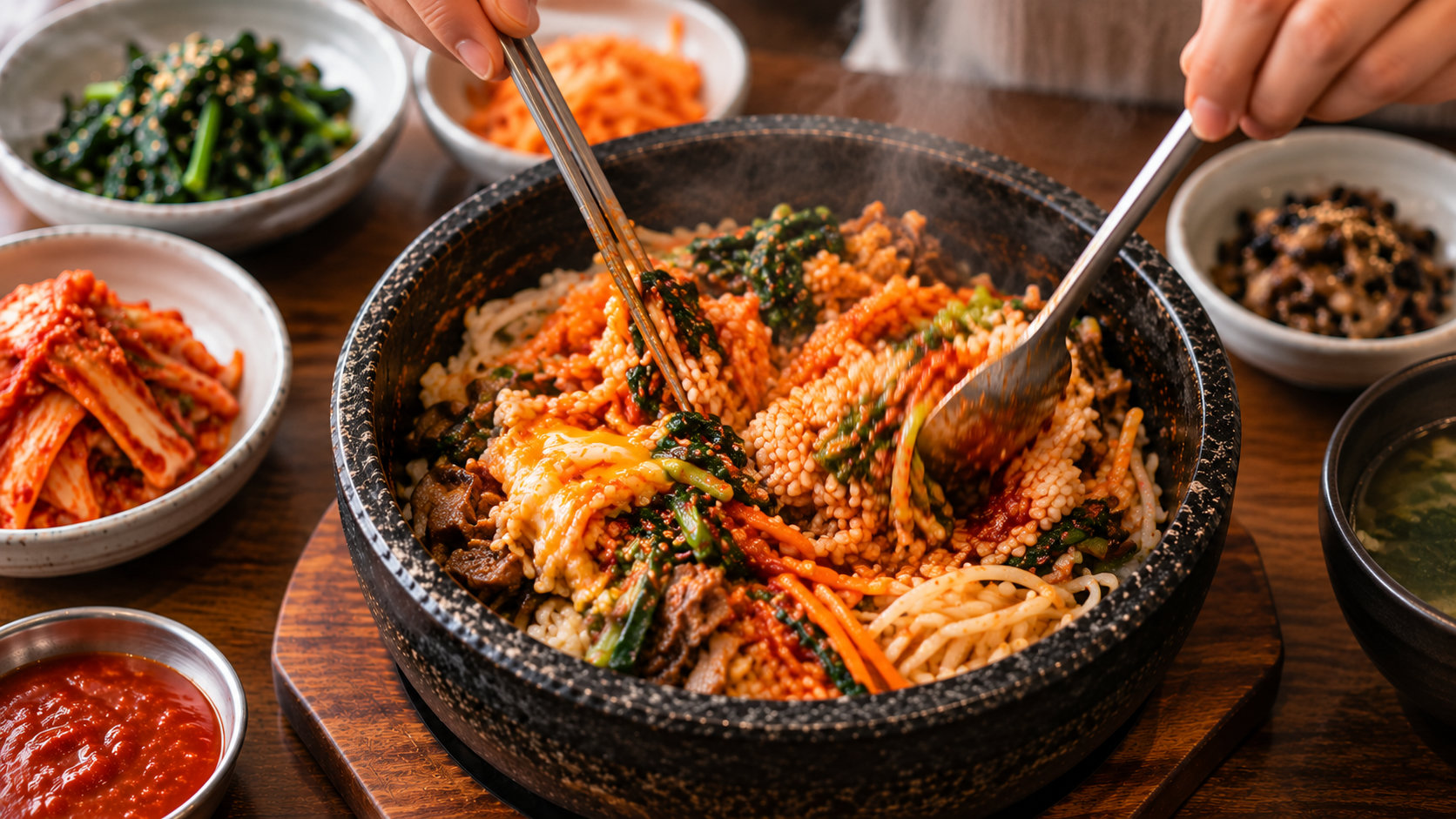
The hot bowl continues cooking the ingredients after the dish reaches the table. Rice touching the surface can develop a crisp, toasted layer at the bottom, adding a different texture to the softer rice above.
Because the bowl remains extremely hot, the ingredients may continue to sizzle while the bibimbap is being mixed.
Not every bibimbap is served this way. Regular bibimbap can be presented in a standard bowl without the crisp rice produced by a heated dolsot.
The Vegetables Matter
The vegetables in bibimbap are not simply decoration. Their different textures and seasonings are an important part of the finished dish.
Spinach and bean sprouts are common, while carrots, mushrooms, zucchini, radish and other vegetables may also appear.
Many of these ingredients are prepared separately before being arranged over the rice. This allows each component to keep its own texture and flavor before everything is mixed together.
The colorful arrangement is one of bibimbap's most recognizable features, but the final balance comes from how those ingredients work together after mixing.
Mixing Bibimbap
Bibimbap is meant to be mixed before it is eaten.
Gochujang can be added according to taste rather than automatically using all of the sauce provided. The rice, vegetables, egg, meat and sauce are then mixed until the ingredients are distributed throughout the bowl.
With dolsot bibimbap, mixing also brings the softer ingredients into contact with the hot bowl and the crisp rice forming along its surface.
The result is deliberately less orderly than the dish that first arrives at the table. Instead of eating each topping separately, the flavors and textures become part of each spoonful.
Different Versions Around Korea
Bibimbap appears in many forms, and regional versions can have their own combinations of ingredients and preparation styles.
Jeonju is particularly well known for bibimbap and has a long-standing association with the dish. Other regional styles may emphasize different vegetables, seafood, meat or local ingredients.
Restaurants also make their own versions, from simple vegetable bibimbap to elaborate bowls with numerous toppings.
This flexibility is part of what makes the dish so adaptable. Its basic structure remains recognizable even when the ingredients change.
How Bibimbap Is Eaten
Bibimbap is generally eaten with a spoon after the ingredients have been thoroughly mixed.
It may arrive with kimchi and other banchan, as well as soup or broth depending on the restaurant.
There is no need for every bite to contain exactly the same ingredients. The purpose of mixing is simply to bring the rice, toppings and seasoning together rather than treating them as separate dishes.
With a hot stone bowl, take some care around the sides of the dolsot, which can remain very hot throughout the meal.
A Korean Classic
Bibimbap takes relatively simple components and brings them together in a single bowl.
Rice provides the base, vegetables add contrasting textures, and ingredients such as egg, meat and gochujang can add richness and depth. Different versions change those components without losing the basic idea of the dish.
Its defining moment comes at the table: the carefully arranged ingredients are mixed together, turning separate flavors and textures into one of Korea's most familiar rice dishes.