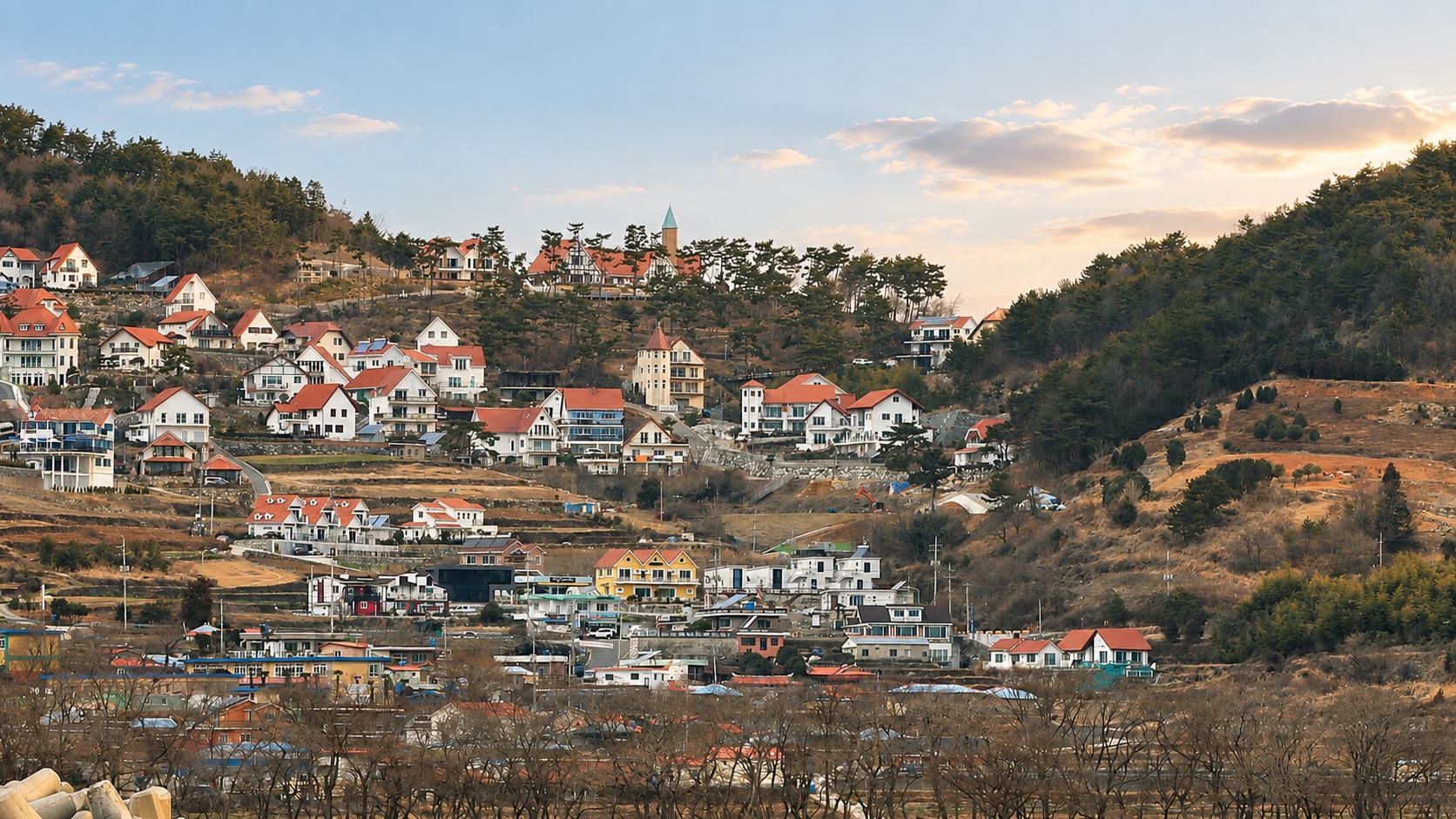
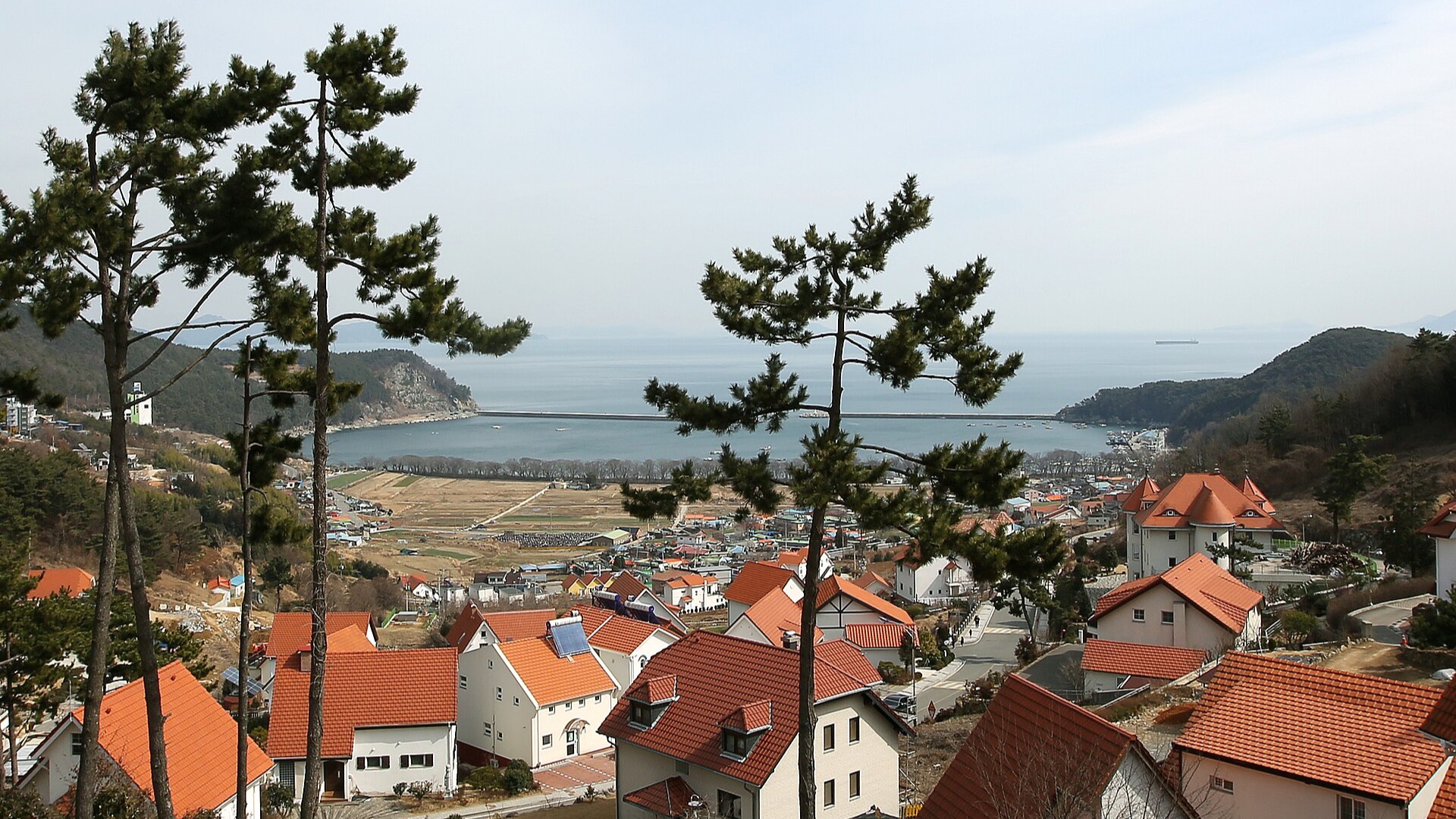
On a hillside above the sea in Namhae, rows of pale houses and red roofs make an unexpected silhouette. German Village is immediately recognisable, yet it feels less like a theme set than a small settlement shaped by a specific chapter in modern Korean history.
The village was established for Korean residents returning from Germany, including former miners and nurses who had worked there in the twentieth century. That history matters more than the visual shorthand. The architecture is striking, but the setting is also a working coastal landscape, with fields, wooded slopes and water in the distance.
A Village with a Particular Beginning
German Village sits in Mulgeon-ri, on Namhae’s eastern side. Its name can suggest a novelty, but the place was created as a home for people with a connection to Germany rather than as a replica of a European town.
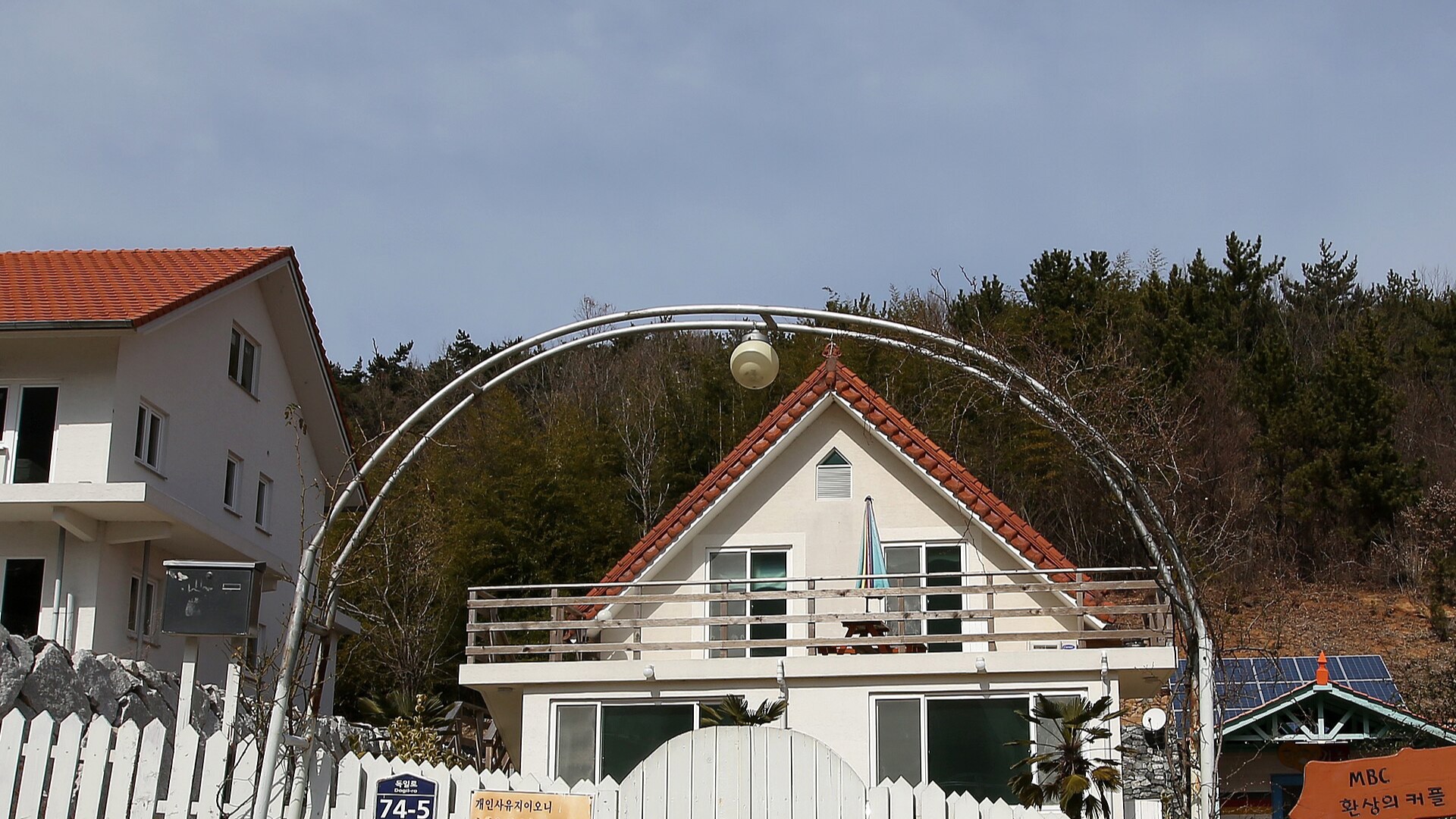
That background gives a walk through the lanes a different texture. Decorative details, cafés and food shops appear alongside houses, gardens and everyday signs of a residential neighbourhood. It is worth looking beyond the rooflines and treating the village as part of Namhae rather than an isolated attraction.
Walking the Hillside
The village is compact enough to explore on foot, although the slope is part of the experience. Short roads open onto views across the roofs, then close in again between individual homes. A slower pace suits the place: pause at a viewpoint, follow the lanes without trying to turn the visit into a checklist, and notice how quickly the built landscape gives way to pine-covered hills.
The light shifts the mood considerably. On a clear day, the roofs stand out against the green of the island; in softer weather, the village and coast feel more closely connected. Neither version needs embellishment.
Namhae Beyond the Rooflines
German Village makes sense as one stop within a longer look at Namhae. The island is known for its coastal roads, farming villages and changing sea views, and the German-inspired houses sit within that wider geography.
From higher parts of the village, the eye moves past the settlement toward the shore. The contrast is the point: a settlement with an international backstory, placed within a very local landscape.
Planning a Visit
Namhae is easier to enjoy with time than with a tight city-style schedule. German Village is generally visited by road, and it works well as part of a day that includes other coastal stops. Exact transport, parking and opening information can change, so checking current local listings before travelling is sensible.
Come for the view, but leave room for the story behind it. The village’s appeal is not that it could be anywhere else; it is precisely that it could only have developed here.