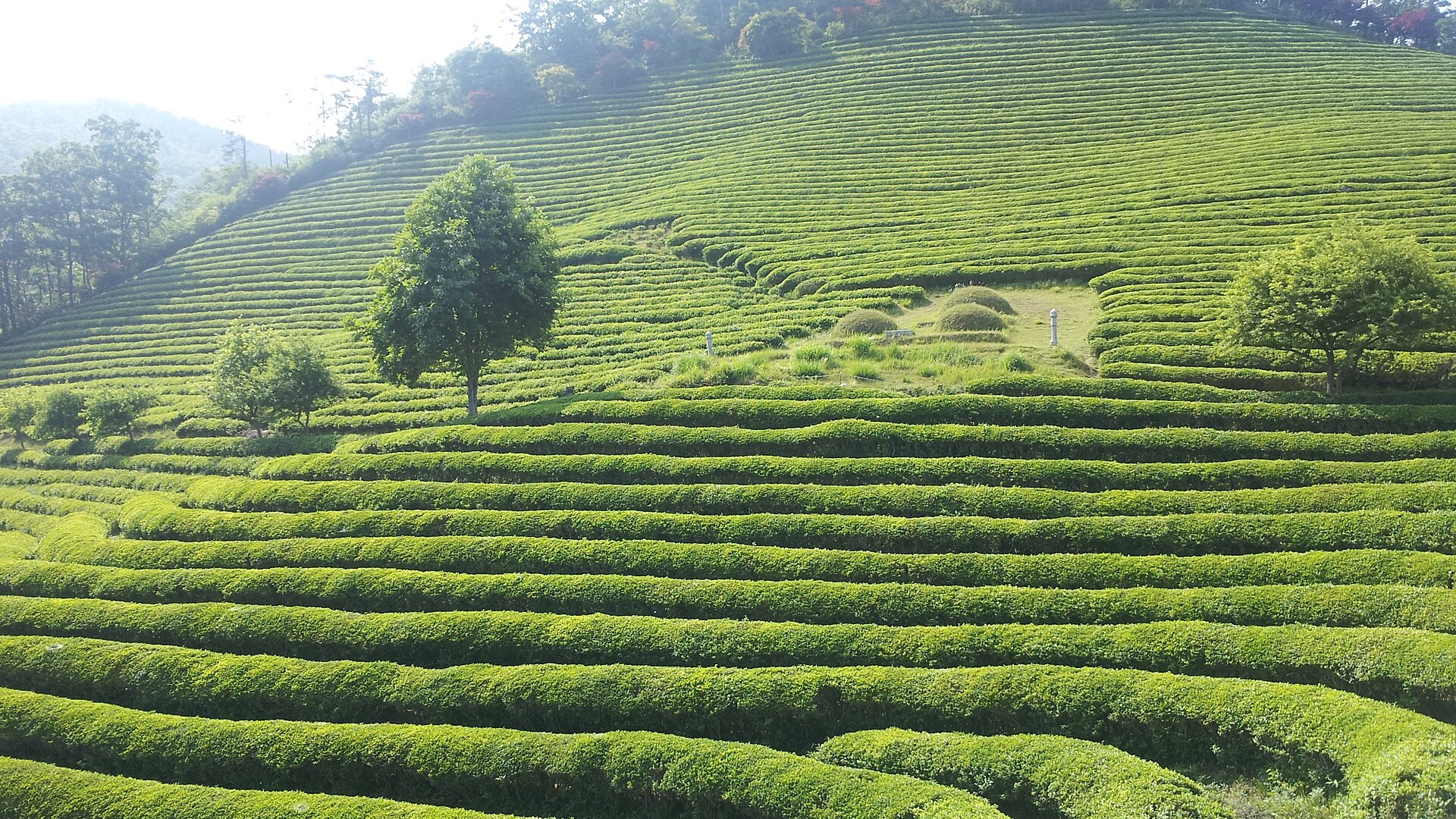
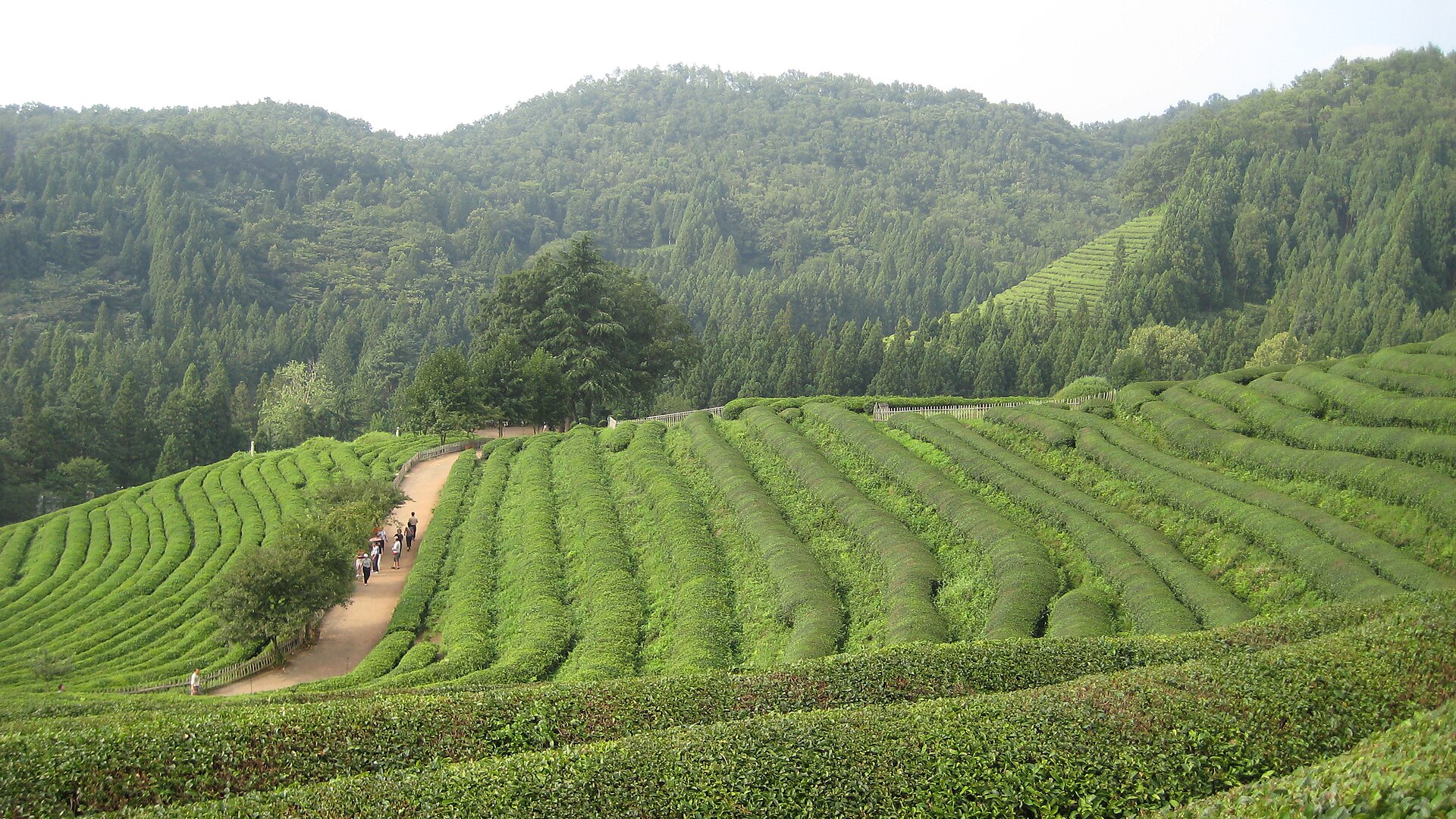
Boseong’s tea country is defined by repetition: rows of clipped green bushes following the slope, one contour after another. The famous fields are easy to photograph, but their strongest quality is their scale. A path makes the eye move through the landscape rather than simply across it.
In South Jeolla Province, Boseong is closely associated with tea cultivation. The Daehan Dawon plantation is the best-known stop, with maintained fields that make the pattern of the hills immediately legible. It is a place to visit slowly, not a backdrop to rush through.
Rows, Slopes and Season
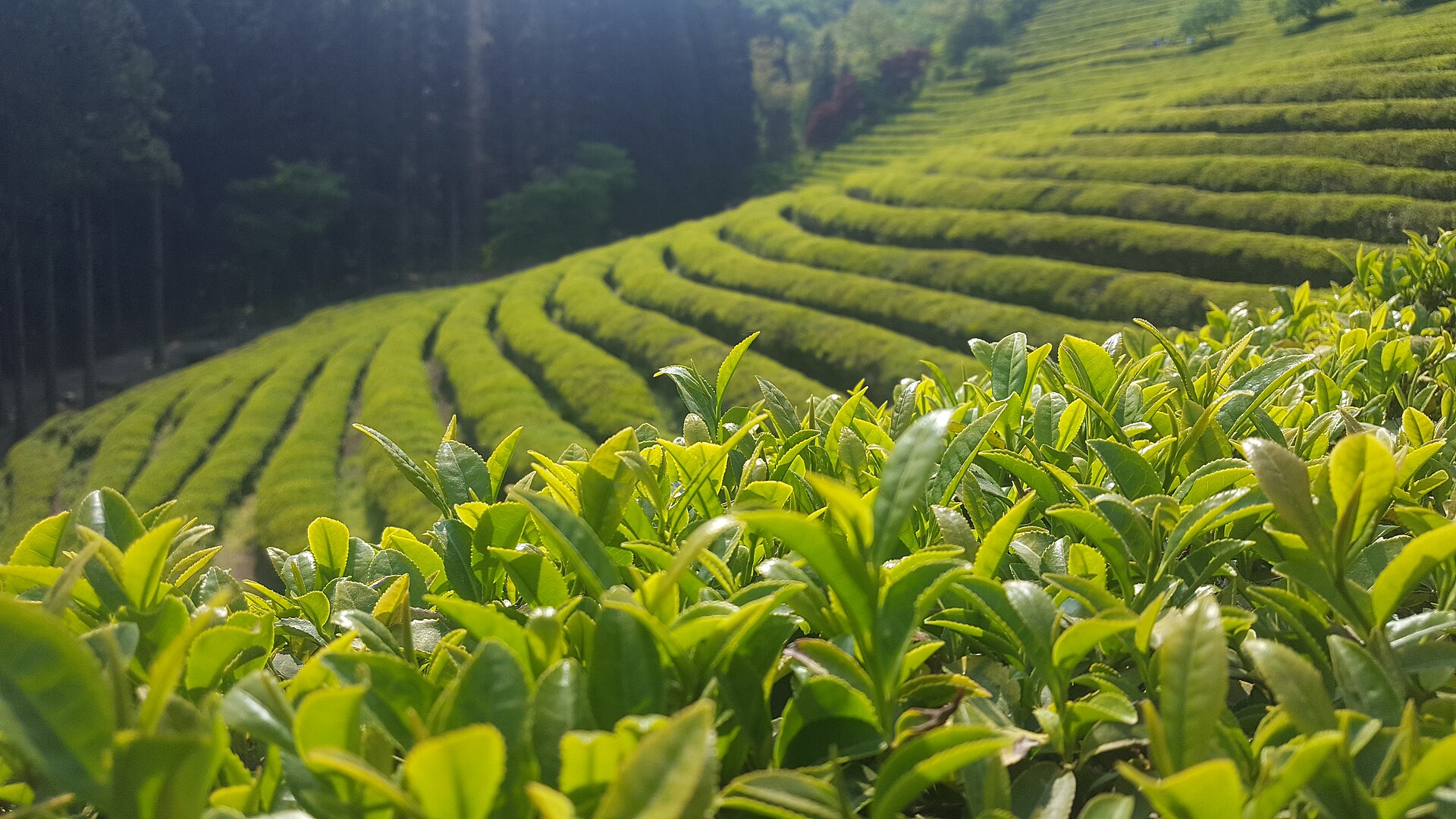
The tea bushes are cultivated in lines that create an unusually graphic landscape. Up close, the effect softens: new leaves catch the light, paths divide the sections, and trees break up the green. The fields change across the year, so the colour and density in a photograph should not be mistaken for a permanent condition.
Spring and early summer are often associated with the fresh growth that makes these hills especially vivid. Quieter weather can be just as rewarding. Mist, rain and softer light reveal a different side of the terraces.
More Than a Viewpoint
Daehan Dawon has walking routes through the plantation, and the experience shifts with height. At the lower level, the rows feel close and tactile; higher up, they read as a broad composition against the surrounding forest.
The landscape also asks for a little restraint. Tea is an agricultural crop, not just a scenic surface, and paths are there to keep the planted rows intact. Staying on them preserves the view for the next person as well as the field itself.
A Southern Detour
Boseong works well as part of a slower trip through the south-west, where the journey between destinations is often as memorable as the stop itself. There are tea-related cafés and shops near the plantation, but the hillside remains the reason to come.
Rather than trying to cover every corner, choose a route, let the slope set the pace, and take time to look at the changing geometry of the planting.
Before You Go
Opening hours, access conditions and seasonal programming can change, so current information from the plantation or local tourism office is worth checking before travel. Comfortable shoes are useful for the paths, particularly after rain.
Boseong rewards attention without needing much explanation. The tea fields are a clear example of how cultivation can become part of a region’s visual identity.