Gyeongbokgung Palace is one of the most recognizable historic places in Seoul and an easy choice for a first trip to Korea.
Large stone courtyards, colourful wooden halls, traditional tiled roofs and mountain views make the palace feel very different from the modern city surrounding it.
The grounds are extensive, so Gyeongbokgung is best experienced as more than a quick photo stop. Walking through the main gates and courtyards gives you time to notice how the individual buildings, open spaces and surrounding landscape fit together.
For first-time visitors, it is also one of the easiest places in Seoul to combine architecture, history and traditional Korean culture in a single visit.
Exploring Gyeongbokgung Palace
Gyeongbokgung was the principal royal palace of the Joseon Dynasty and remains one of Seoul’s most important historic palace complexes.
The scale of the site is immediately noticeable.
Instead of one central building, visitors move through a sequence of gates, courtyards, halls, gardens and pavilions.
This makes the palace particularly interesting for a first visit because the experience changes as you move deeper into the grounds.
Geunjeongjeon Hall
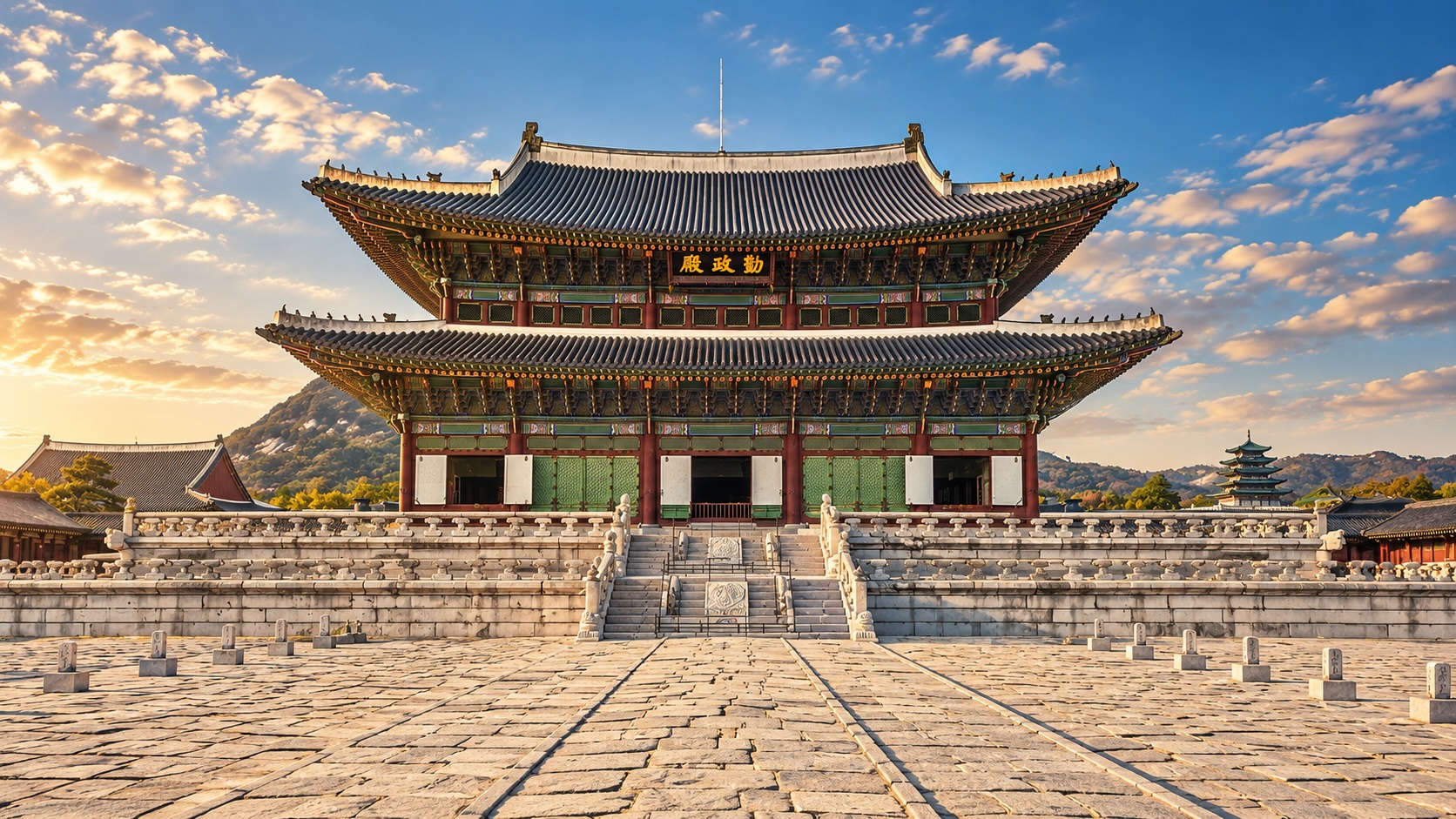
Geunjeongjeon is one of the most important buildings inside Gyeongbokgung Palace.
The large throne hall stands beyond a broad stone courtyard and is surrounded by carefully arranged architectural details.
Its scale and formal symmetry make it one of the strongest visual impressions within the palace.
Take time to look beyond the main façade as well. The painted wooden structures, roof details and stone platforms reveal much more when viewed up close.
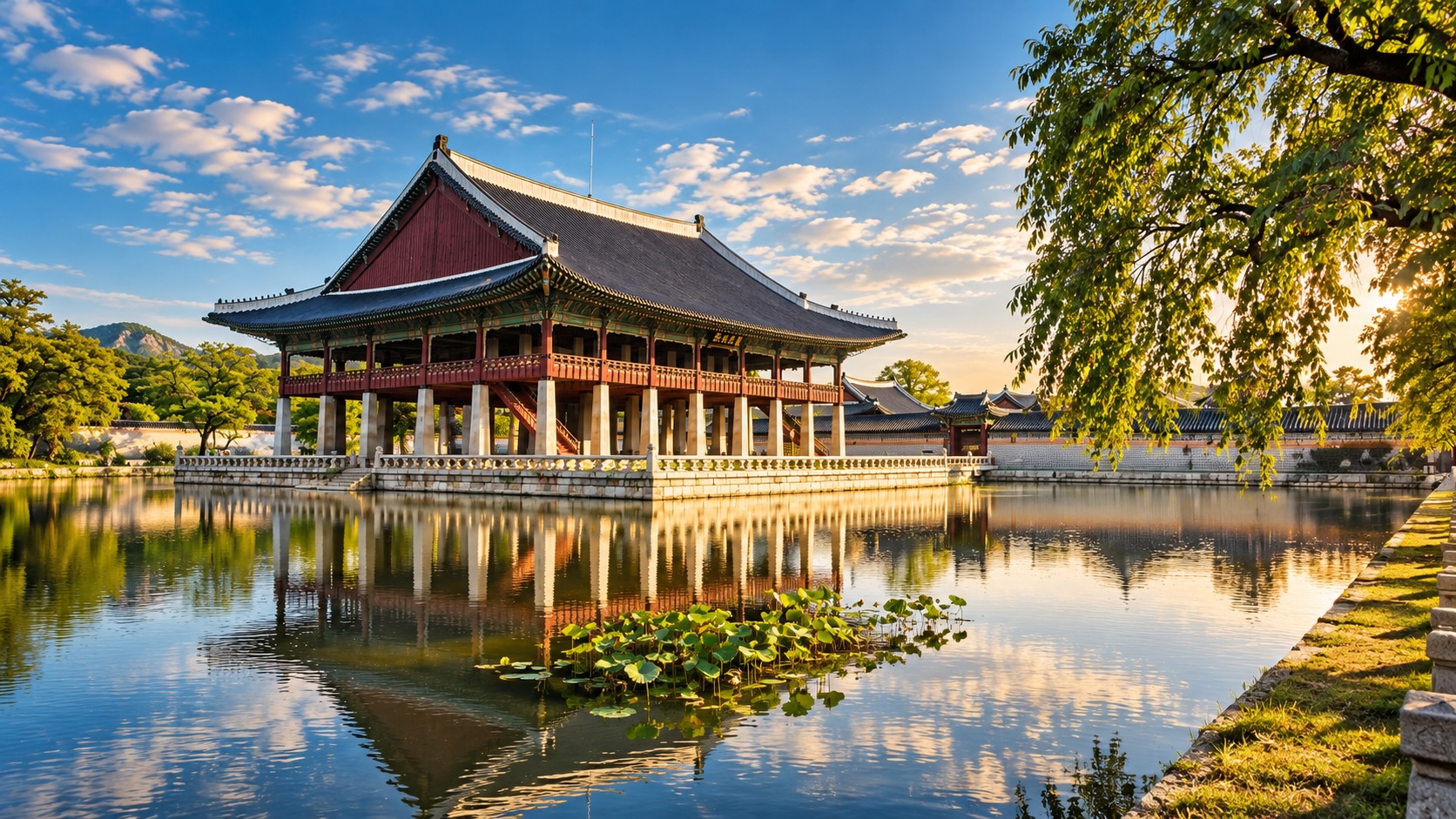
Gyeonghoeru Pavilion
Gyeonghoeru Pavilion provides a completely different atmosphere.
The pavilion stands beside a large pond, creating one of the most peaceful and recognizable views inside the palace grounds.
Reflections on the water, surrounding trees and traditional architecture make this area especially attractive for photography.
It is also a good place to slow down after walking through the larger formal courtyards.
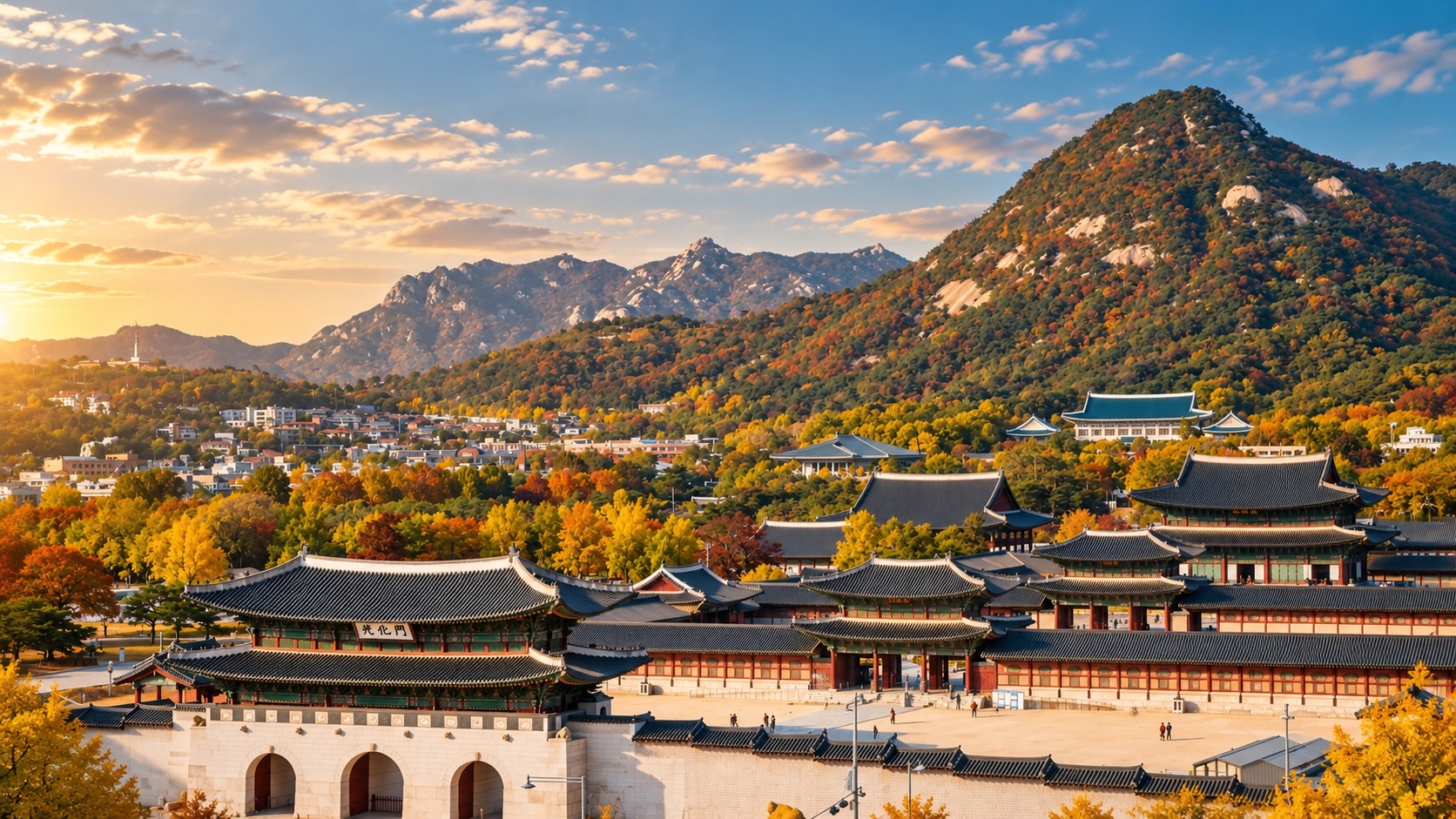
Palace Views and the Mountains
One of the most striking things about Gyeongbokgung is its relationship with the surrounding landscape.
From several points inside and around the palace, traditional rooftops appear against the mountains north of central Seoul.
The combination of palace architecture, autumn trees and mountain slopes gives the site a sense of scale that is difficult to appreciate from street level alone.
This is also one of the reasons Gyeongbokgung feels visually distinct from many other historic sites in the city.
When to Visit
Opening hours vary depending on the season.
Current official visitor information lists:
January–February:
09:00–17:00
March–May:
09:00–18:00
June–August:
09:00–18:30
September–October:
09:00–18:00
November–December:
09:00–17:00
Last admission is one hour before closing.
Gyeongbokgung Palace is normally closed on Tuesdays.
If a public holiday falls on a regular closure day, operating arrangements can change, so check current official information before visiting.
For photography and a quieter atmosphere, earlier in the day can be a good choice.
Wearing Hanbok
Many visitors choose to wear traditional Korean hanbok while exploring the palace.
According to current official visitor information, visitors wearing a complete hanbok can enter Gyeongbokgung Palace without paying the normal admission fee.
Specific hanbok rules apply, so check the current official guidelines if you plan to use the free-admission policy.
Wearing hanbok is optional and not required to enjoy the palace.
What to See Nearby
Gyeongbokgung is well placed for combining several central Seoul sights in one day.
Nearby areas include:
- Gwanghwamun
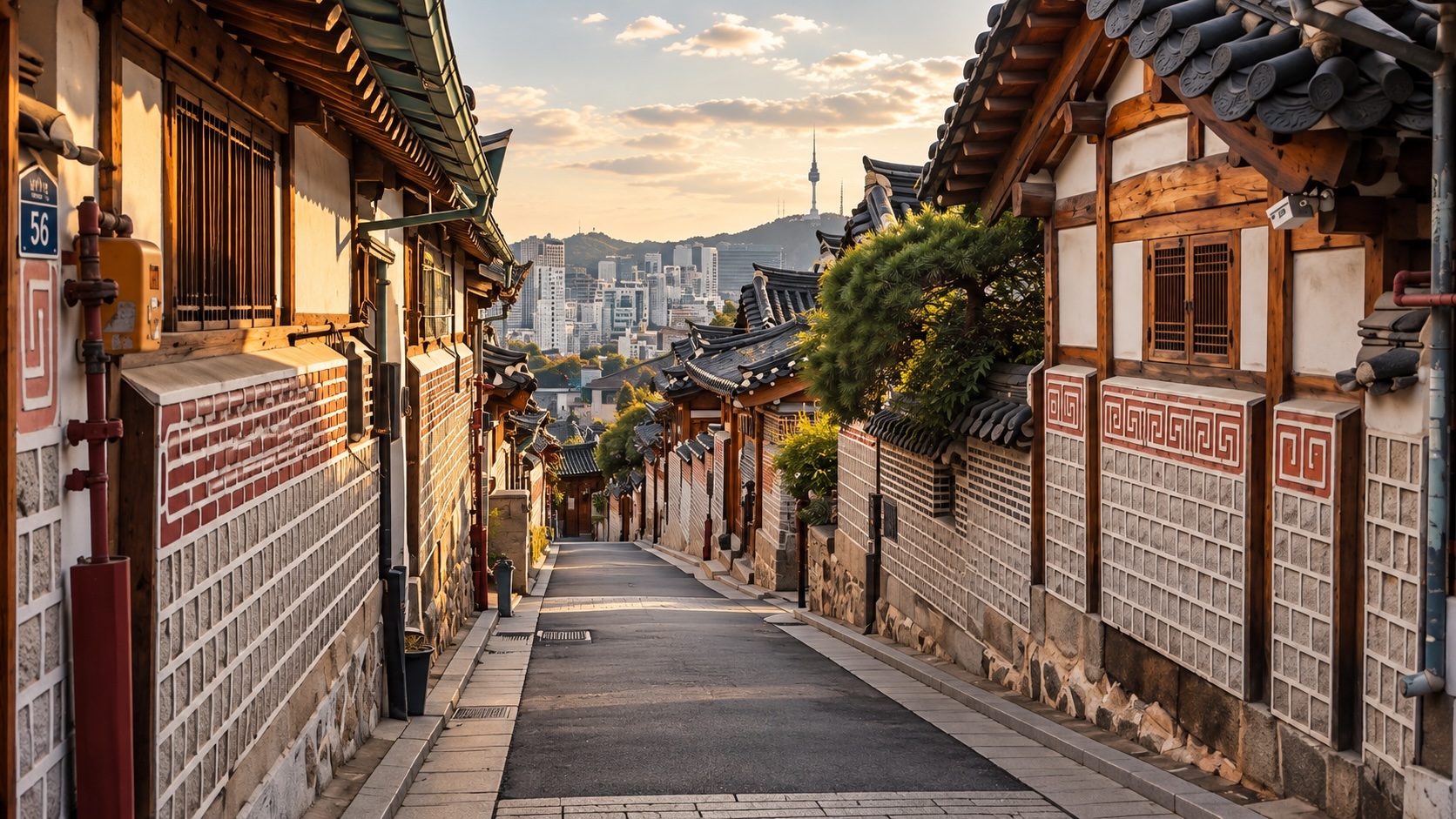
- Bukchon Hanok Village
- Seochon
- Insadong
Bukchon Hanok Village works particularly well as a second stop because it offers a more residential view of traditional Korean architecture.
Getting There
Address:
161 Sajik-ro
Jongno-gu
Seoul
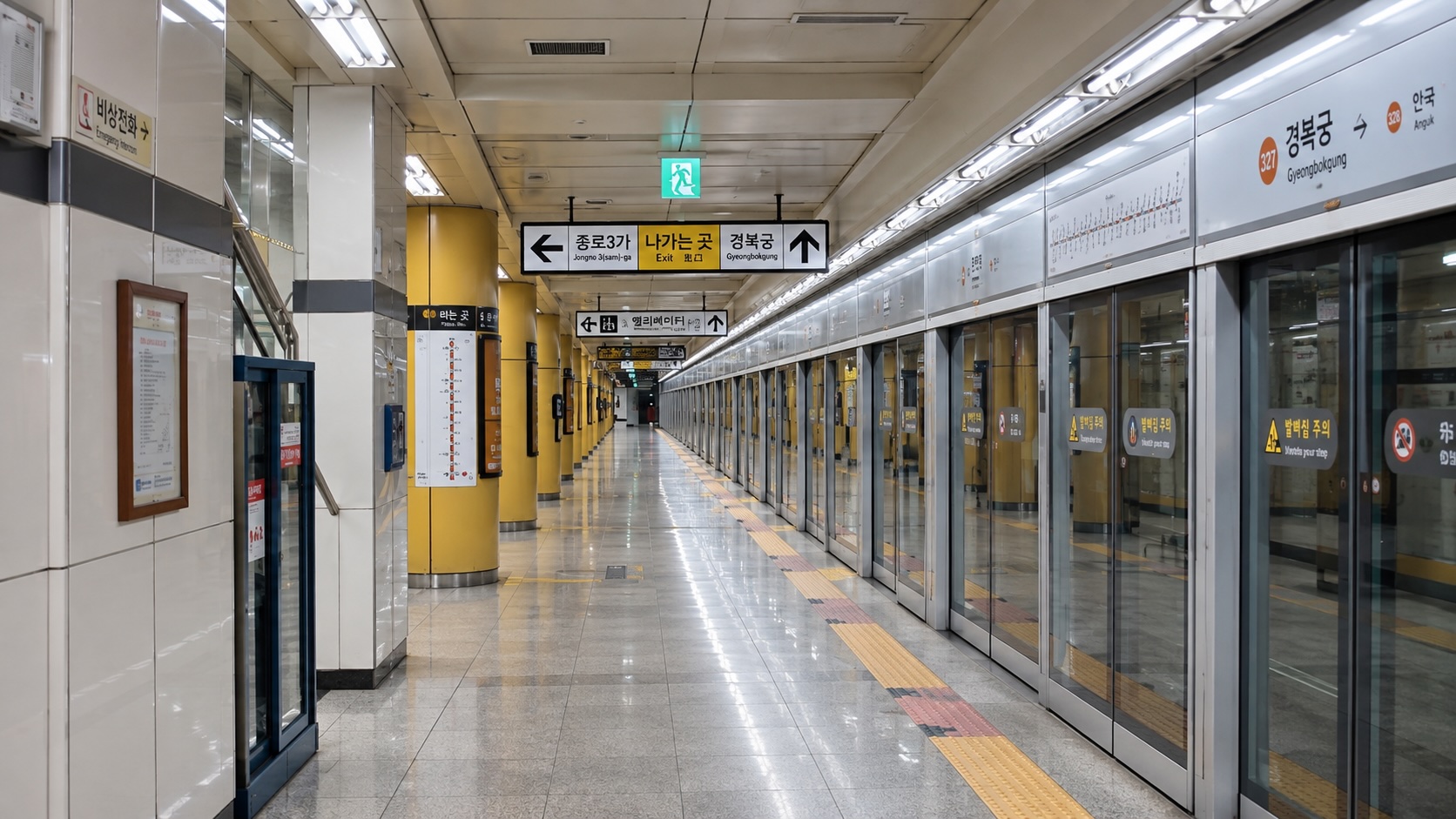
A convenient subway connection is:
Gyeongbokgung Station
Seoul Subway Line 3
Exit 5
Gwanghwamun Station on Line 5, Exit 2, is another nearby option.
Practical Information
Name:
Gyeongbokgung Palace
Address:
161 Sajik-ro, Jongno-gu, Seoul
Nearest subway:
Gyeongbokgung Station, Line 3, Exit 5
Regular adult admission for foreign visitors:
KRW 3,000
(Ages 19–64)
September–October opening hours:
09:00–18:00
Last admission:
One hour before closing
Closed:
Tuesdays
Phone:
+82-2-3700-3900
Opening hours, admission rules and special programs can change, so check the current official palace information before visiting.