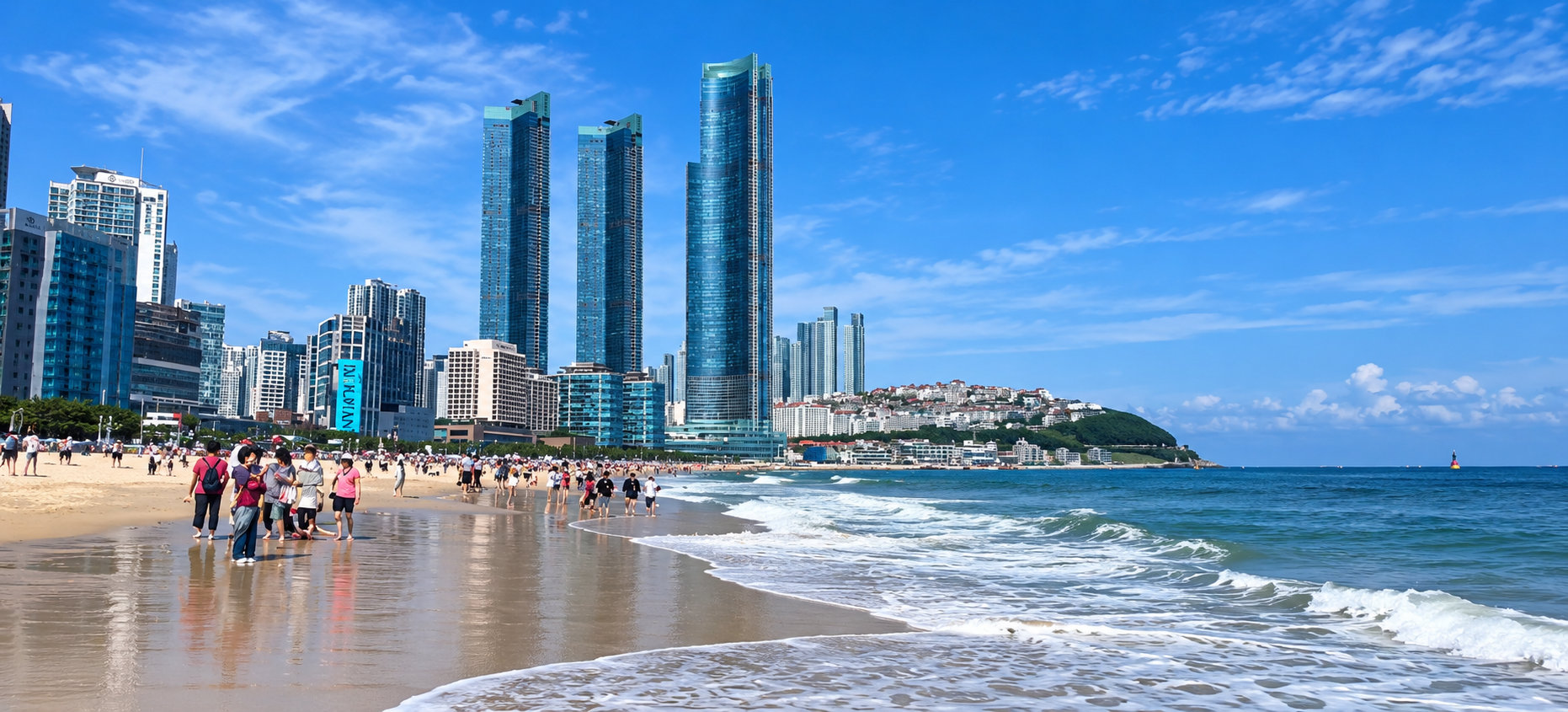
Haeundae Beach lies in Busan’s Haeundae-gu, where a wide sandy shoreline meets a modern city landscape. The sea, high-rise buildings, hotels, the promenade and coastal paths sit close together, giving the area a character that shifts between beach district and urban waterfront.
It is one of Busan’s best-known coastal areas, but it is not only a summer beach. Outside the main swimming season, the shore and surrounding paths offer space for walks and a clear view of how the city meets the sea.
Haeundae Beach and the City
The beach has a broad open stretch of sand facing the water, with a dense built-up district immediately behind it. Hotels, residential towers and commercial buildings frame the coastline, so a walk here is always shared between the beach and the city rather than separated from it.
The atmosphere changes with the time of day and the season. Summer brings more beach activity, while quieter months place more emphasis on the promenade, the skyline and the movement of the water along the shore.
Walking Along Haeundae Beach
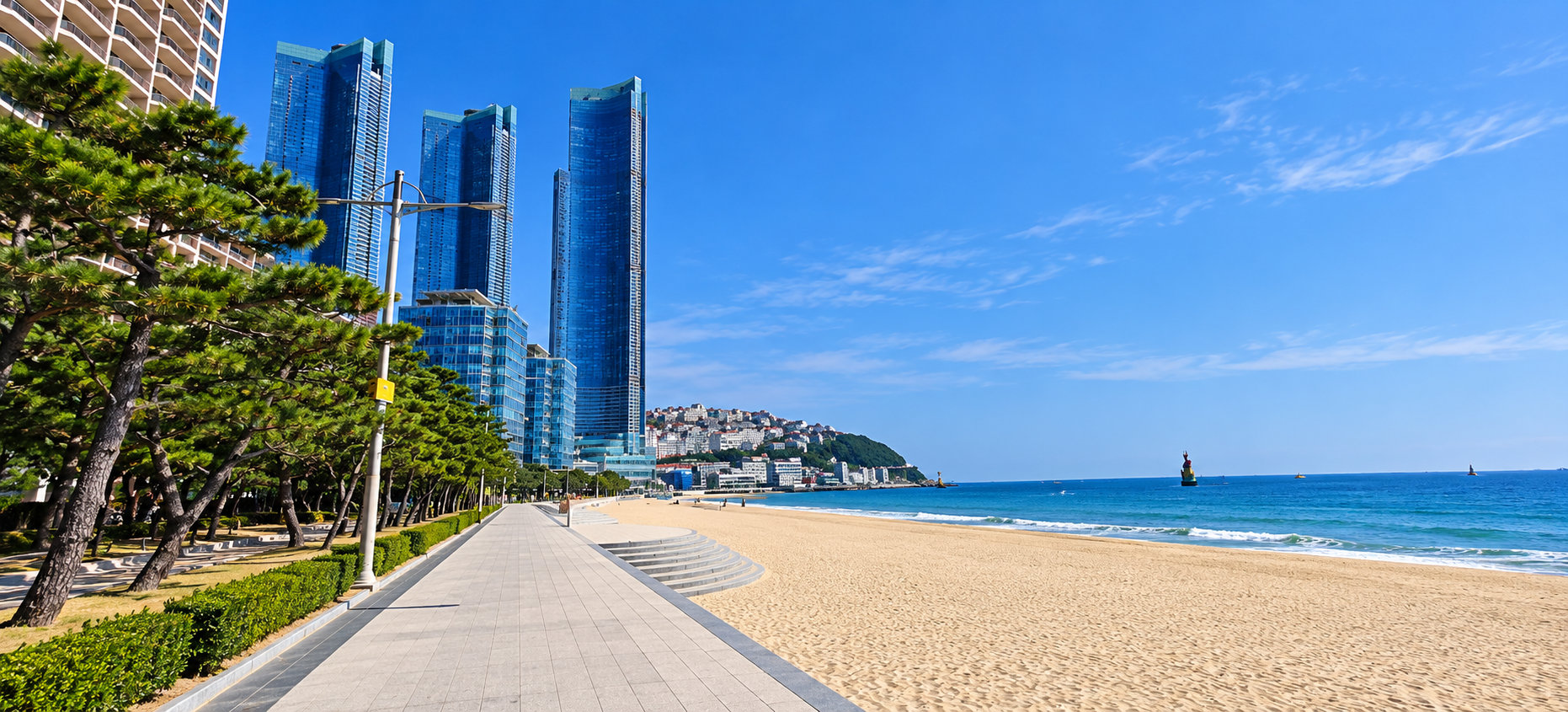
A promenade follows the beach, with pedestrian paths and access points leading toward the sand. Parts of the coastal area include pines and small green spaces, while the open line of the beach keeps the sea in view for much of the walk.
Outside the busiest summer periods, it can be a straightforward place for an unhurried stroll. The setting never feels far from the city: cafés, streets and tall buildings remain directly beside the waterfront.
The View from Dongbaekseom
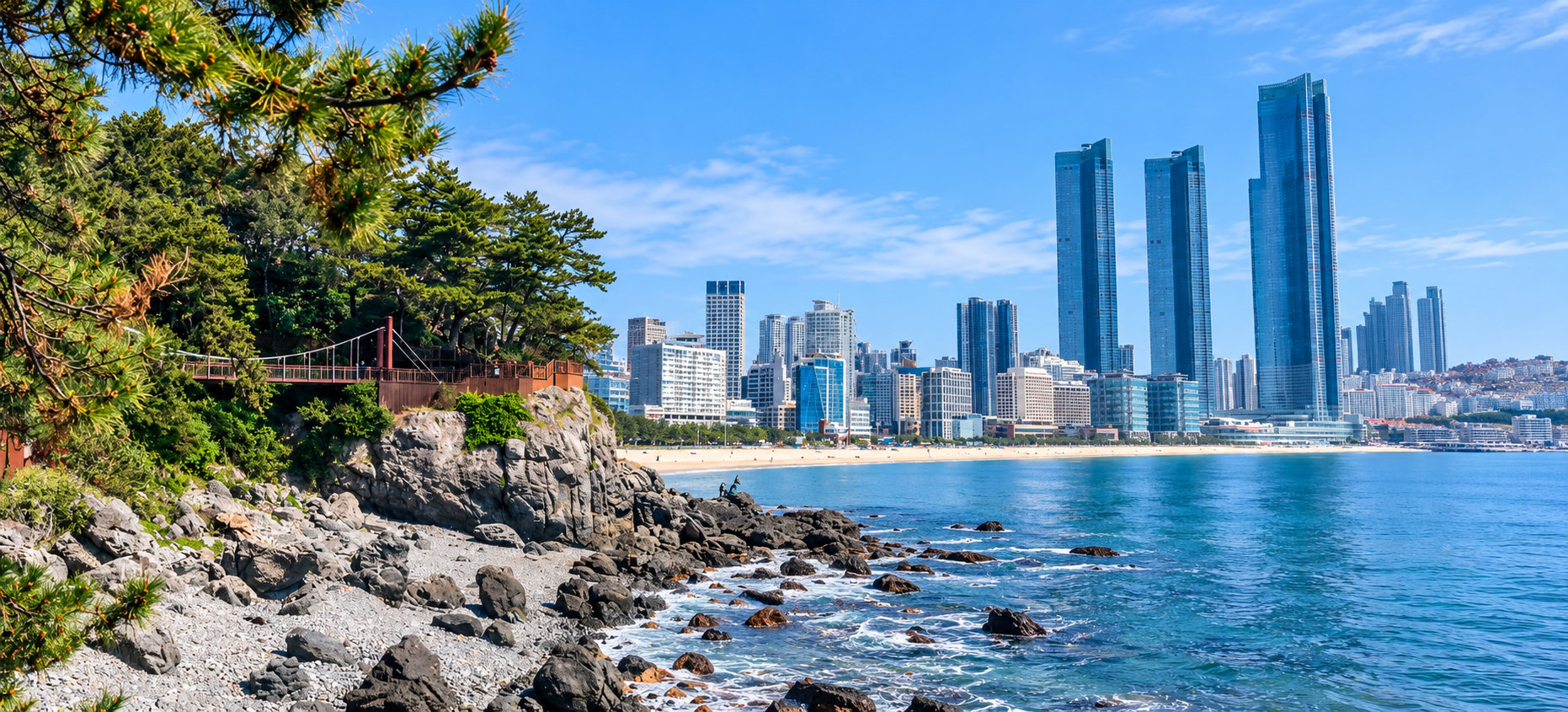
Dongbaekseom sits at the western end of Haeundae Beach. Its rocky coast, pines and wooded areas bring a more natural texture to the edge of the district, while coastal paths turn the view back toward the beach and the skyline.
Visit Busan connects Dongbaekseom Island and the Dongbaek Coastal Trail with Haeundae Beach. The paths offer another way to experience the area without leaving the waterfront behind.
Haeundae from Above
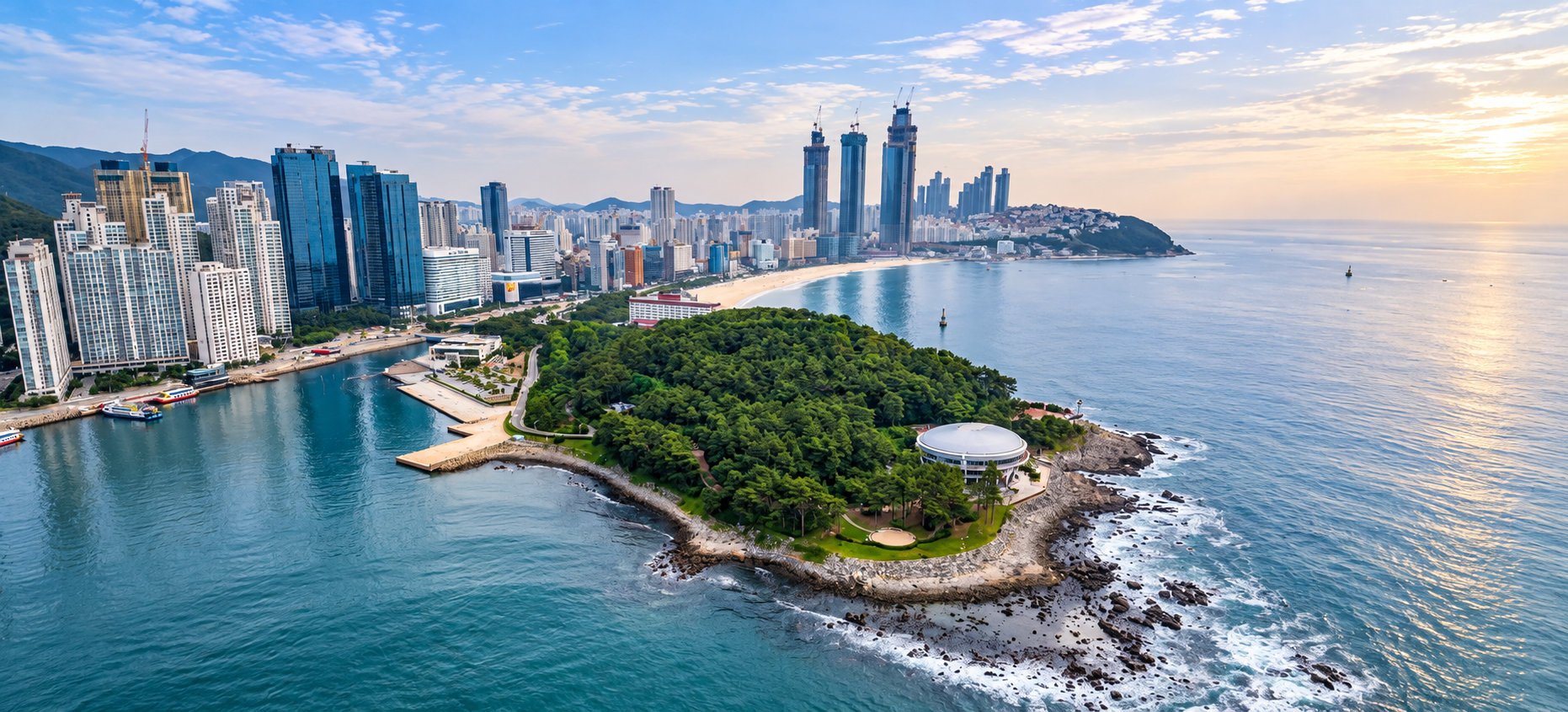
From a wider perspective, Dongbaekseom sits in front of the curve of Haeundae Beach, with the dense city directly behind the sand. Sea lies on one side; park and coastal landscape on the other. It is a compact view of the geography that makes this part of Busan distinctive.
When to Visit Haeundae Beach
Visit Busan currently lists operating hours of 09:00–18:00. Facilities and seasonal beach operations can vary, so check current local information if you are planning activities rather than a simple walk along the waterfront. The listed service fee is free.
Summer is the busiest period, with swimming and beach activity drawing more visitors. Spring and autumn bring cooler conditions that suit walks, while winter can still make for an interesting coastal route, though it may be cold and windy.
How to Get to Haeundae Beach
Haeundae Beach is at 264 Haeundaehaebyeon-ro in Haeundae-gu, Busan. For many visitors, the simplest route is Busan Metro Line 2 to Haeundae Station. From Exit 5, Visit Busan lists the beach at around a 15-minute walk.
Buses 139, 307 and 1003 are also listed for the Haeundae Beach stop. Routes can change, so checking current navigation and public-transport information before travelling is sensible.
Around Haeundae Beach
Haeundae is more than a stretch of sand. Dongbaekseom, the Dongbaek Coastal Trail, the urban waterfront and nearby commercial streets all sit within the same area. The promenade connects these elements in a way that makes it easy to move between city views and the coast.
Practical Tips for Visiting
- Comfortable shoes are useful if you plan to combine the beach with Dongbaekseom.
- Bring sun protection on bright days.
- Coastal wind can make conditions feel cooler than expected.
- Summer is significantly busier than other seasons.
- Check current swimming and facility information if visiting for beach activities.
- Take rubbish with you or use designated bins.
A Different Side of Busan
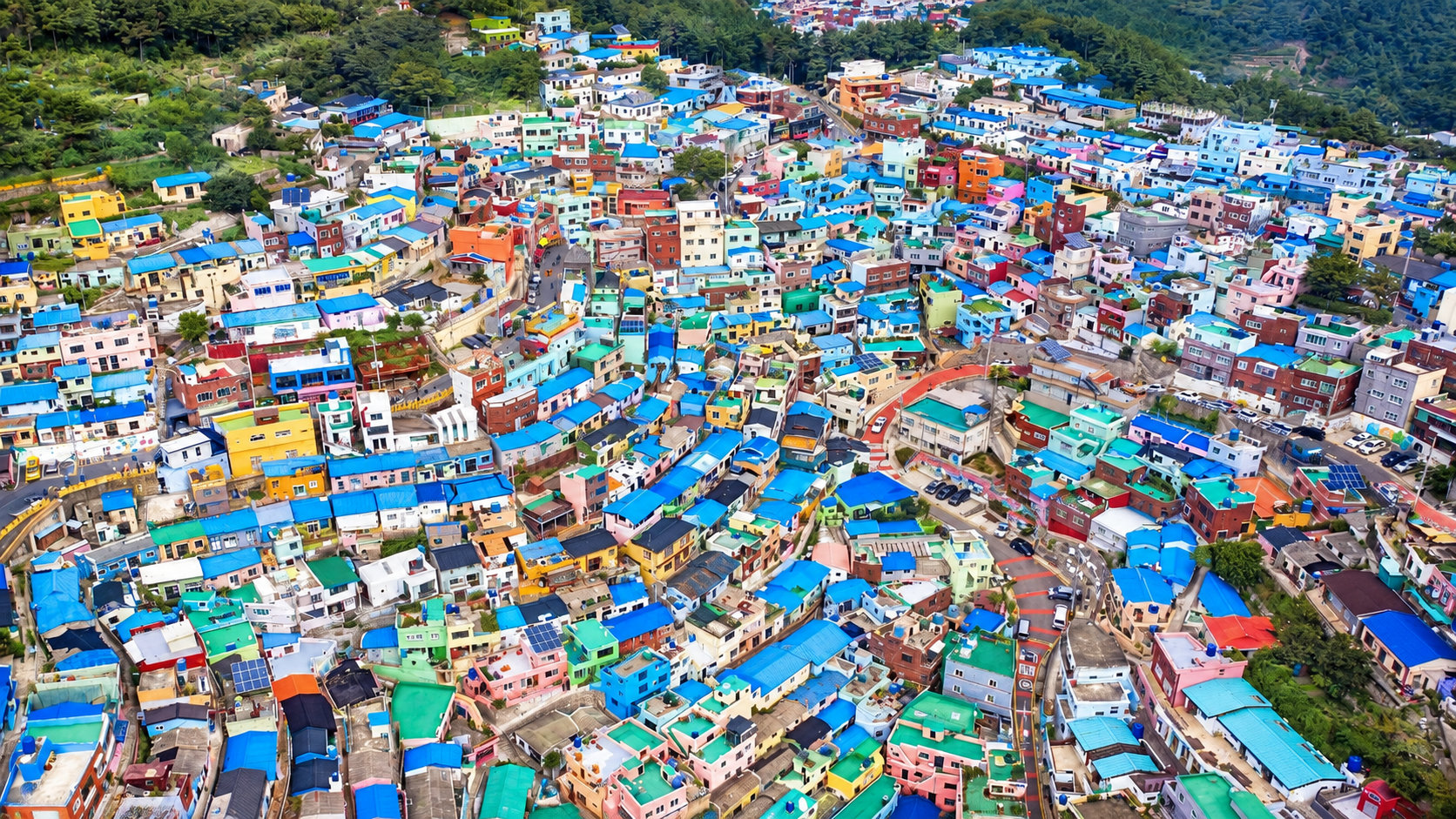
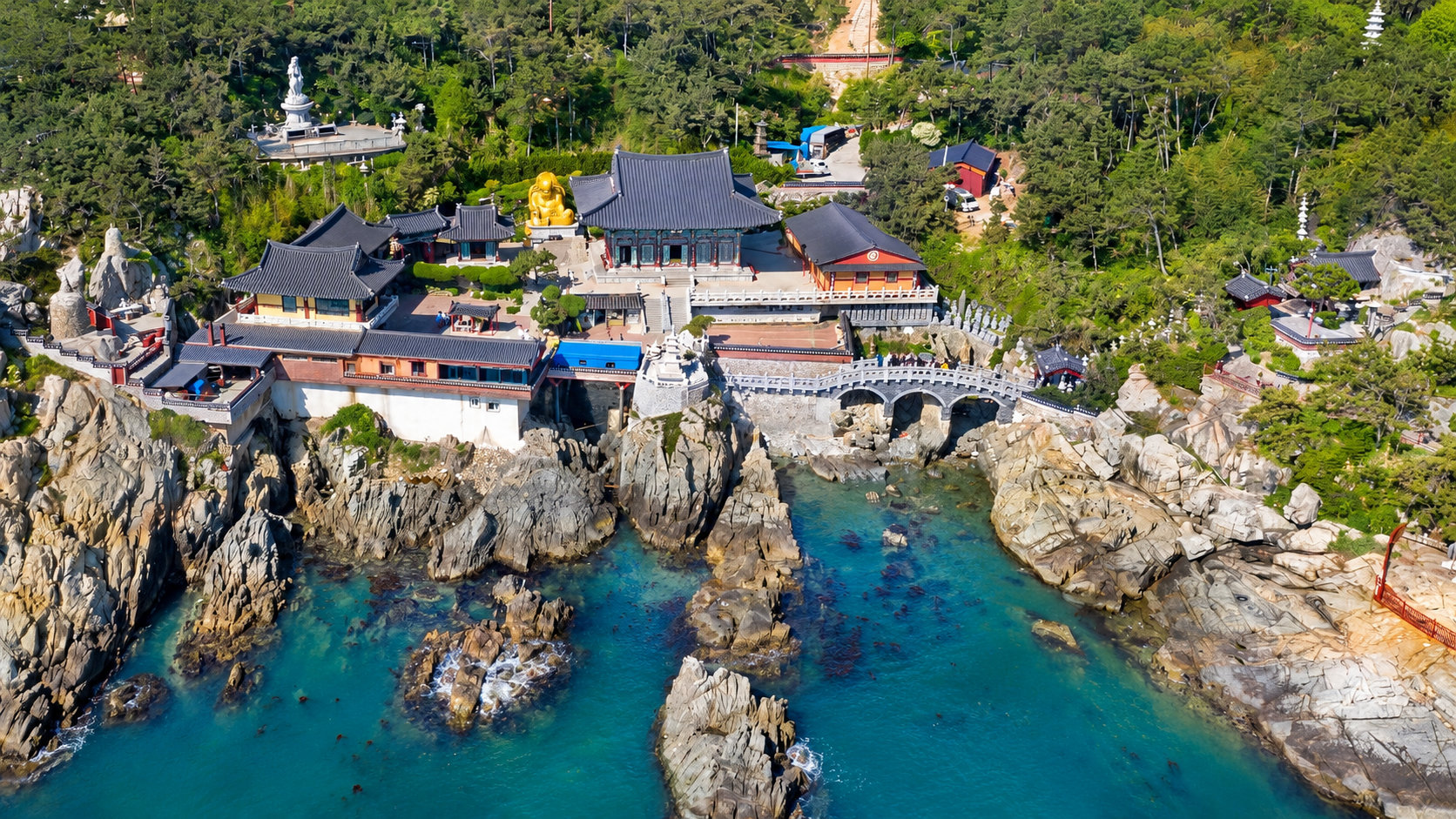
Haeundae shows a different side of Busan from Gamcheon’s hillside streets or the coastal temple at Haedong Yonggungsa. Here, modern city building, a broad beach, sea views, the promenade and coastal paths all occupy the same compact part of the city.
That mix makes Haeundae useful beyond the warmest months: a place where a short walk can move easily from urban streets to sand, water and a wider coastal view.