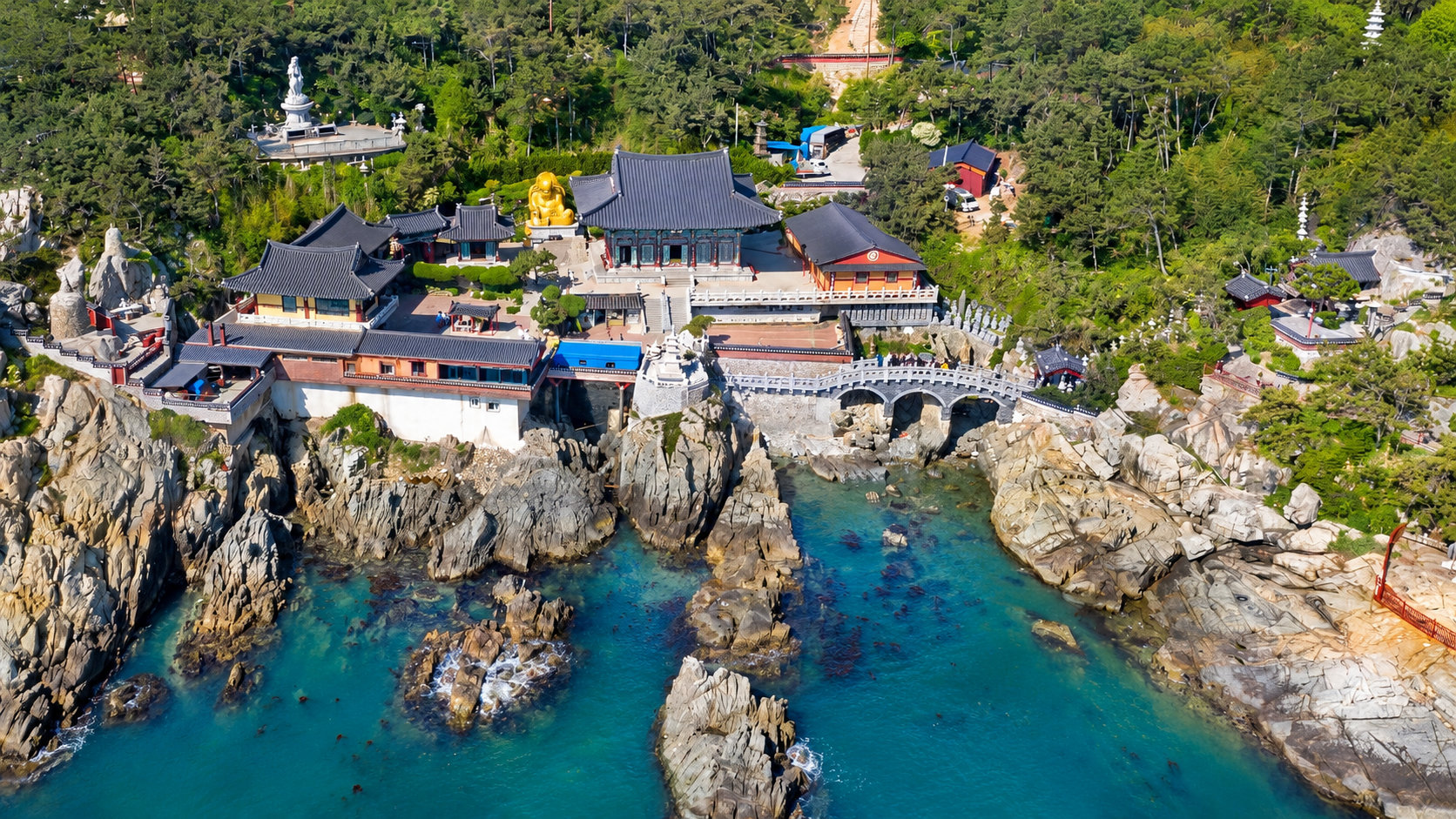
Haedong Yonggungsa stands on Busan’s rocky eastern coast in Gijang. Traditional Buddhist temple architecture meets the sea directly here: buildings, stone steps, coastal rock and open water shape the experience from the first approach.
The setting distinguishes it from many temples found in mountain landscapes. Haedong Yonggungsa is not simply a coastal viewpoint, but an active Buddhist temple where the architecture and the shoreline remain closely connected.
A Temple Beside the Sea
The complex sits across different levels of the rocky coast. Stone paths and stairways move between traditional roofs, temple structures and lookouts over the water, while the shoreline is visible from several points along the route.
Dark tiled roofs and coloured wooden details sit against the coastal rock rather than a single formal courtyard. That change in elevation gives each section a slightly different perspective on the temple and the sea beyond it.
The History of Haedong Yonggungsa
According to the temple’s traditional history, its origins are traced to 1376 during the Goryeo period and the Buddhist teacher Naong. The earlier temple is said to have been destroyed during the Japanese invasions of the late sixteenth century.
The complex was rebuilt in the twentieth century. Monk Ungang of Tongdosa Temple was involved in reconstruction work in the early 1930s, and the name Haedong Yonggungsa was adopted later. This layered history is useful context for a site that now combines an old tradition with a comparatively modern rebuilt complex.
Walking Down to the Temple
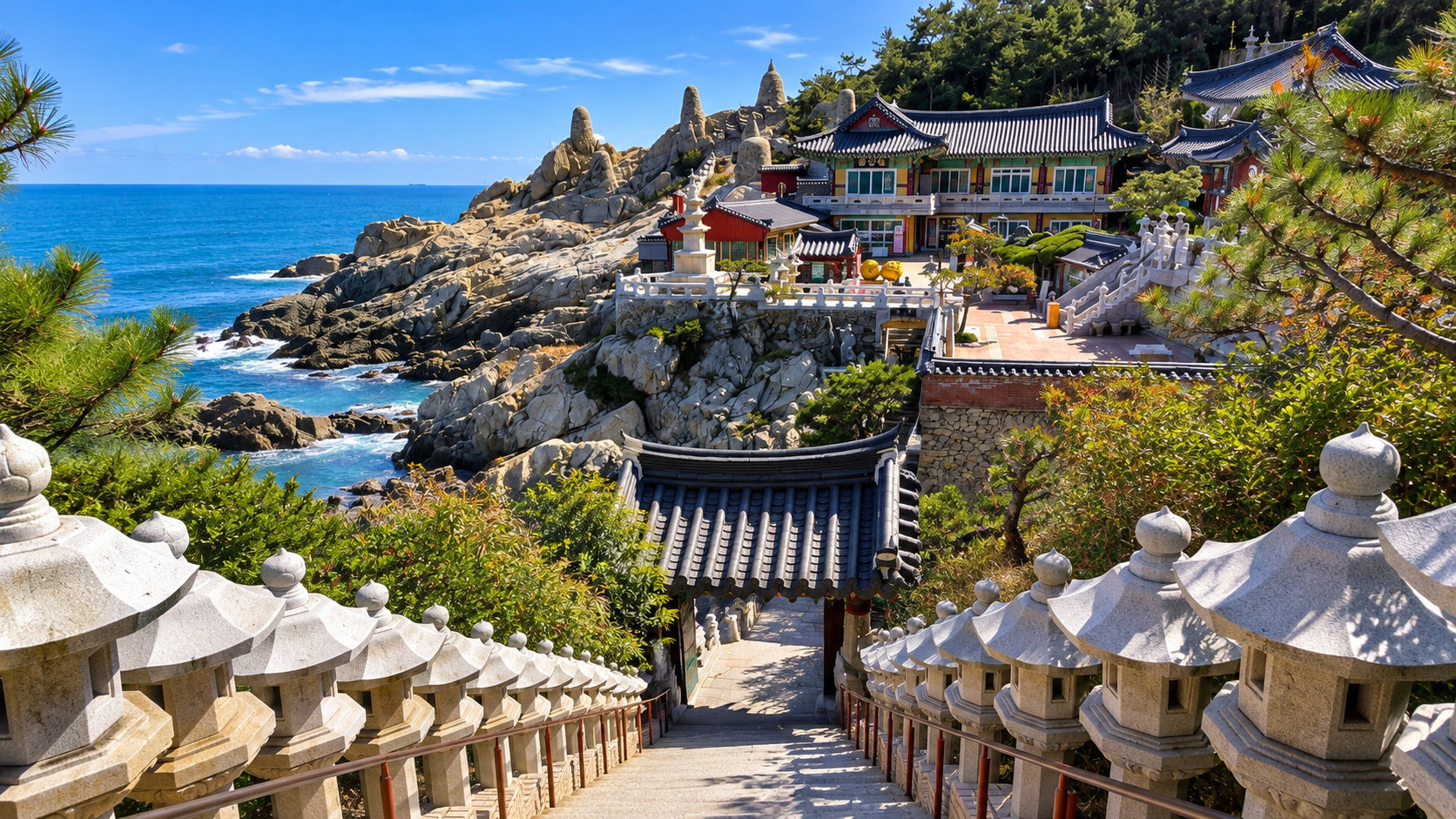
The route toward the temple follows numerous steps, including the well-known 108 steps in parts of the approach. Stone lanterns accompany sections of the way, and the descent gradually opens views toward the coastline and the buildings below.
There is more than one level to take in, so the experience changes as the path moves downward. Pause where appropriate rather than expecting every visitor to follow one exact route through the complex.
Exploring the Temple Complex
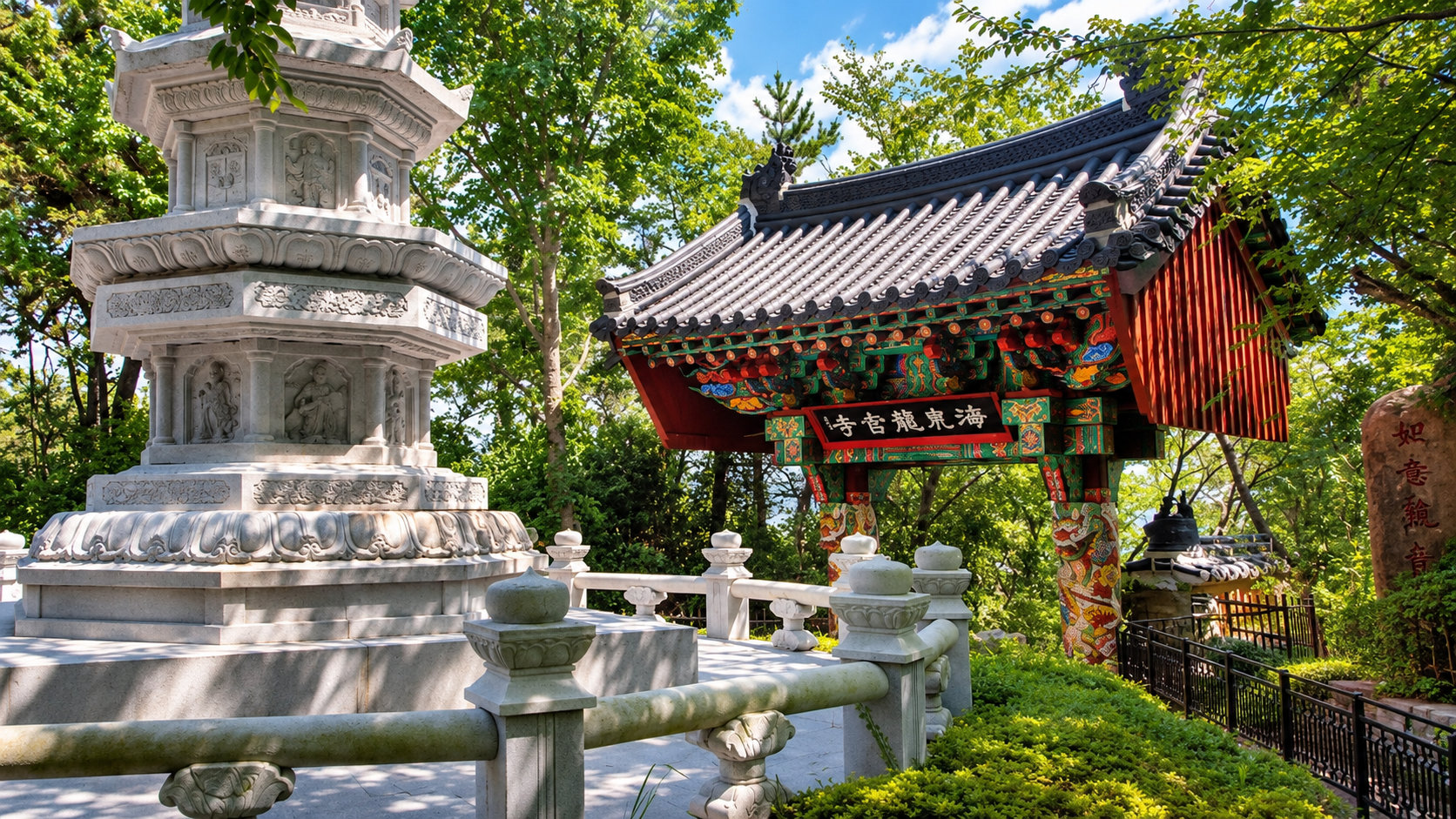
Traditional Buddhist architecture appears throughout the grounds in painted timber, tiled roofs, stone balustrades, courtyards and stairways. Buddhist statuary and other religious elements are part of the working temple environment, not simply decorative features.
The different levels make it natural to take in the complex gradually. A building viewed from a higher path may look quite different once the sea and coastal rock come into view beside it.
The Coast Around Haedong Yonggungsa
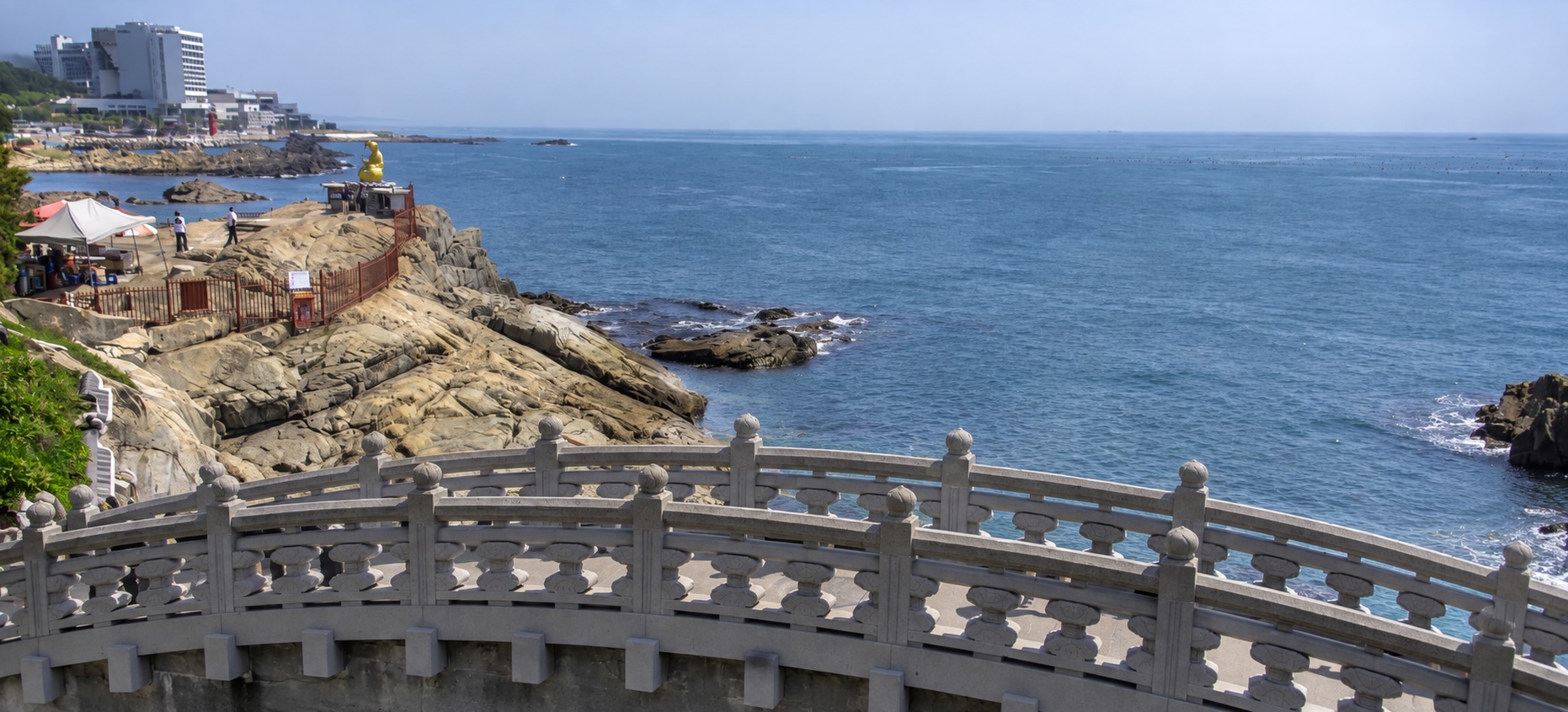
The coastline is central to a visit here. Rocky edges, water and paths above the shore provide different angles on the temple buildings. Sunrise Rock, also known as Ilchulam, is a recognised feature in the wider area, and Haeparang Trail Route 1 passes nearby.
The trail connection is one part of the surrounding coast rather than a reason to treat the temple as a hiking route. The main focus remains the relationship between the religious site and its immediate shoreline.
When to Visit Haedong Yonggungsa
Haedong Yonggungsa is currently open daily from 04:30 to 19:20, with last admission at 18:50. Admission is free. These details can change, so visitors with an early or time-sensitive plan should check current information before travelling.
The temple is unusually accessible in the early morning, when it may be quieter. During the day, the architecture and coastal setting are easier to see, although more visitors are also possible.
How to Get to Haedong Yonggungsa
The temple’s address is 86 Yonggung-gil, Gijang-eup, Gijang-gun, Busan. From Osiria Station on the Donghae Line, Exit 1, visitors can continue by local bus and then walk to the temple entrance. Bus 139 and express bus 1001 are listed options for the area.
Get off at Yonggungsa Temple & National Institute of Fisheries Science, then allow roughly fifteen minutes on foot. The temple is not directly beside Osiria Station, and connections can change, so checking current navigation or transport information before the journey is useful.
Temple Etiquette
Haedong Yonggungsa is an active Buddhist temple. Speak quietly, avoid interrupting prayers or religious activities, and photograph respectfully. Do not take close photographs of people at prayer without permission, and follow notices throughout the grounds.
When entering Buddhist halls, use the side doors rather than the central front door, which is traditionally reserved for monks. If shoes need to be removed, place them neatly before going in.
Practical Tips for Visiting
- Comfortable walking shoes are useful; expect stairs and some uneven coastal surfaces.
- Conditions near the coast can feel different from central Busan.
- Bring sun protection on bright days.
- Check current opening hours before an early or late visit.
- Check current public-transport information before travelling.
- Allow time to explore without rushing and respect religious spaces.
- Be considerate when taking photographs.
A Different Side of Busan
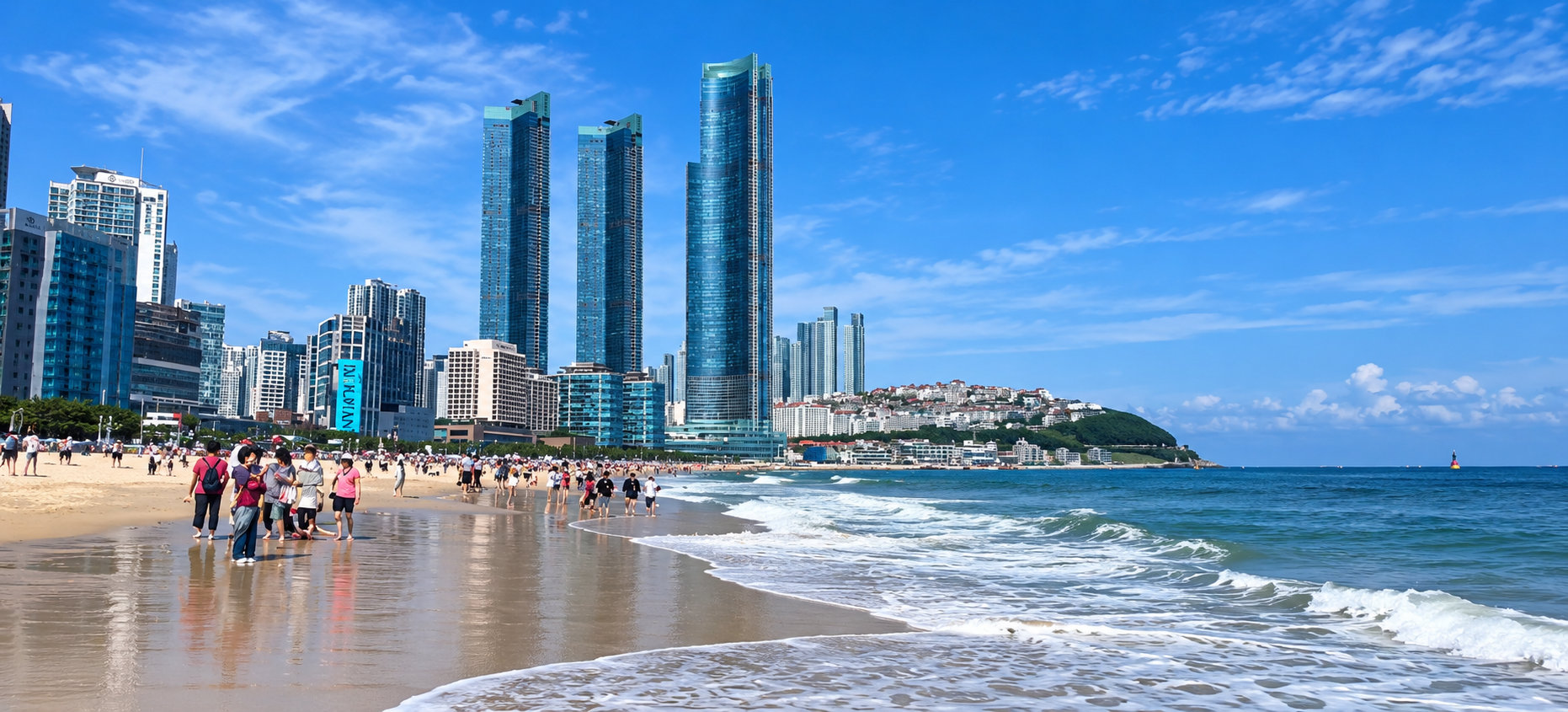
Haedong Yonggungsa offers a clear contrast to Busan’s beach districts, high-rise areas, shopping streets and dense central traffic. Here, traditional architecture, coastal rock, the sea and an active religious setting set the pace.
Its appeal is in that combination: a temple complex shaped by its location on the shore, and a place best approached with enough time and respect for what it is.