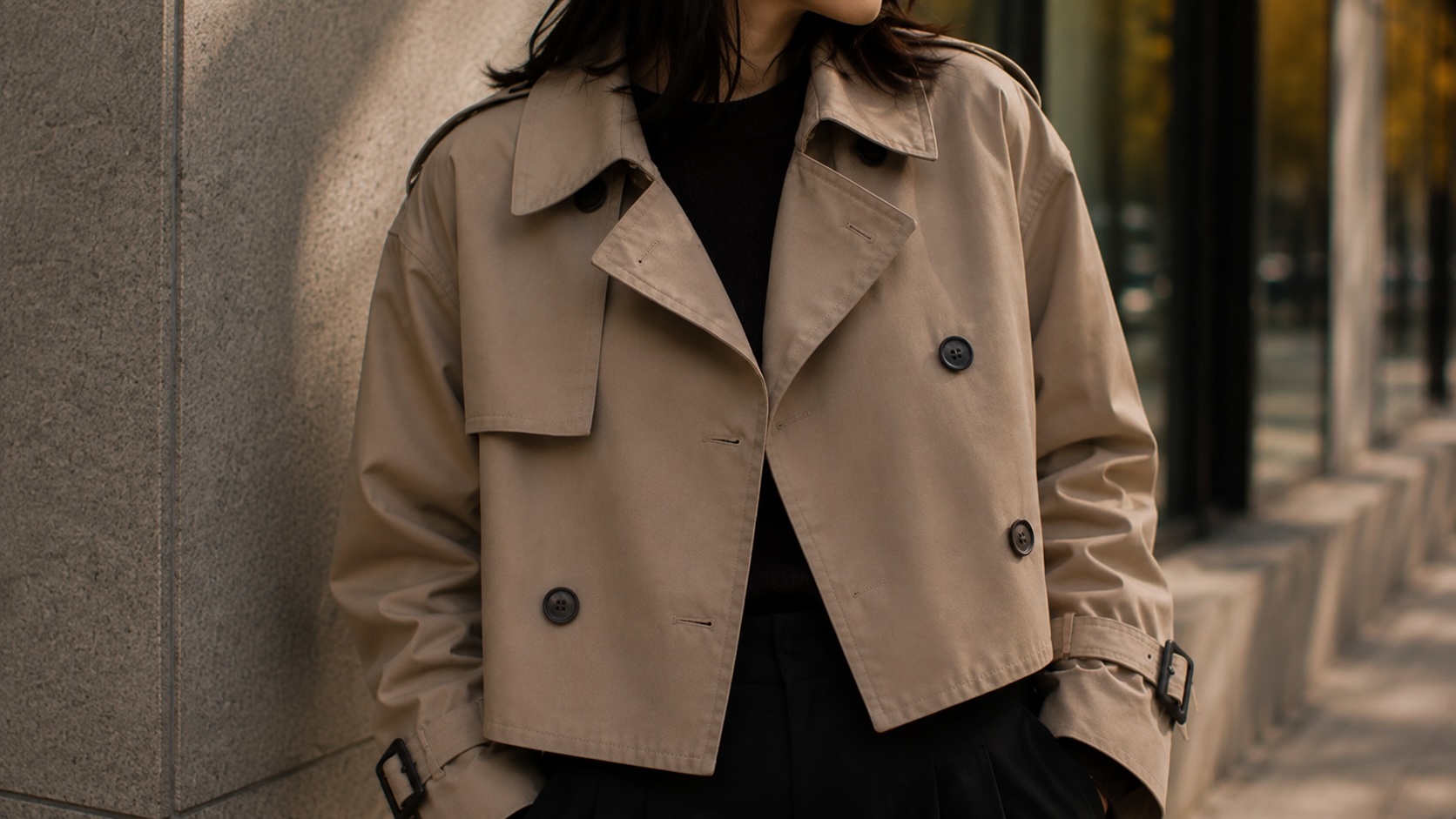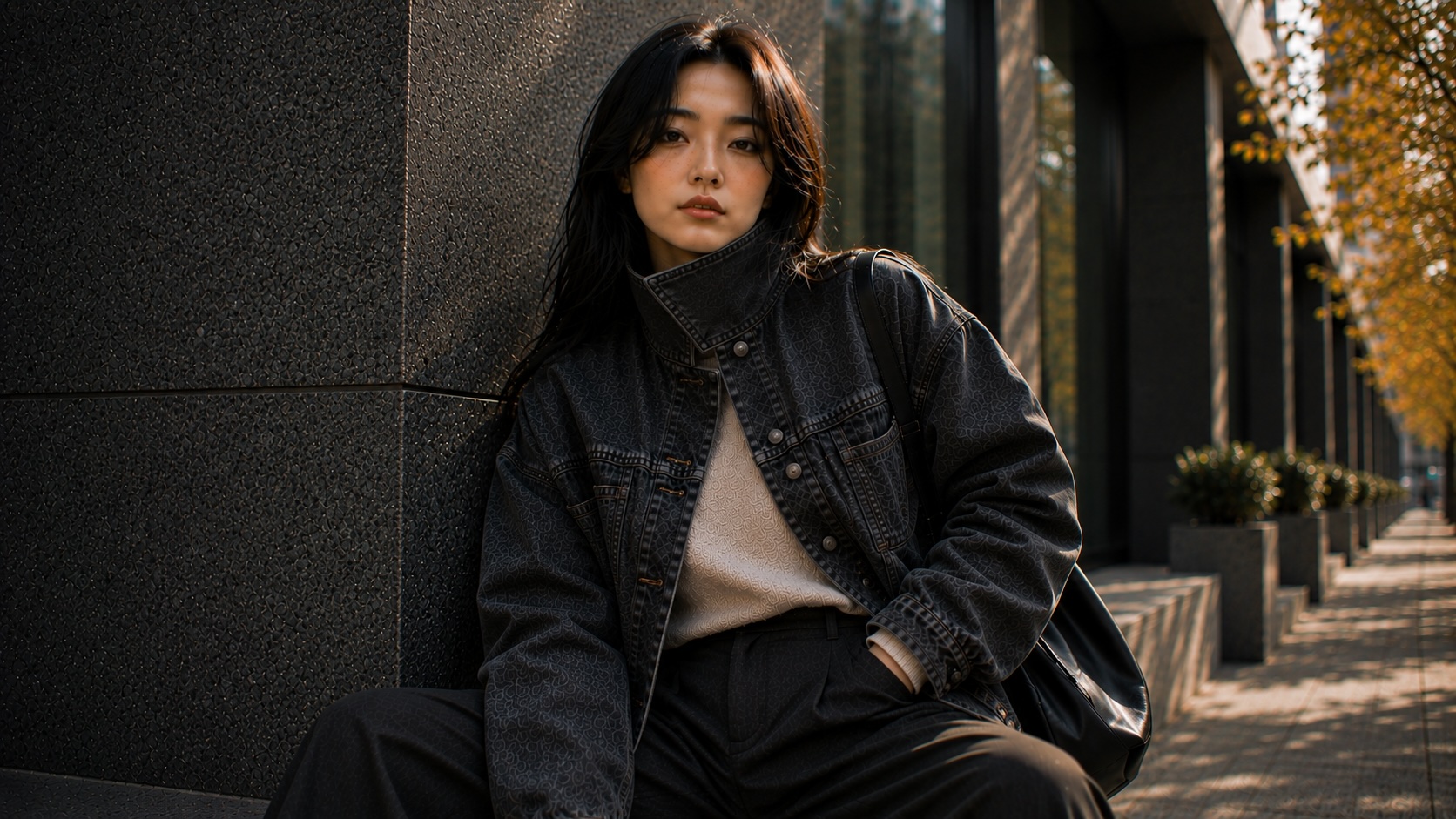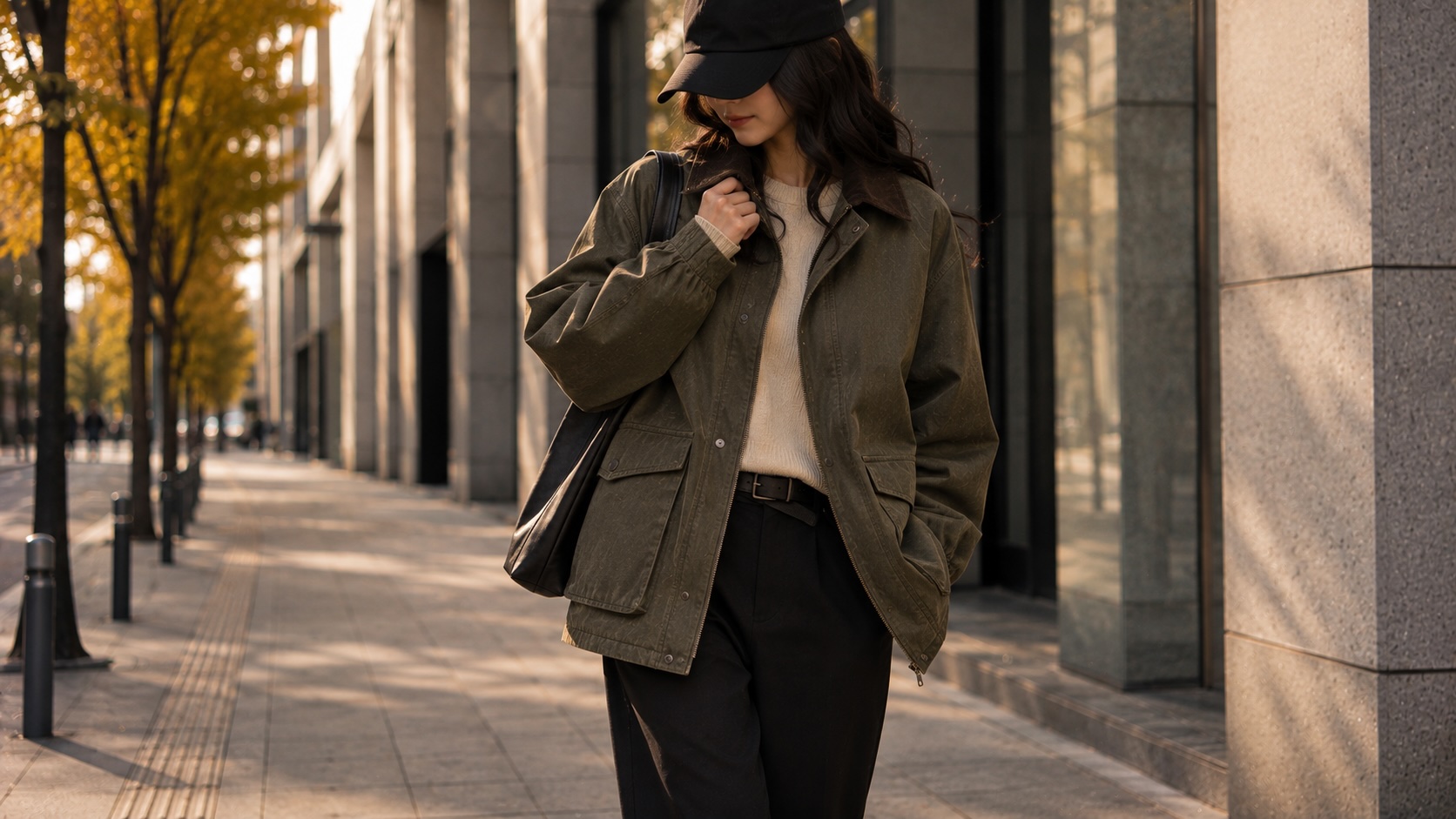
A barn jacket has a practical shape, but it does not need to lean into nostalgia. In olive or deep khaki, it becomes an easy outer layer for the city: broad enough to wear over a light knit, structured enough to give dark trousers a little direction. The result is more Seoul street style than country weekend.
The key is restraint. A pale knit under the darker jacket opens the upper half, while black or dark brown trousers keep the look anchored. There is no need to add rustic checks, heavy boots or anything that explains the reference too loudly. Let the silhouette do the work: short to mid-length jacket, relaxed sleeve, a trouser that falls straight from the hip.
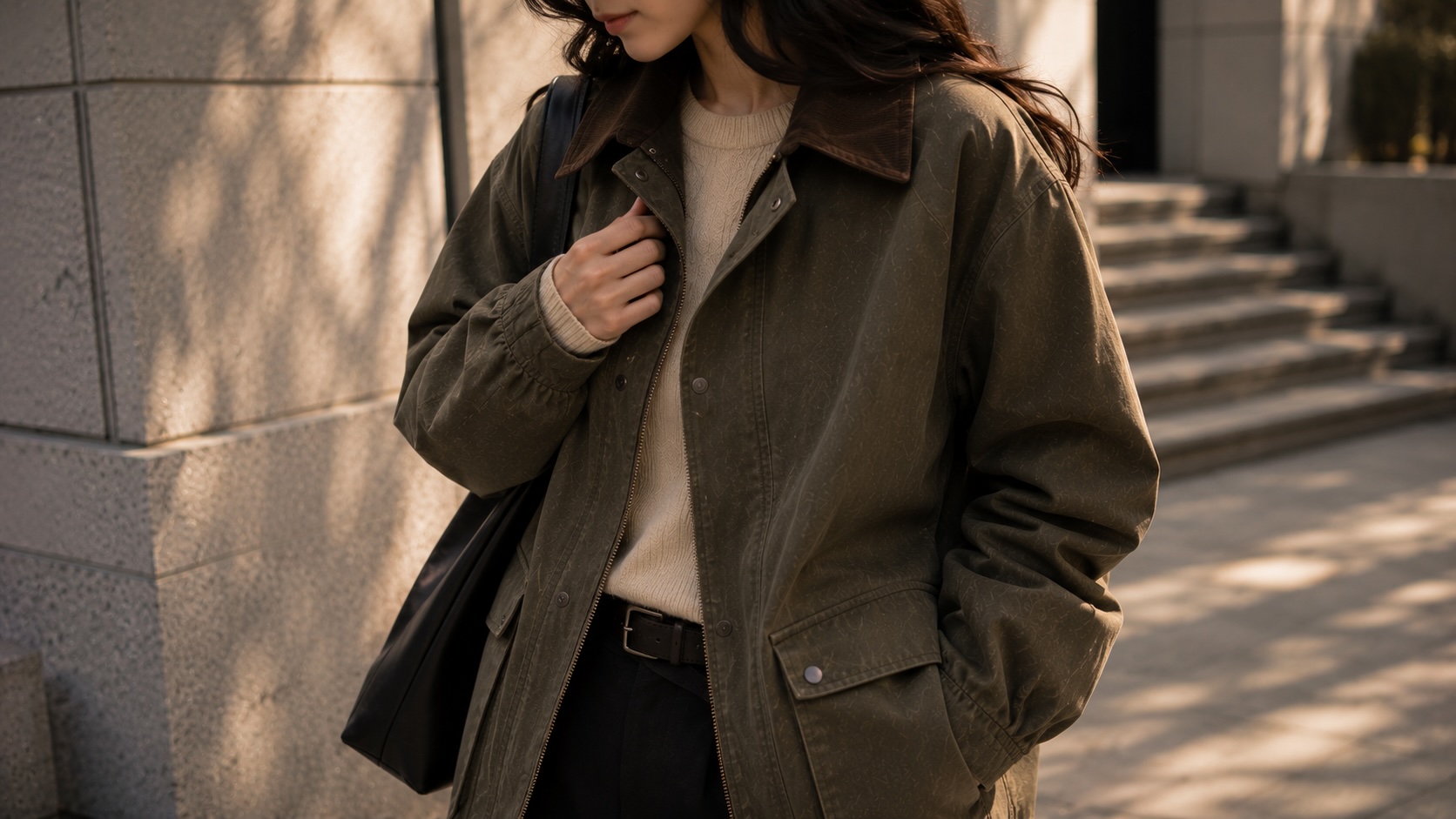
Utility, Edited for the City
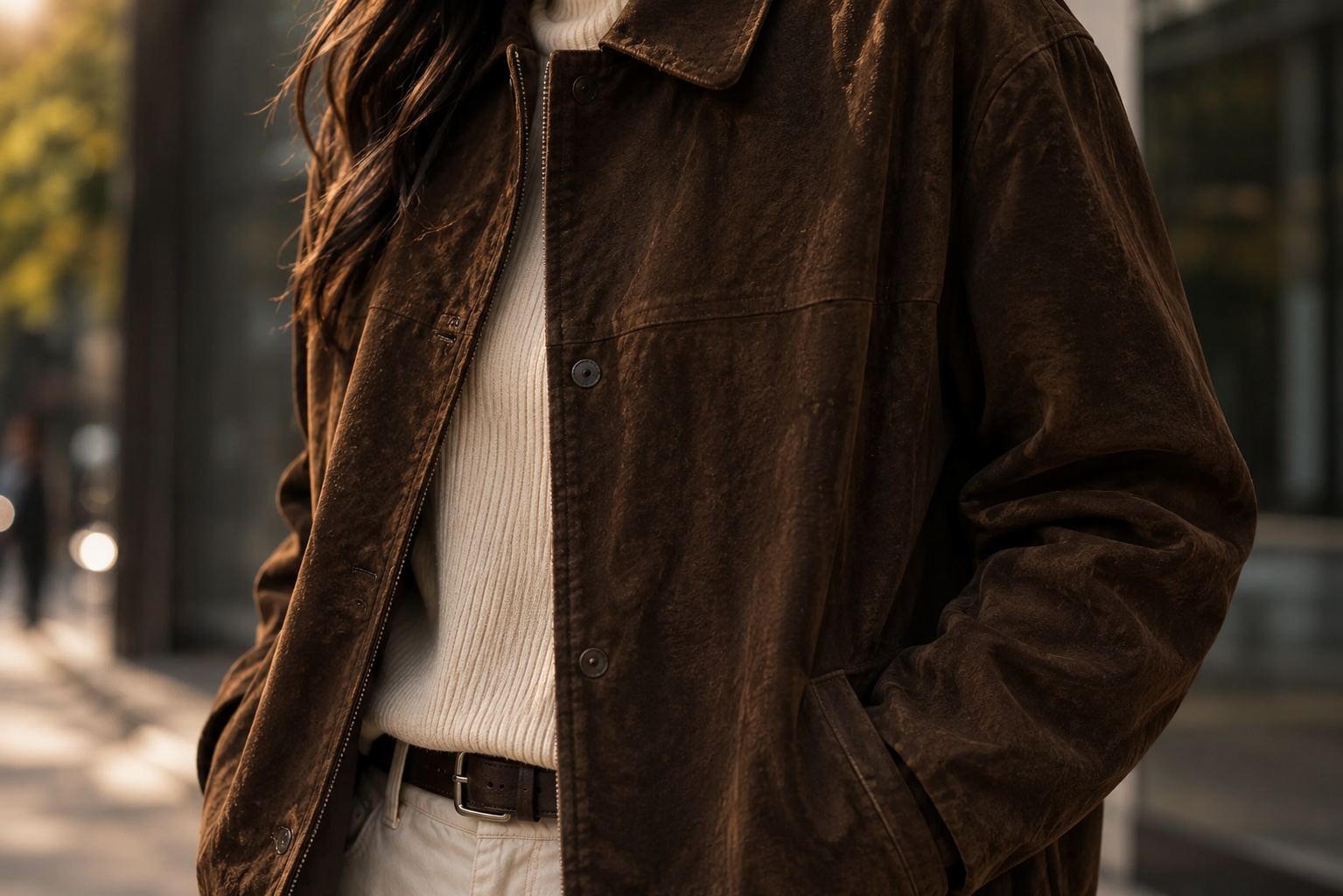
The details are useful when they stay simple. Patch pockets bring a little texture to the front, and a corduroy collar can soften the jacket's edge without making it feel costume-like. A dry cotton canvas is especially good for this look: it holds its shape through the shoulder, then becomes more familiar with wear. Choose a cut with room at the armhole so the knit underneath never feels trapped.
A concealed placket or plain matte buttons keep the focus on the overall shape. Underneath, a fine cream knit provides just enough contrast against olive. Add a narrow scarf only when the weather calls for it, and let it sit loosely rather than wrapping it into a statement. The layers should feel gathered over time, not assembled for a photograph.
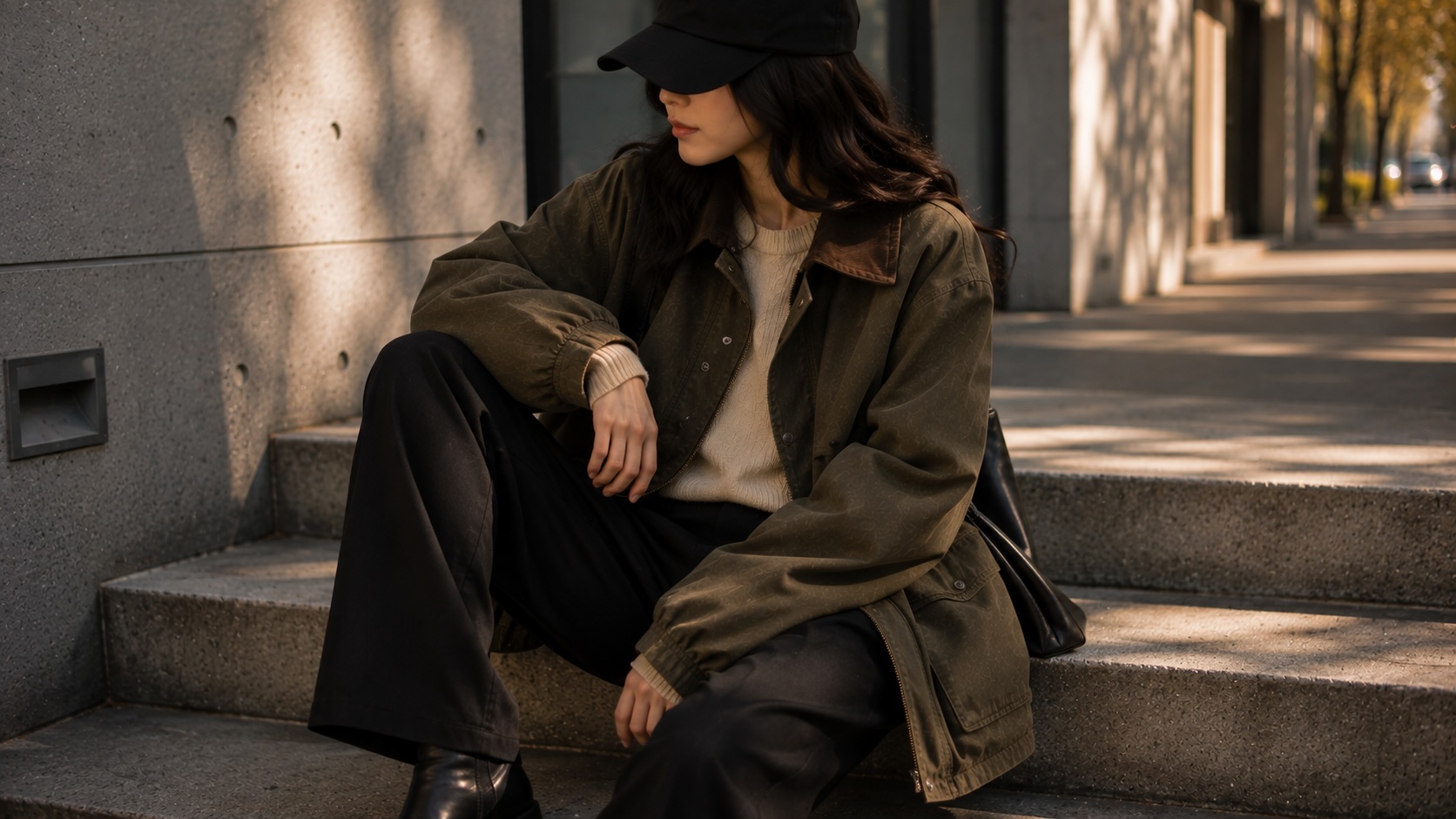
An Everyday Shape with More Presence
Dark trousers make the utility references feel sharper. A black straight leg, a soft brown pleat or a slightly fuller cut all work beneath the shorter jacket. Keep the shoes low and substantial—leather loafers, rounded sneakers or a simple ankle boot. The barn jacket then reads as an everyday city layer with a useful history, not a borrowed costume. That distinction is what keeps it current.