Alongside shopping centres and department stores, Seoul still has many traditional markets woven into its neighbourhoods. They offer another view of the city: food being prepared to order, small retailers, older market layouts and the ordinary rhythm of local shopping.
These are not simply visitor attractions. Many markets remain practical places to buy groceries, household goods, clothing and prepared meals. The experience changes from one market to the next, and that difference is part of what makes them worth exploring.
Why Visit a Traditional Market in Seoul?
Traditional markets feel different from Seoul’s large retail districts because the shops are often smaller and closely packed together. A single lane can move from fresh produce and prepared dishes to textiles, everyday goods or a counter serving a quick snack.
The pace is direct and practical rather than polished. Regular customers, independent vendors and the mixture of food with other shopping make these places useful for seeing how a neighbourhood functions, without treating every market as the same kind of outing.
Gwangjang Market
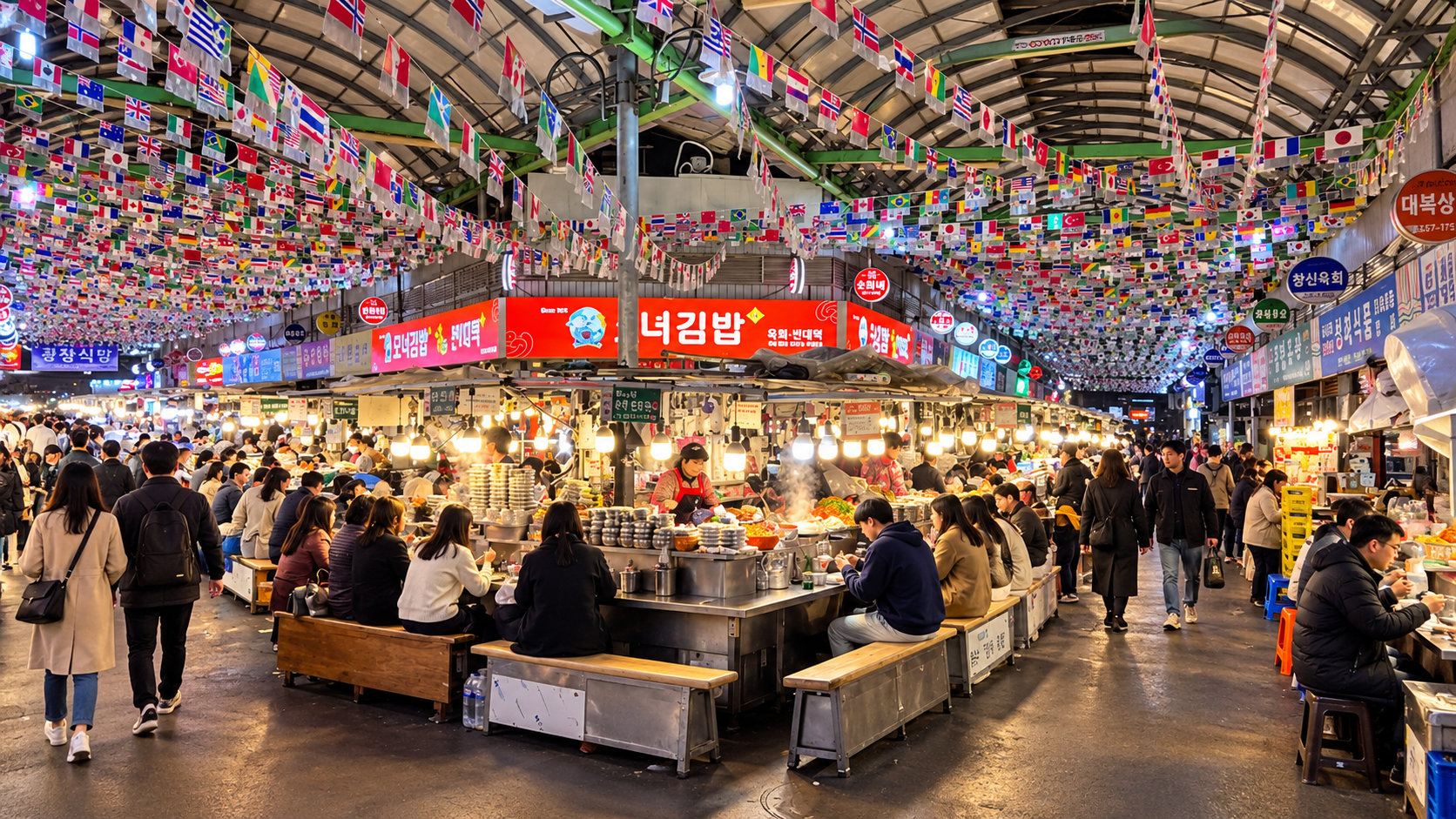
Gwangjang Market is in Jongno-gu at 88 Changgyeonggung-ro, within easy reach of Jongno 5-ga Station on Line 1, Exit 8. Its Food Alley is a major draw, with long covered passages, closely placed stalls and open counters that give the market a busy, concentrated feel.
Food is only one part of the market. There are also areas for textiles, clothing and other goods, so the atmosphere shifts as you move away from the counters. Opening hours vary by section and individual shop, and the food areas may keep different hours from the general market. It is sensible to check current information before going.
What to Eat at Gwangjang Market
Bindaetteok, gimbap, tteokbokki and eomuk are among the foods often found around the market’s food stalls. Counters differ considerably, so it is worth taking a moment to see what is being prepared fresh and where there is a natural flow of customers before choosing.
Mangwon Market
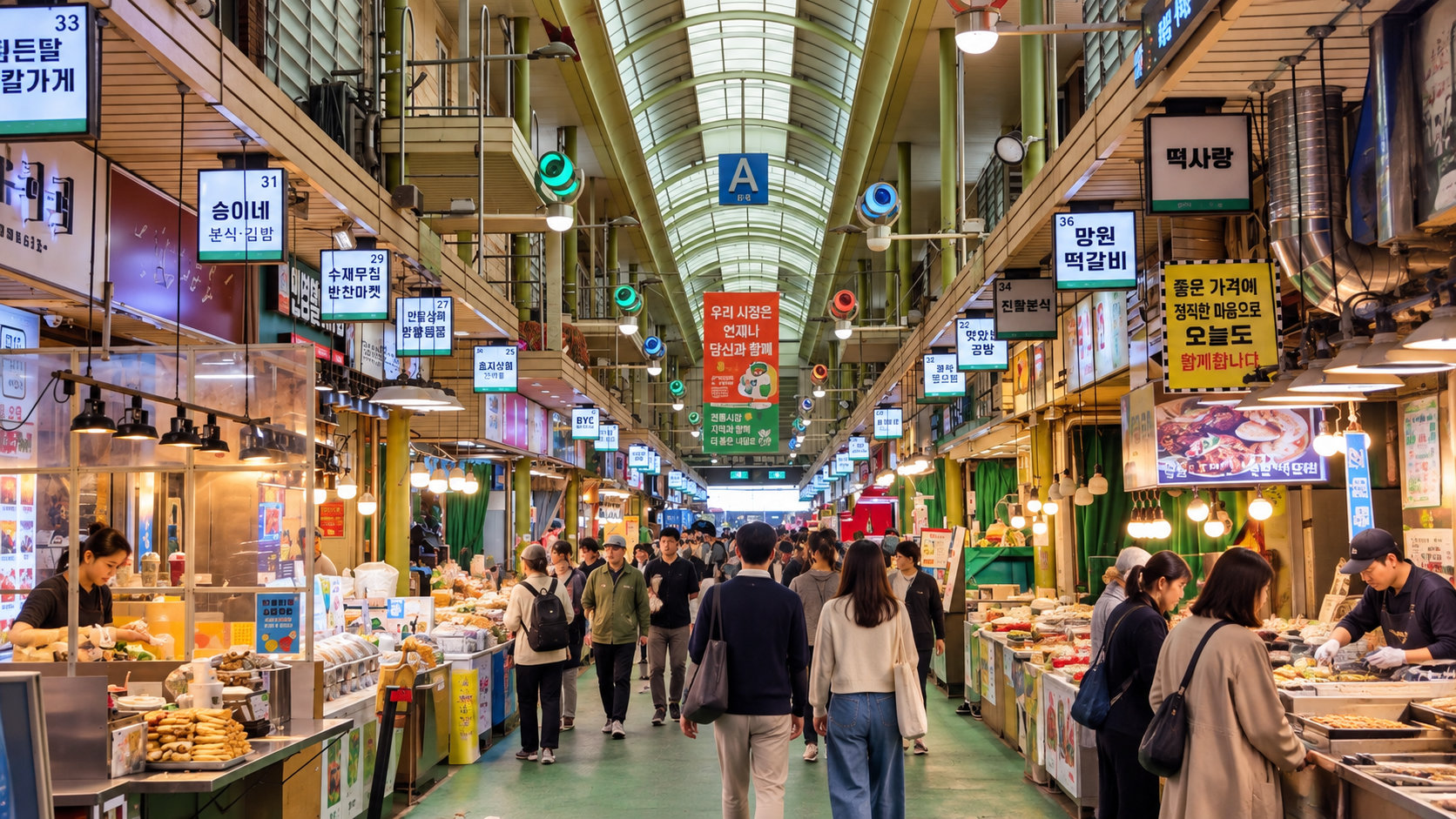
Mangwon Market in Mapo-gu is at 27 Poeun-ro 6-gil, near Mangwon Station on Line 6, Exit 2. It is more compact than Gwangjang and has the closer scale of a neighbourhood market, with snacks, takeaway food and everyday shopping sharing the same covered route.
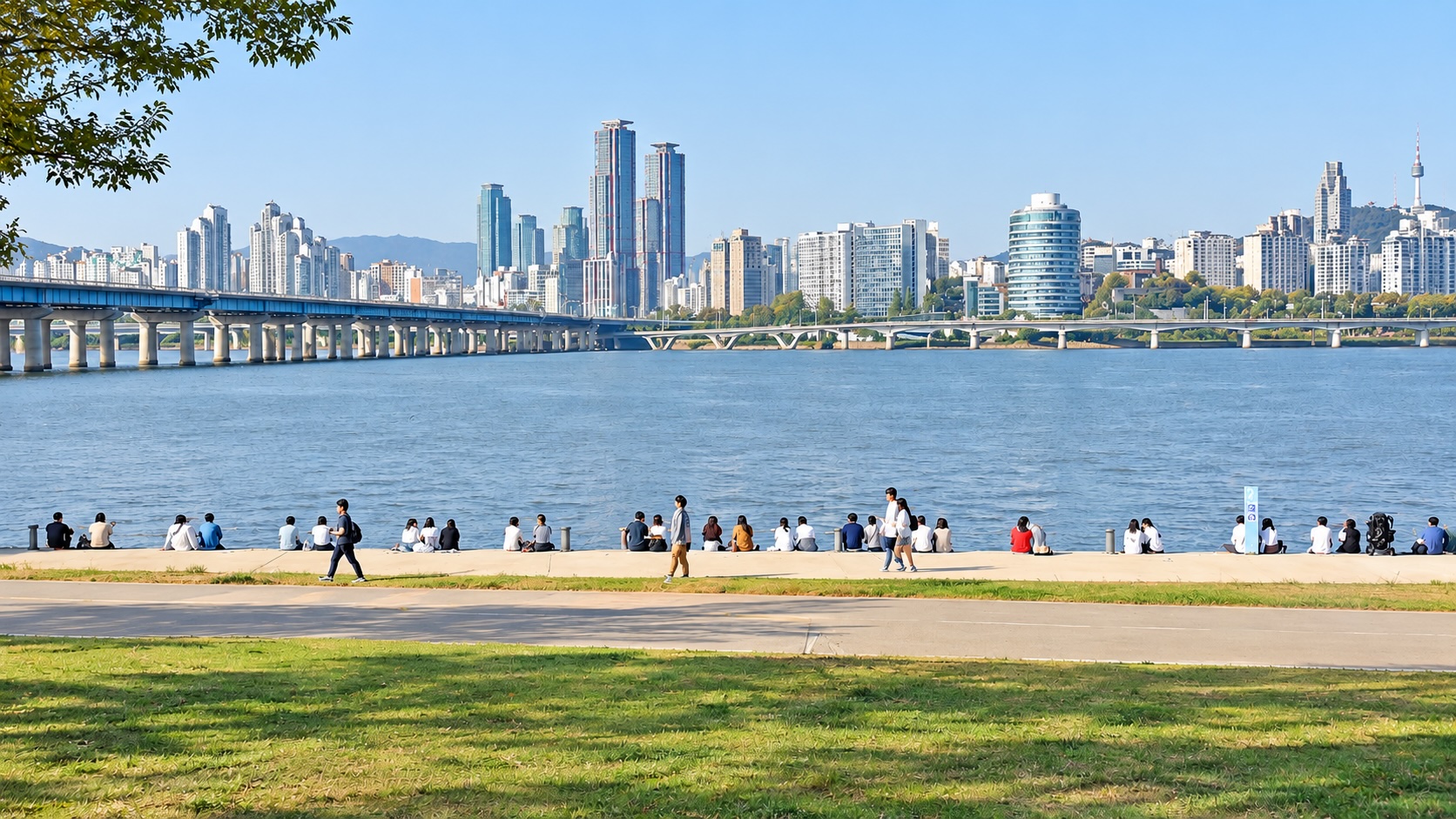
Dakgangjeong, croquettes and tteokgalbi are among the examples visitors may come across. Mangwon Hangang Park is also nearby, making it easy to connect a market stop with a walk toward the Han River. Many shops generally operate during the daytime and evening, but opening hours vary by vendor.
A More Local Market Atmosphere
Mangwon’s narrower passage has less of Gwangjang’s large-scale energy. Instead, it presents a straightforward city market where groceries, prepared food and daily necessities sit beside one another. It can be a good choice when a compact stop fits better into a wider day in Mapo.
Tongin Market
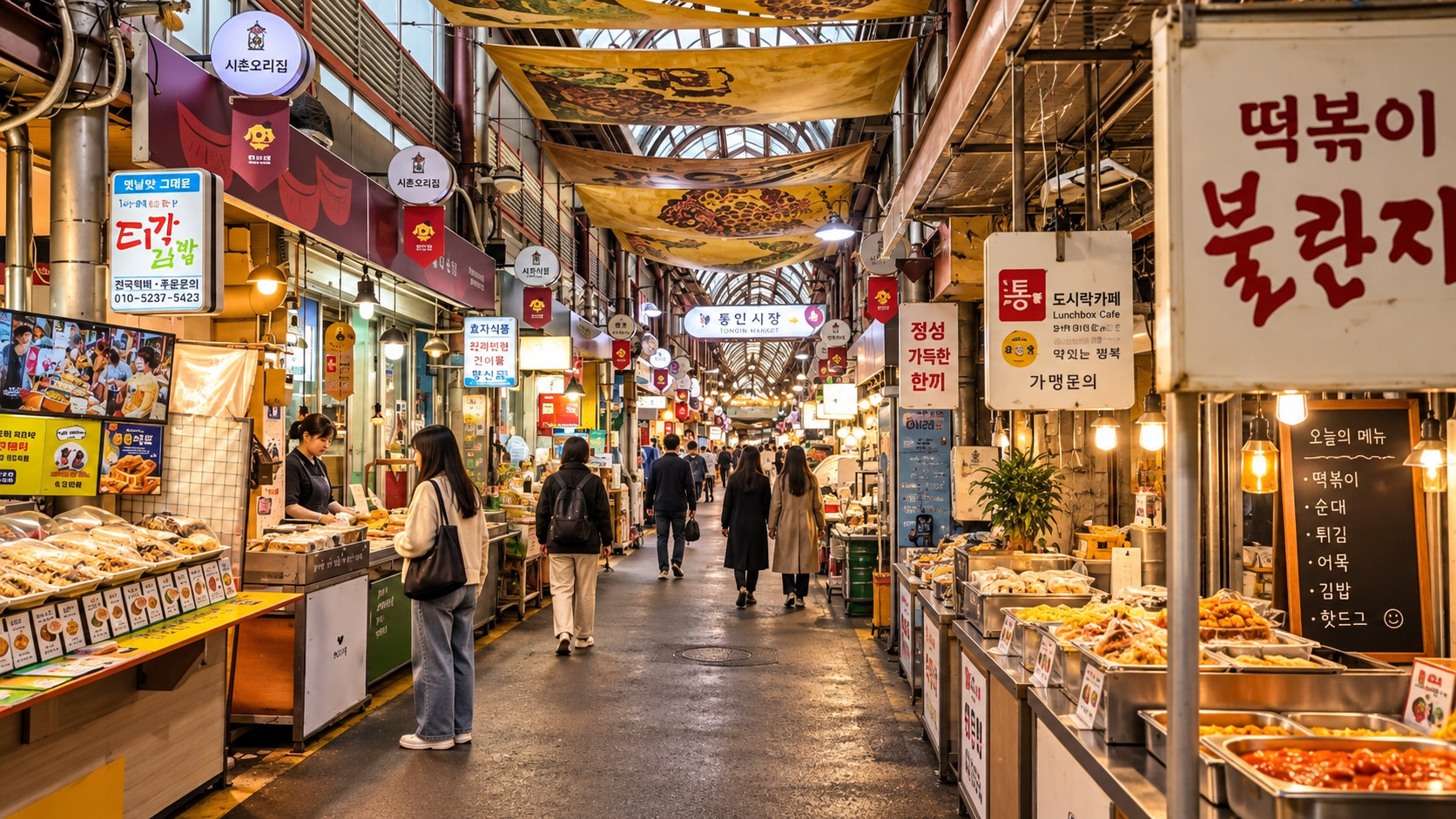
Tongin Market is at 18 Jahamun-ro 15-gil in Jongno-gu, reached from Gyeongbokgung Station on Line 3, Exit 2. It is smaller and easier to take in than Gwangjang, and is known for its Dosirak Café and token-based lunchbox experience.
Visitors can buy tokens and exchange them for food at participating stalls, building a lunchbox from several small dishes. The Dosirak Café operates on its own schedule, so it is worth checking the current opening days and hours before visiting.
How the Tongin Market Lunchbox System Works
- Buy tokens from the Dosirak Café or its official issuing point.
- Look for participating market stalls that accept the tokens.
- Choose from different small dishes as you move through the market.
- Bring the selections together in an individual lunchbox.
Which Seoul Market Should You Choose?
Gwangjang suits a visit focused on a larger traditional market and active food counters. Mangwon offers a more compact neighbourhood setting with snacks and takeaway food. Tongin is smaller again, with the Dosirak token experience providing a particular reason to go. None is objectively best; the choice depends on the kind of stop that works for your day.
Best Time to Visit Seoul Markets
Mornings can be quieter, although some food stalls may not yet be fully active. Lunch often brings more movement to food-focused areas and can be considerably busier. Afternoons can offer a useful balance of open vendors and activity. In the evening, the experience depends more strongly on the individual market and stall, so current information remains useful.
Practical Tips for Visiting Seoul Markets
- Cash can still be useful, and not every stall uses the same payment methods.
- Small notes can make everyday purchases easier.
- Keep the main passage clear and check prices before ordering.
- Be considerate when photographing vendors or other visitors.
- Check current hours for individual markets and food sections.
- Keep an eye on bags and personal items in very busy areas.
- Dispose of rubbish properly and do not expect every seller to speak English.
Markets as Part of Everyday Seoul
Beyond street food, markets show how food is sold, how small businesses work and how older retail structures continue within a modern city. They also make clear how much Seoul can change from one district to another.
Whether it is a crowded food alley, a neighbourhood arcade or a compact lunchbox stop, each market offers a practical, everyday perspective on the city rather than a single version of it.