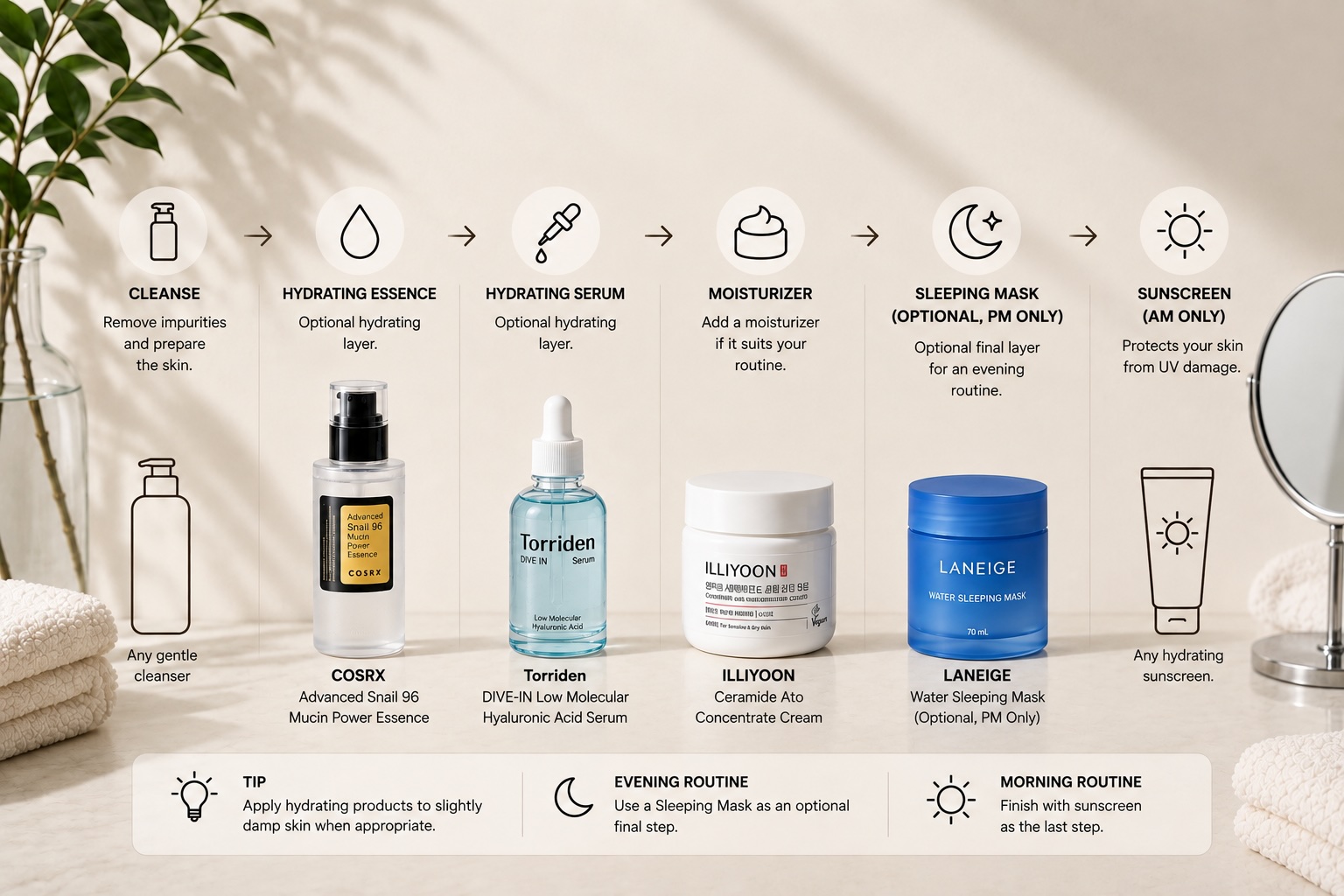
Layering hydrating skincare can be a useful way to build a routine, but it does not need to become a system of strict rules. A small number of products, placed in a sensible order, is often enough.
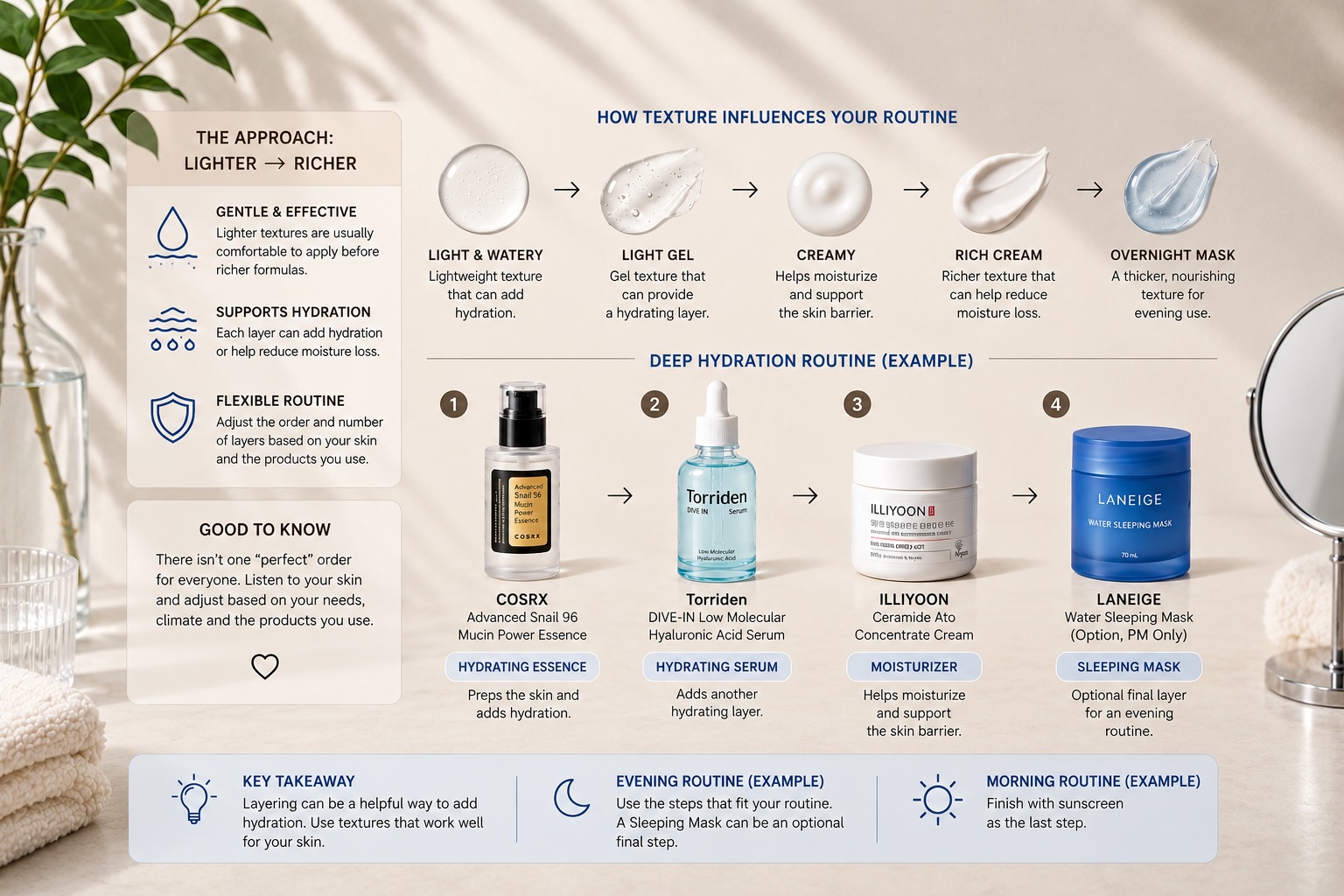
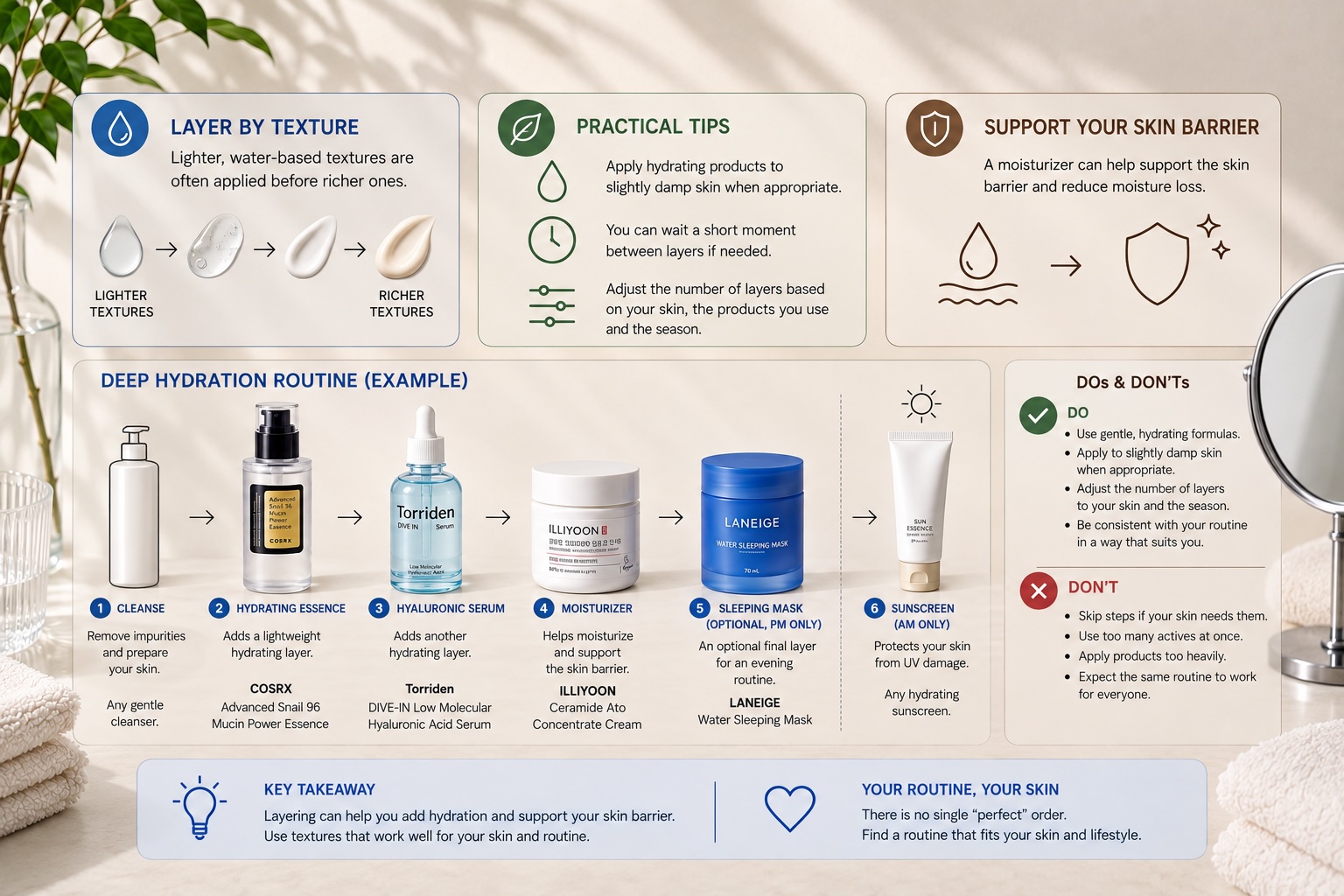
A practical approach is to move from lighter, water-based layers to richer textures: cleanse, hydrating essence, serum and cream, with a sleeping mask as an optional final step at night. Product directions and your own routine remain more important than following any sequence too rigidly.
Start with Lighter Hydrating Layers
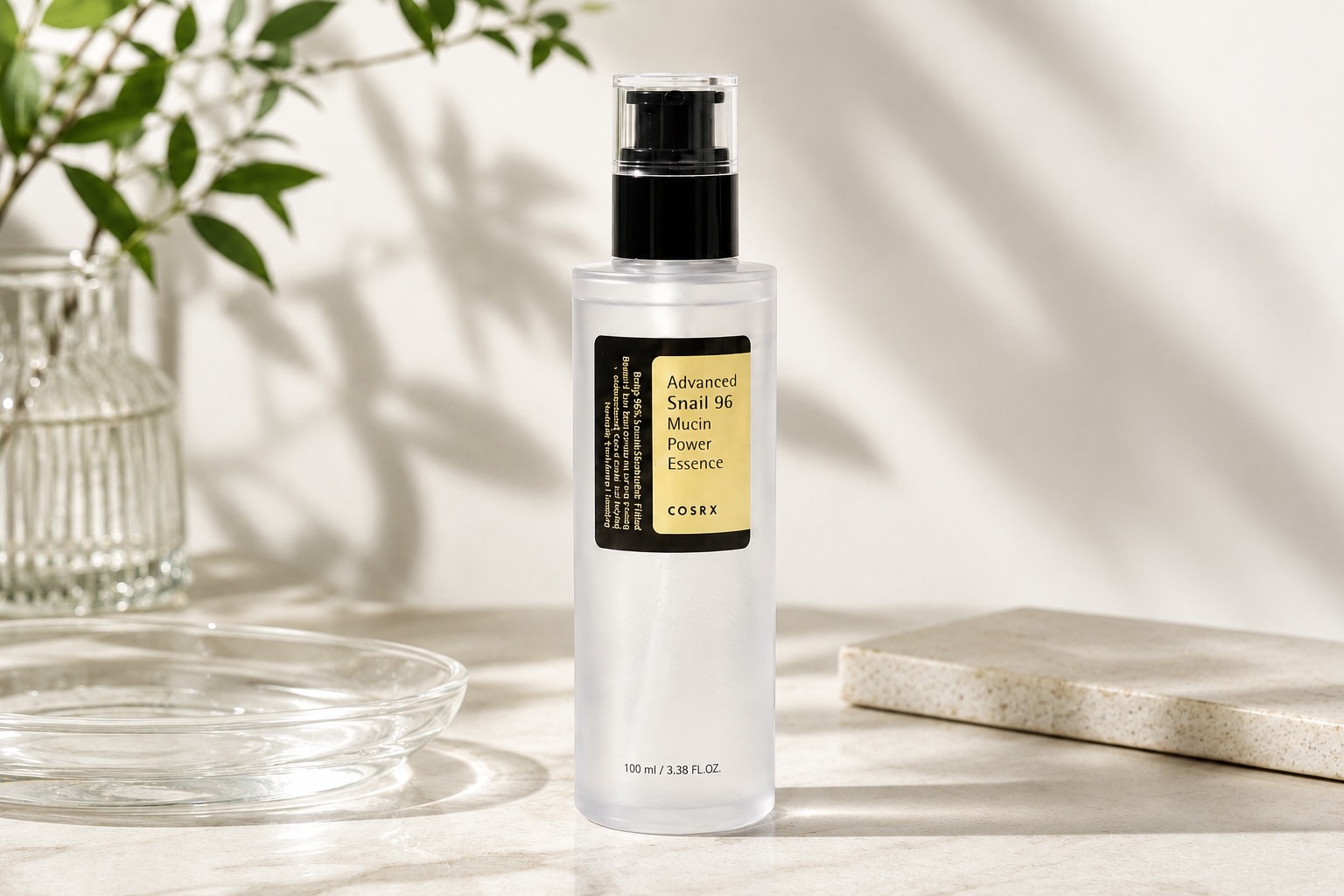
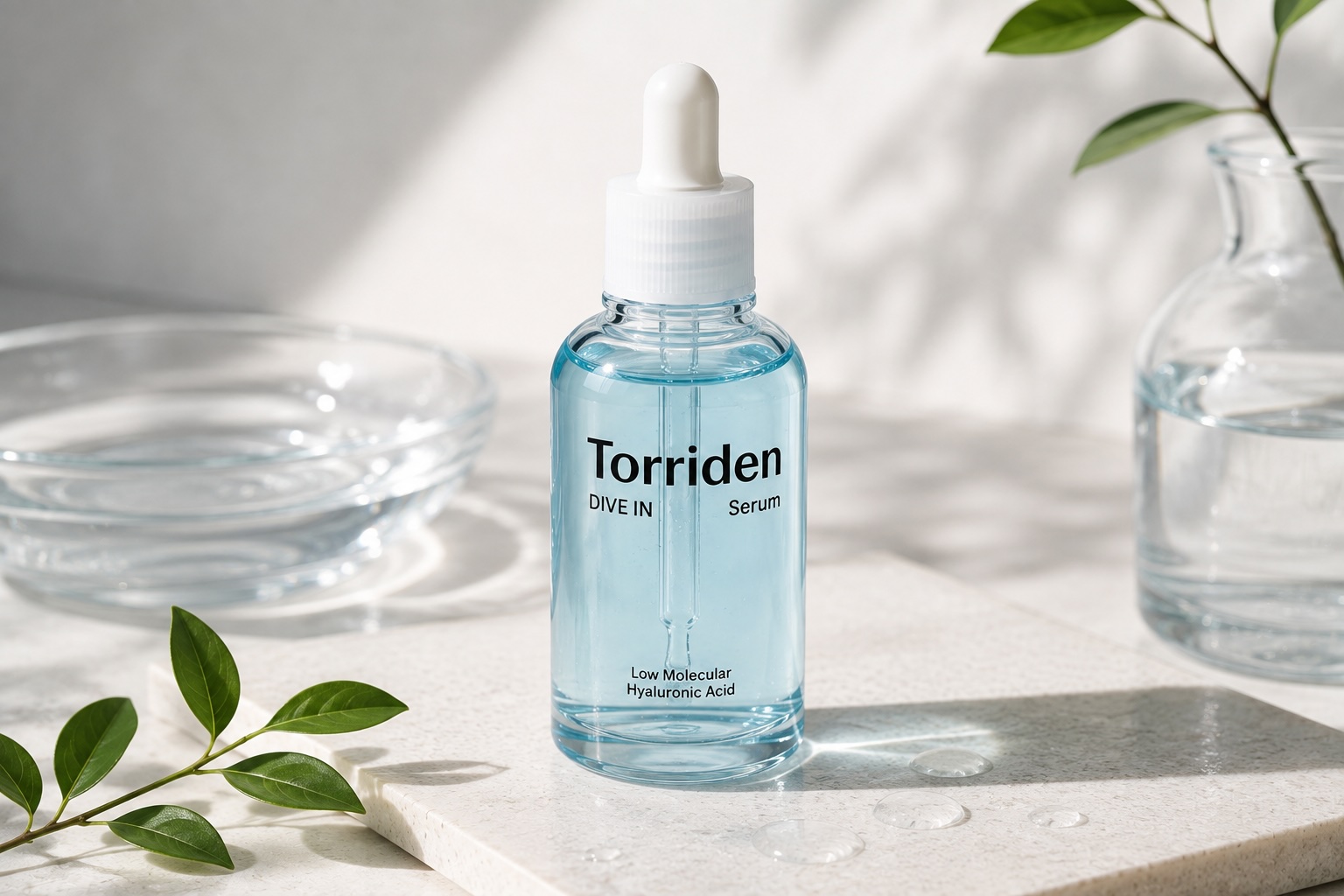
After cleansing, COSRX Advanced Snail 96 Mucin Power Essence can add a lightweight hydrating layer. Torriden DIVE-IN Low Molecular Hyaluronic Acid Serum can follow as another hydrating layer. This order is simply a practical way to arrange different textures, rather than a universal rule about how skincare must be used.
Allow each layer to settle before applying the next if needed, without turning the routine into a timed exercise. Some days one layer is enough; on others, both may feel useful. Follow the directions for each individual product and adjust the number of layers depending on your skin and routine.
Move to a Moisturizer
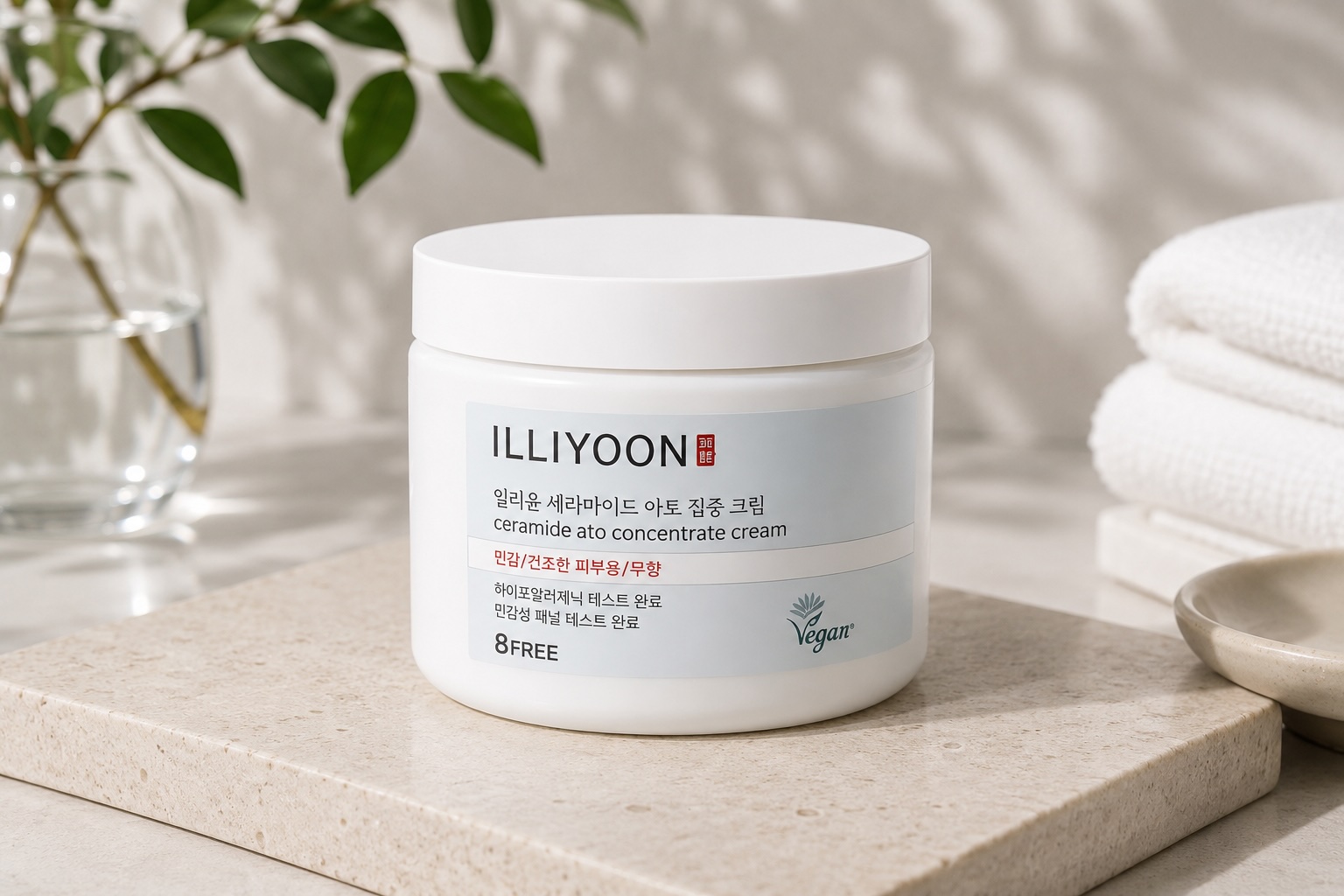
A cream is usually the richer part of this simple sequence. ILLIYOON Ceramide Ato Concentrate Cream is one example in this four-product edit. A moisturizer can provide a more substantial final layer, support the skin barrier and help reduce moisture loss. The amount that feels comfortable can change with the season and with the rest of the routine.
Keep Overnight Care Optional
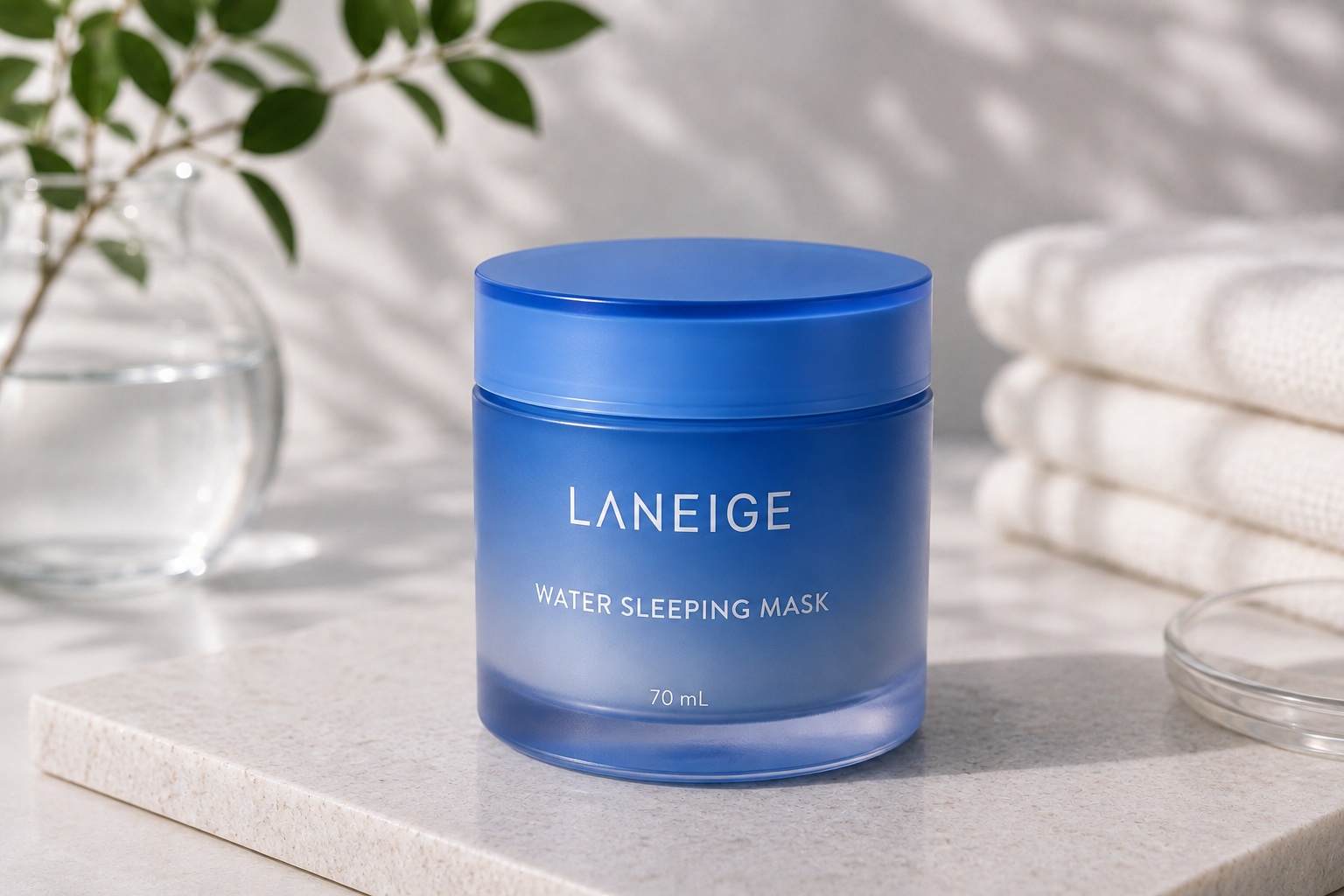
LANEIGE Water Sleeping Mask can be added as an optional final layer of moisture overnight. It does not have to appear in every evening routine. A simple essence, serum and cream sequence can stand on its own when that is what feels right.
Let Morning and Evening Differ
In the daytime, sunscreen comes after the rest of the skincare routine as the final step. At night, the sleeping mask remains optional. That small difference is enough to keep the two routines distinct without needing separate versions of every product.
Layering works best when it stays flexible. More products do not automatically make a routine more useful; the aim is simply to choose steps that fit together comfortably and are easy to continue.