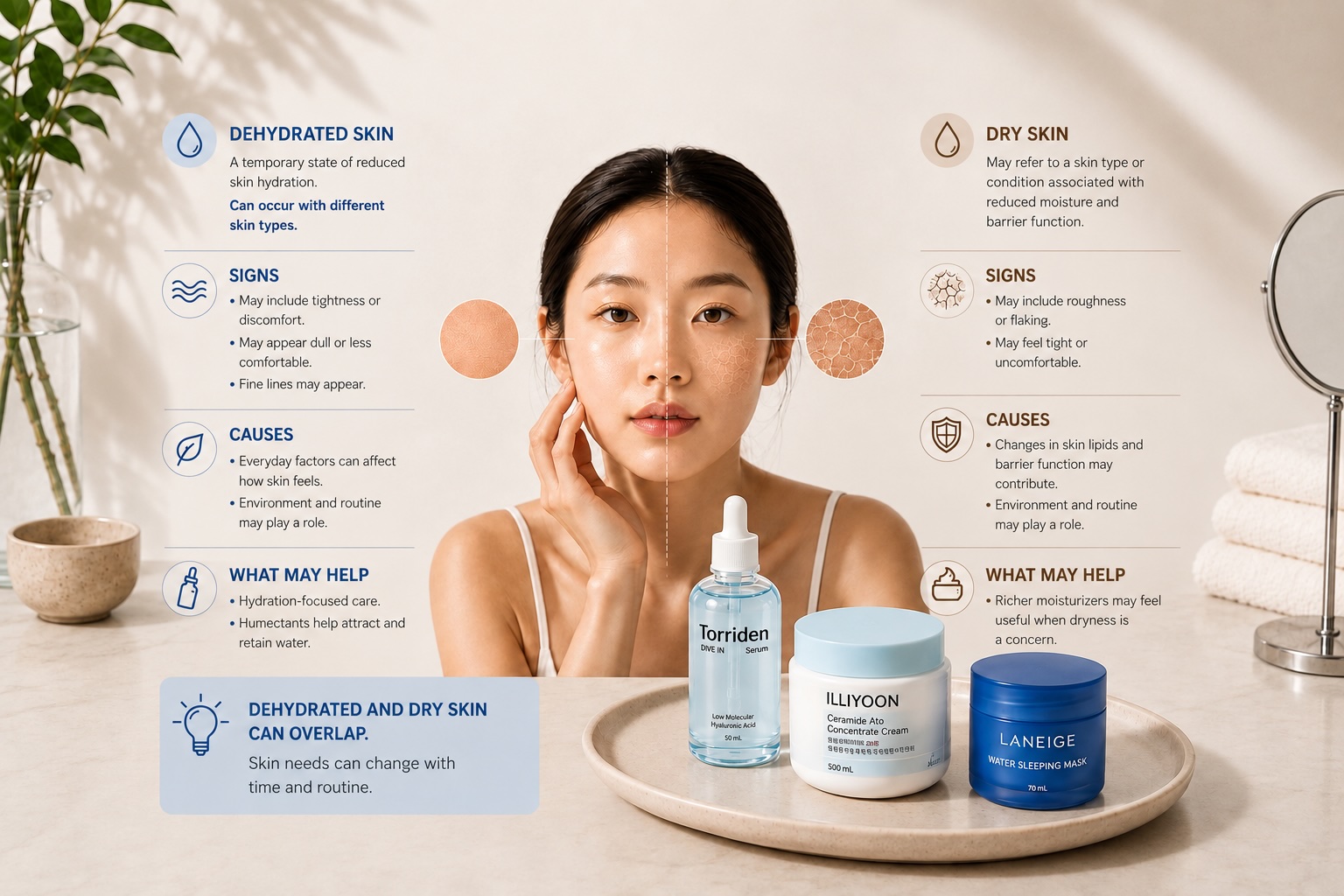
Dehydrated and dry skin are often discussed as though they were easy opposites. In practice, the picture is less tidy. They can overlap, and the words describe different aspects of how skin may feel or behave.
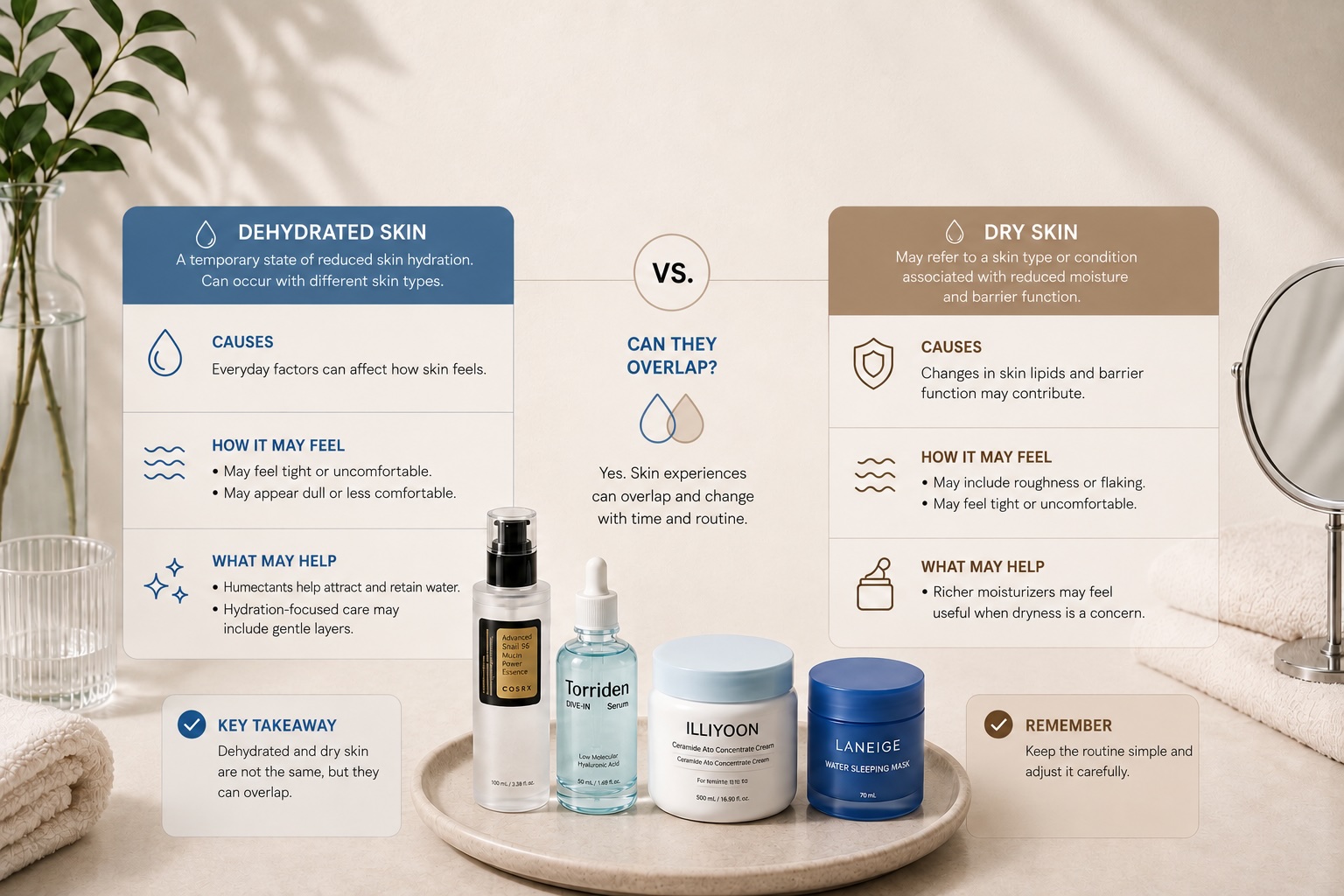
Dehydrated skin is commonly used to describe a temporary state of reduced skin hydration. It can occur with different skin types. Dry skin can be associated with reduced moisture, lower lipid levels and impaired barrier function. Neither label tells the whole story on its own.
What Dehydrated Skin Can Mean
A temporary drop in skin hydration can show up across many skin types, including skin that does not otherwise feel dry. Tightness, dullness, fine lines or a less comfortable texture are sometimes mentioned in this conversation, but they are not diagnostic signs. They can overlap with many everyday factors and are best read as part of a wider picture.
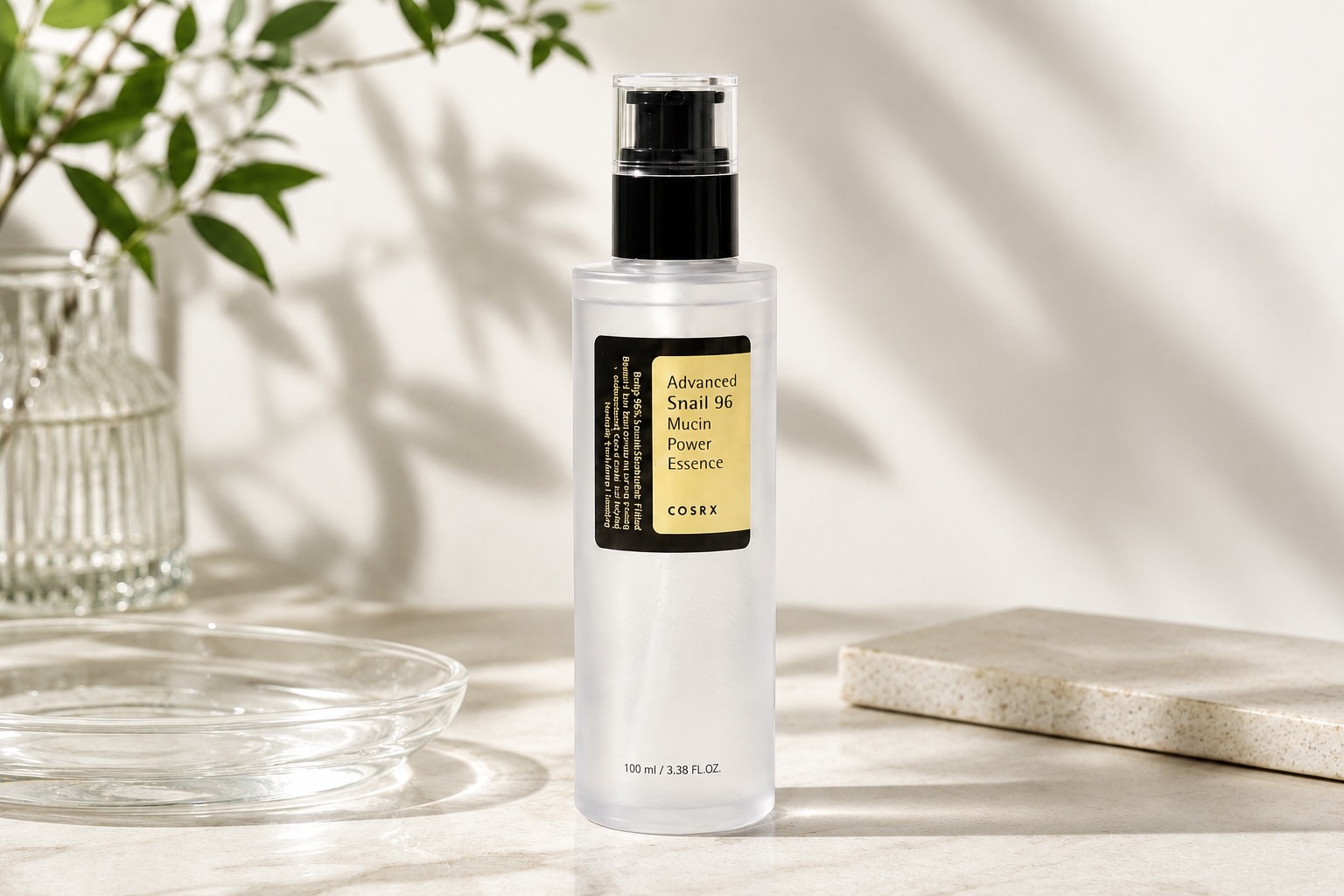
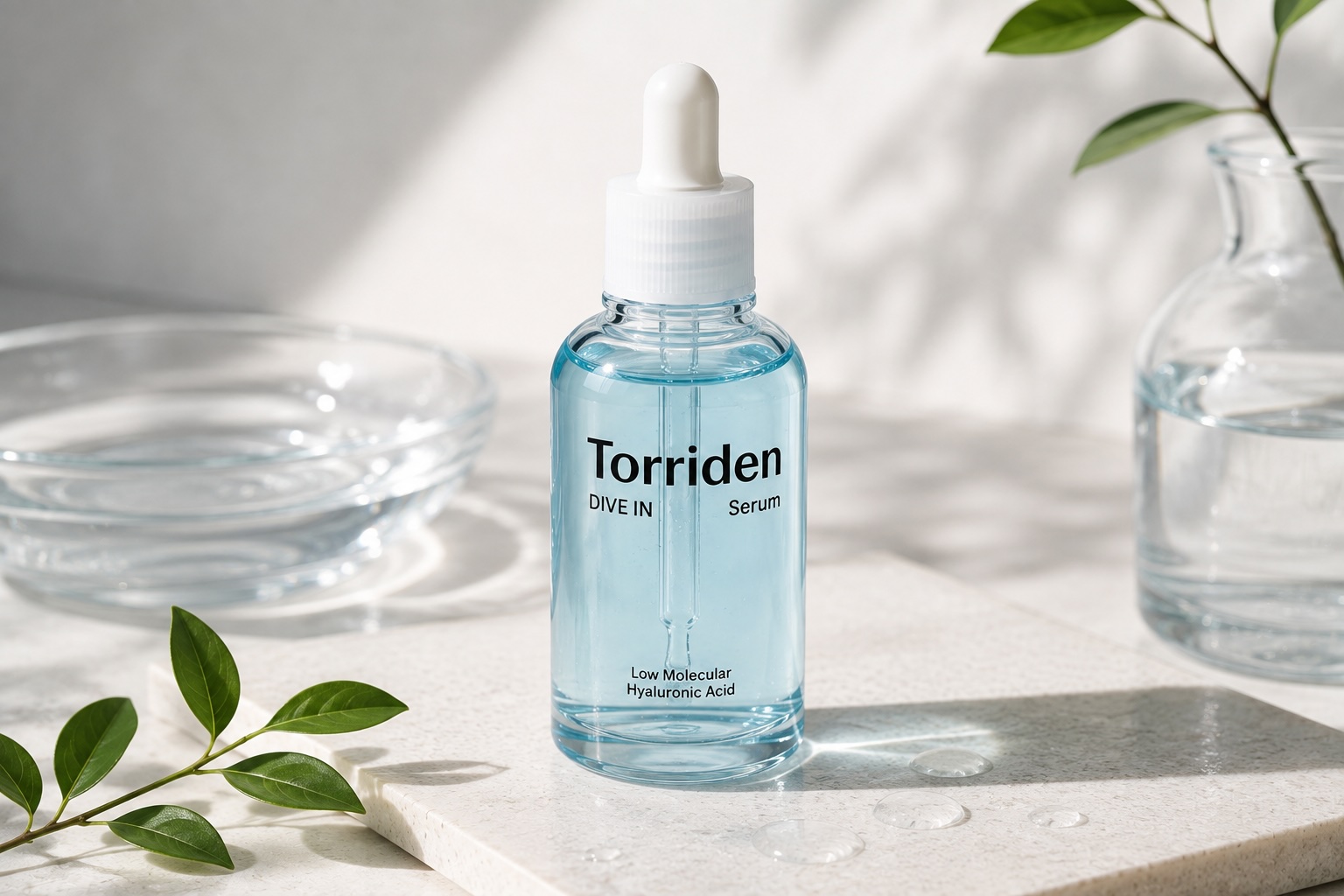
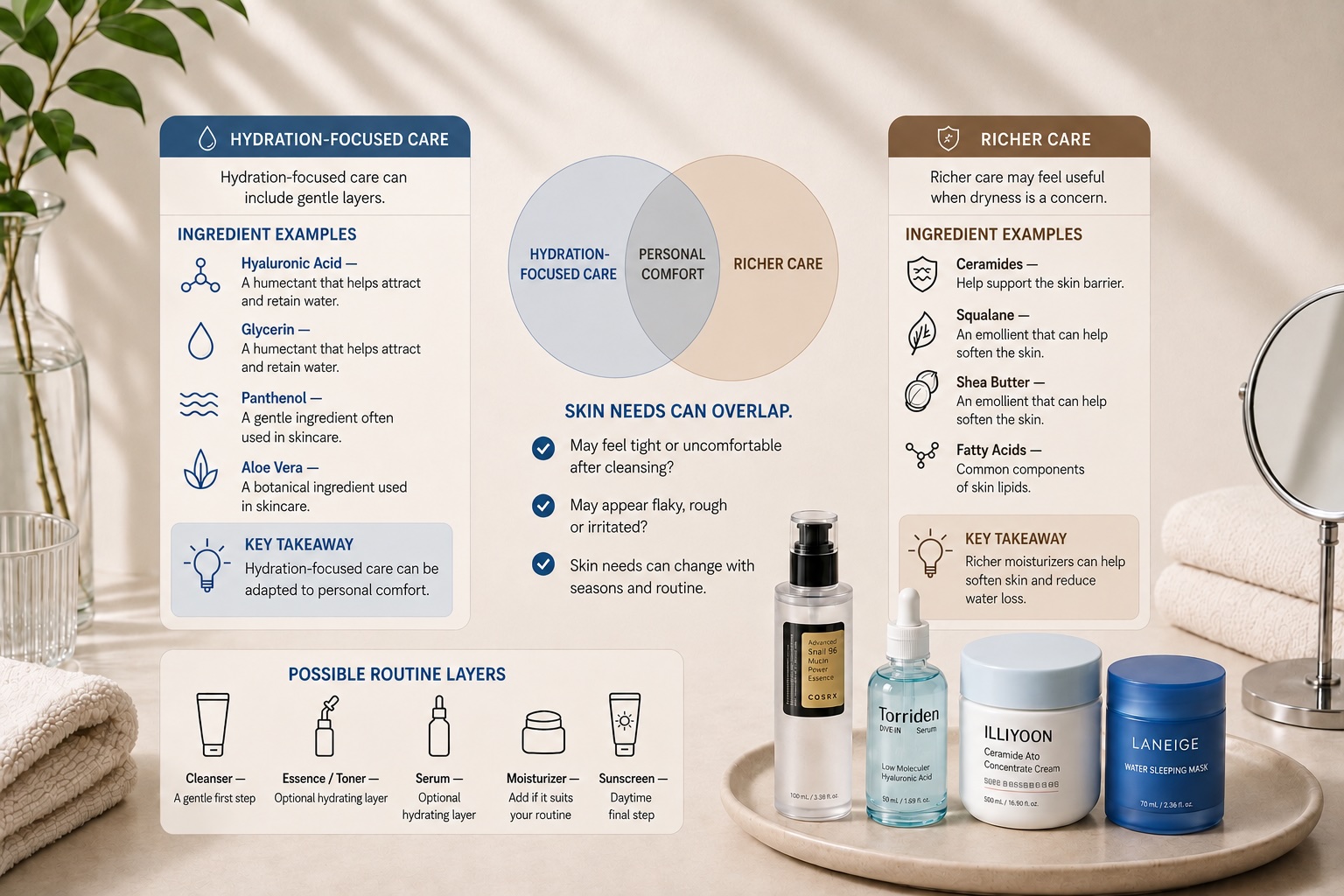
Hydration-focused care often centres on adding gentle layers. Humectants can help attract and retain water, which is why a product such as COSRX Advanced Snail 96 Mucin Power Essence or Torriden DIVE-IN Low Molecular Hyaluronic Acid Serum may fit into this kind of routine. They are examples, not a prescribed answer for every person.
What Dry Skin Can Mean
Dry skin can be associated with reduced moisture, lower lipid levels and an impaired barrier function. Roughness, flaking, sensitivity or a feeling of tightness may occur, but none of these experiences can establish a diagnosis on their own. Dehydrated and dry skin can also occur together, which is one reason tidy categories can be misleading.
Where Hydration and Richer Care Meet
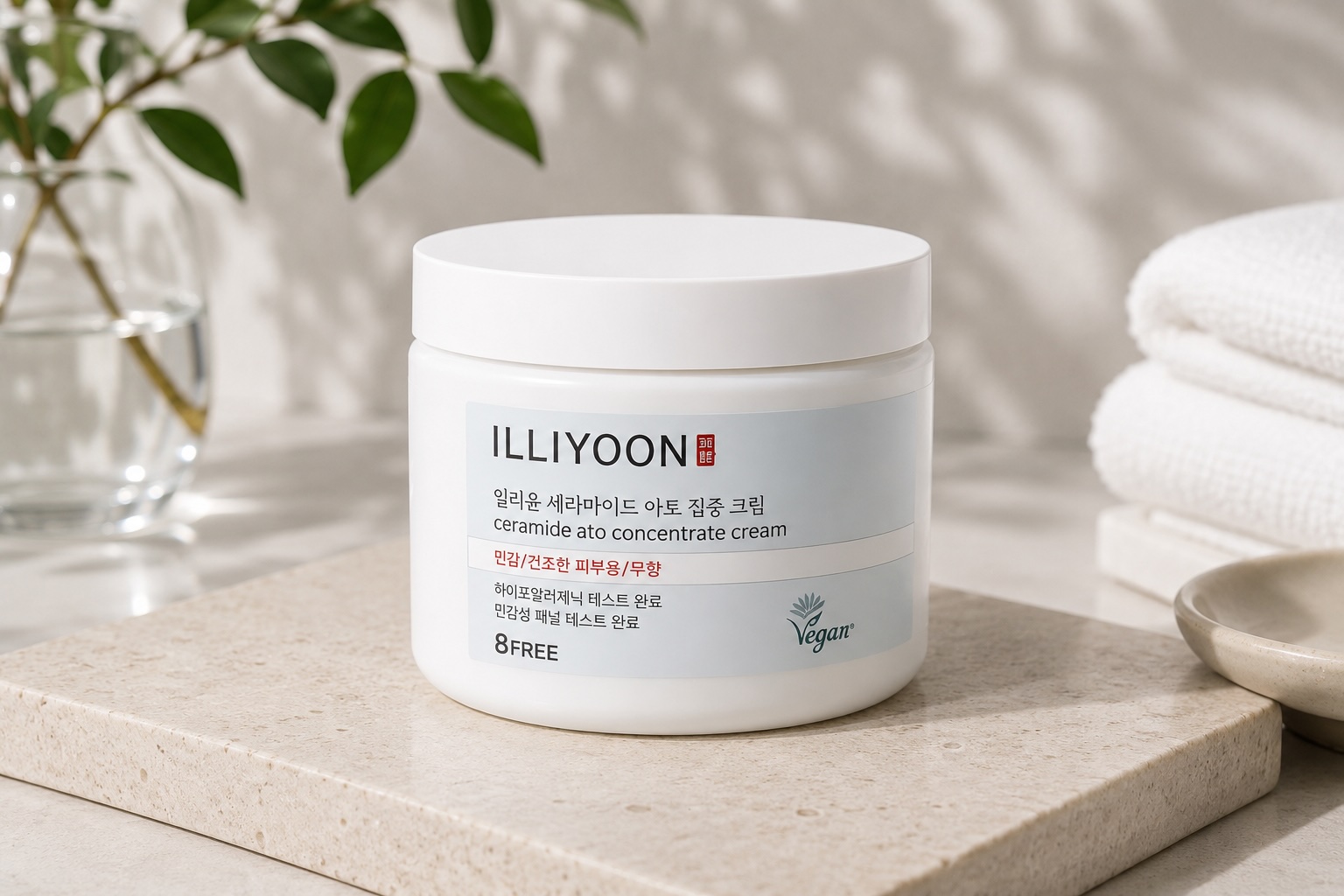
The two approaches do not need to compete. A hydration layer may be followed by a richer moisturizer when that combination feels appropriate. Emollients and richer moisturizers can help soften the skin and reduce moisture loss, while ceramides can help support the skin barrier. ILLIYOON Ceramide Ato Concentrate Cream is one editorial example of a richer cream within this small product edit.
Keep the Routine Readable
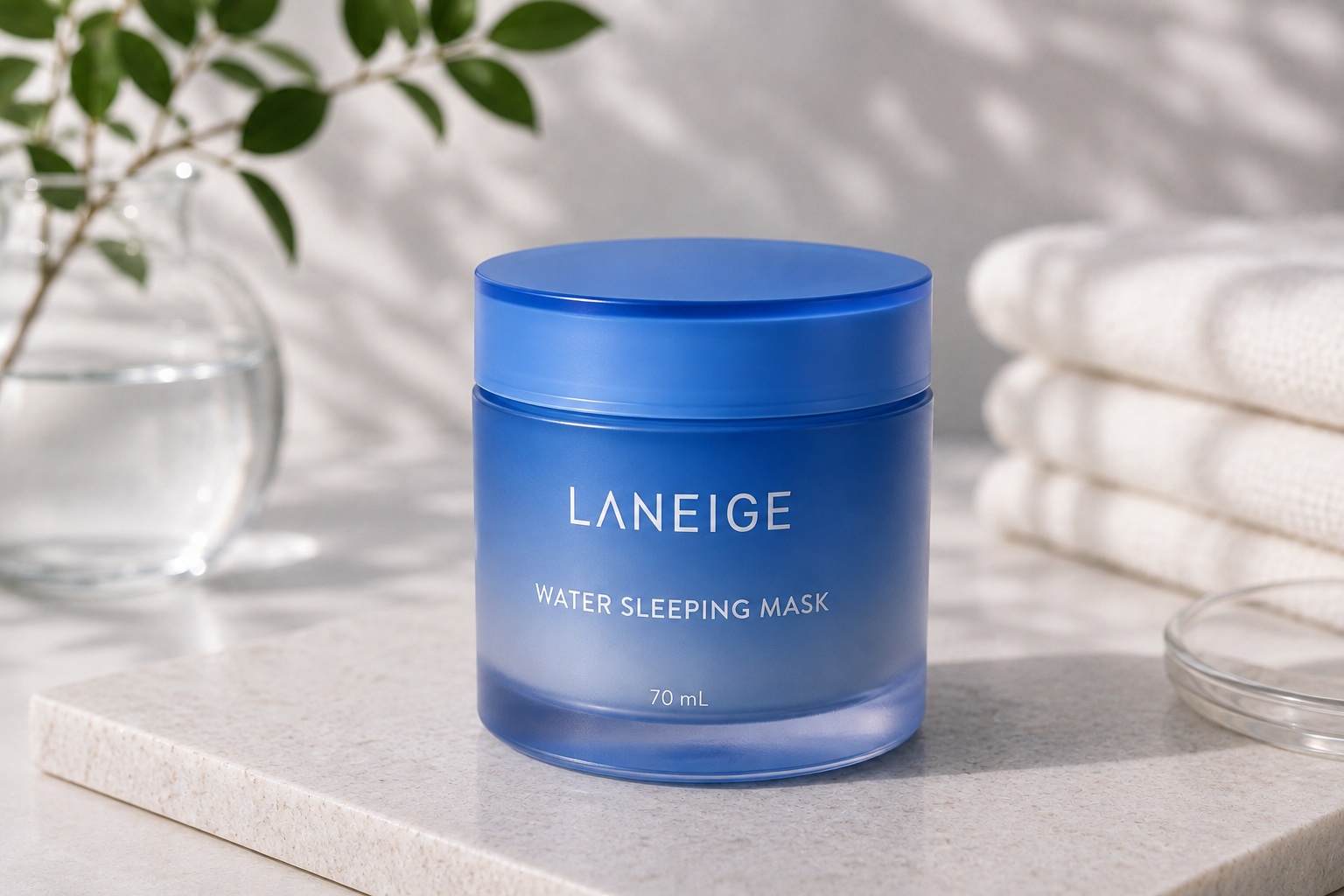
A simple sequence might begin with cleansing, then an essence and serum, followed by cream. LANEIGE Water Sleeping Mask can be an optional final layer at night rather than something to add by default. Product instructions, personal comfort and the way skin feels over time are more useful guides than trying to match a long routine to a single label.
The signs of dehydrated and dry skin can overlap, so there is rarely a need to make the routine more elaborate in search of a perfect distinction. Begin with a manageable structure, adjust it carefully, and leave room for the fact that skin can change with the day, season and surrounding routine.