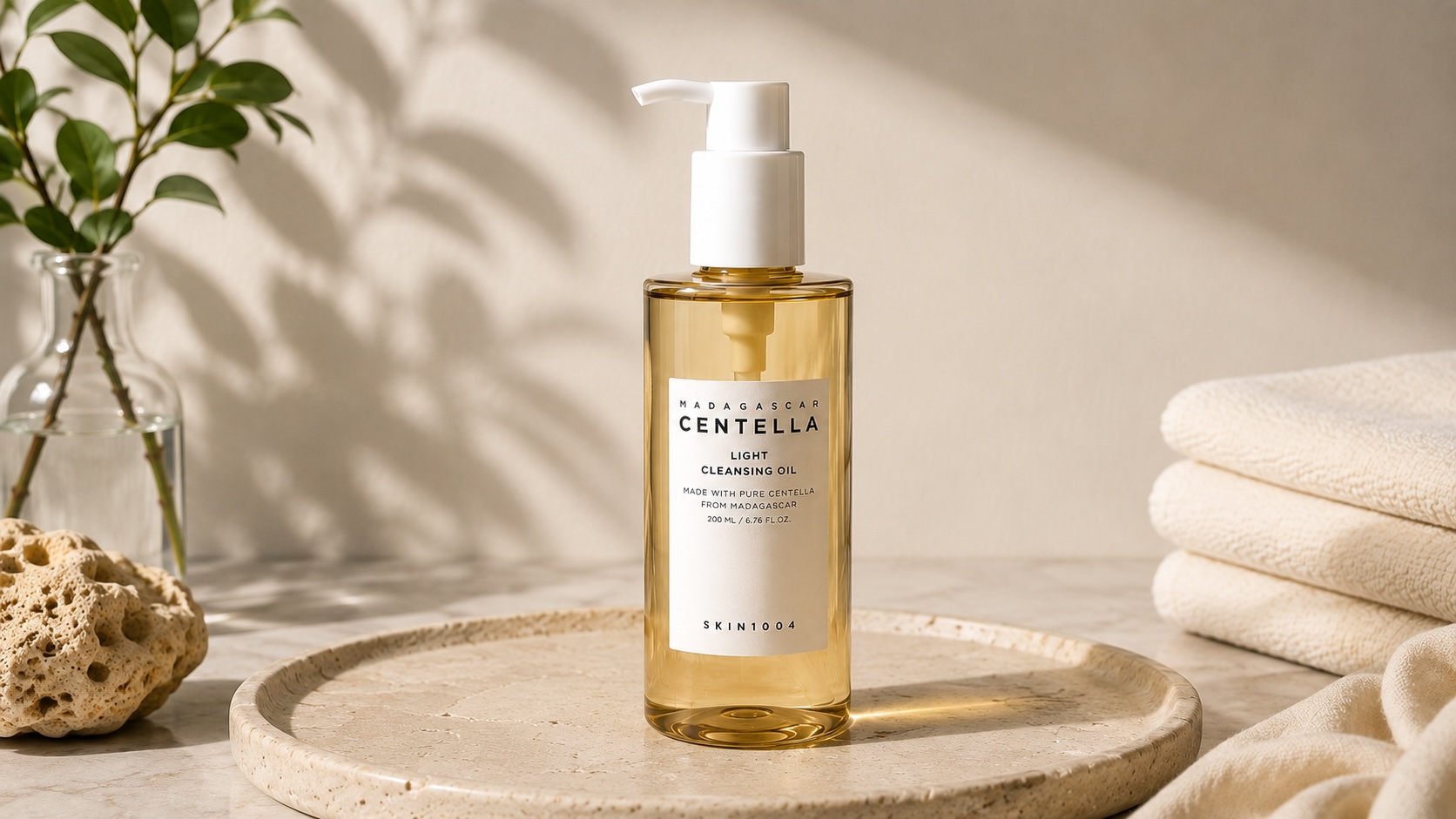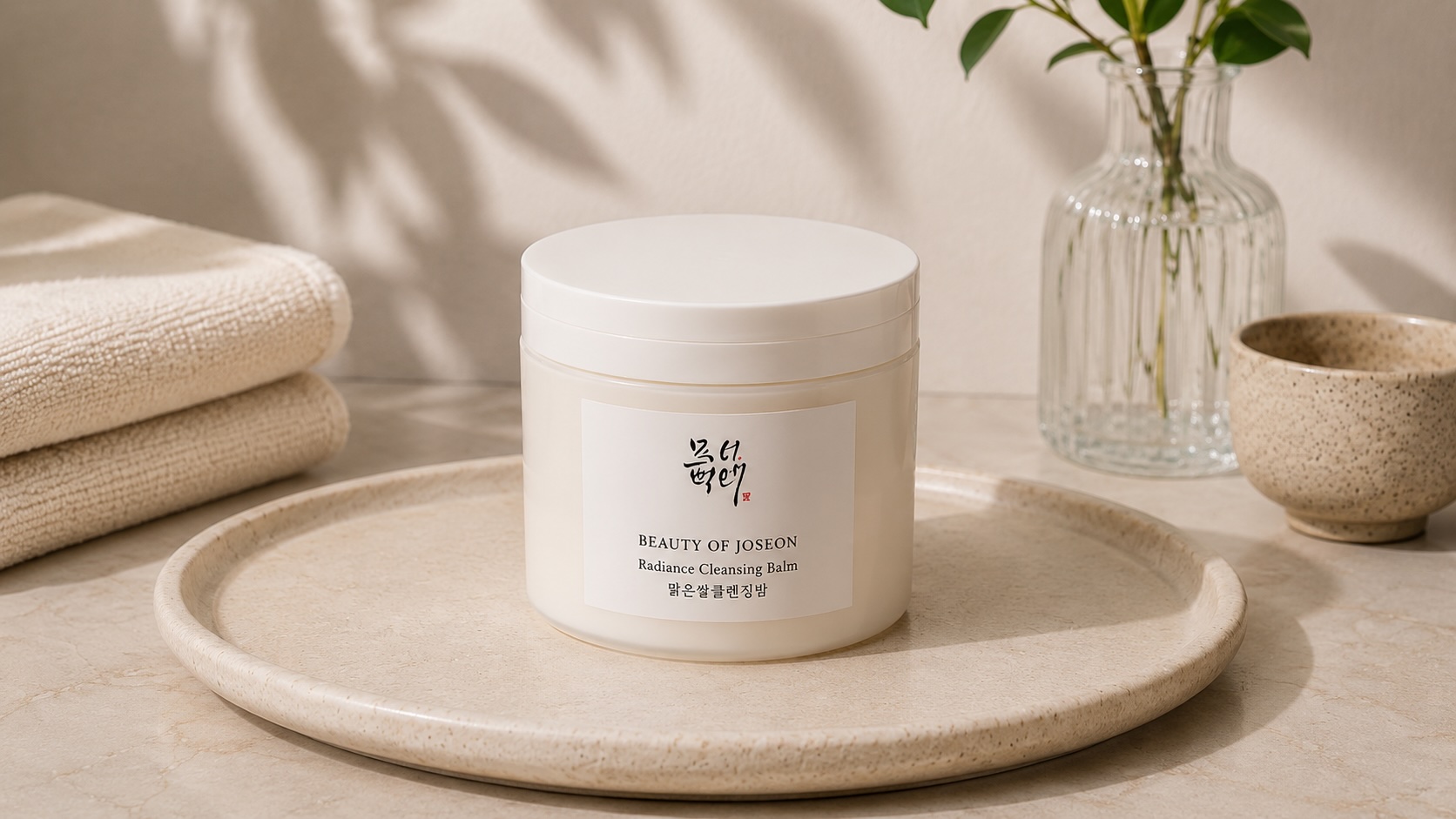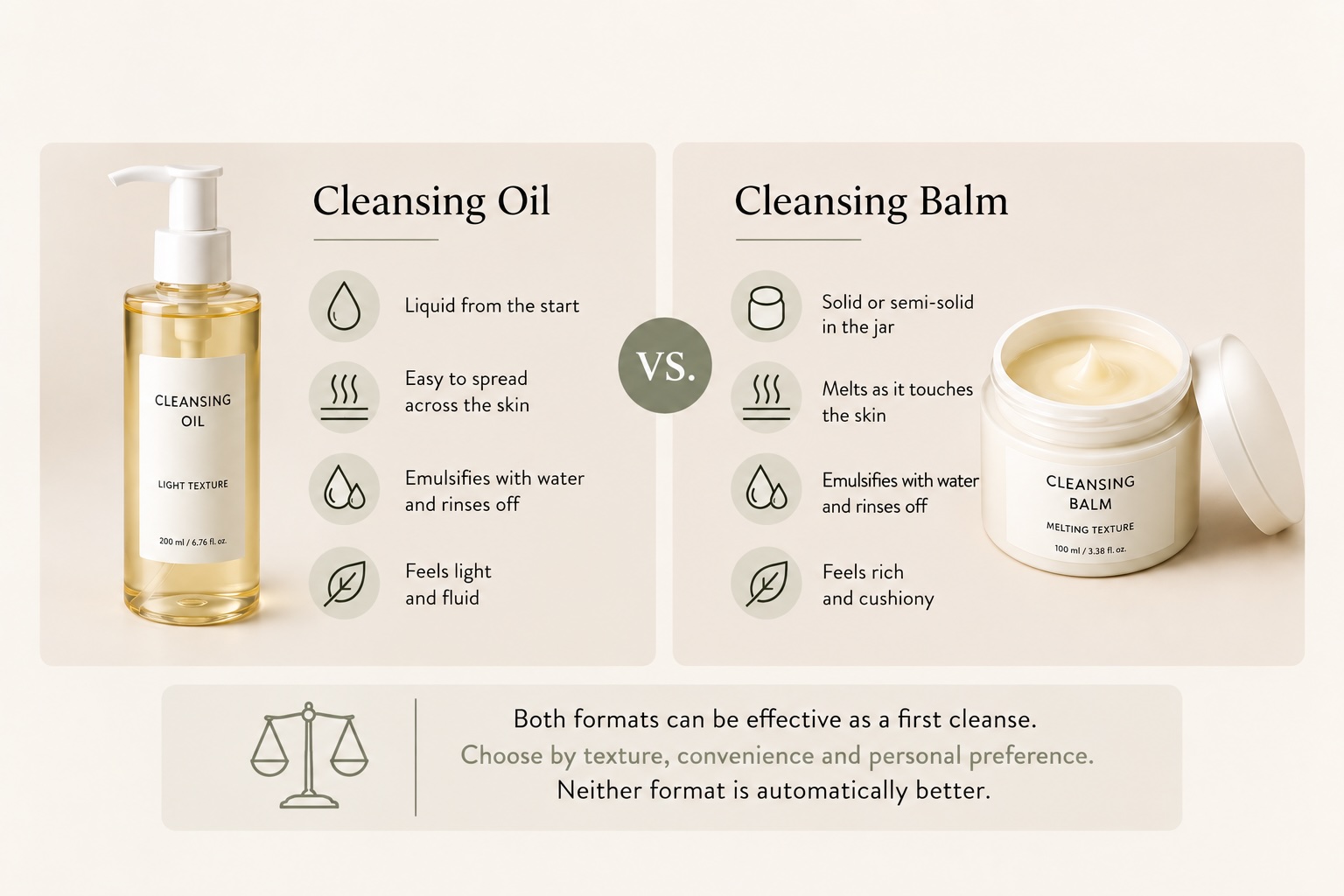
Cleansing oil and cleansing balm are two common first-cleansing formats. Both can be used to help remove makeup, sunscreen and other oil-soluble residue, but they differ mainly in texture and how they feel during use.
Cleansing oil begins as a liquid and is easy to spread immediately across dry skin. Cleansing balm starts as a solid or semi-solid texture and softens as it is worked between the fingers and over the face. Neither format is automatically better than the other.
Similar Method, Different Texture
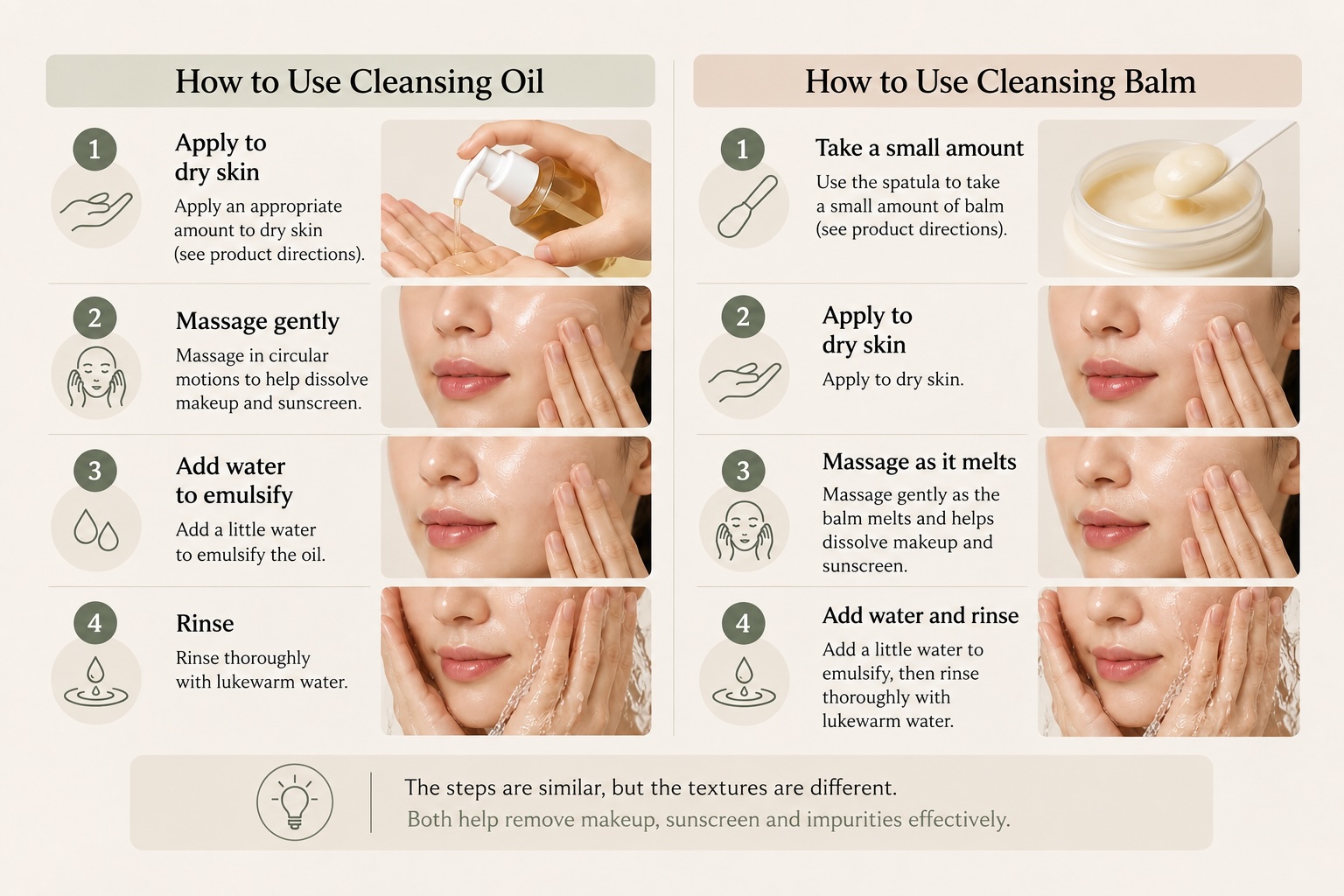
The basic method is similar. Cleansing oil is applied to dry skin and gently massaged across the face. Water is then added to emulsify the oil before it is rinsed away.
Cleansing balm follows a comparable sequence, but begins with taking a small amount from the jar. The balm is spread over dry skin as it softens and melts, then water is added before rinsing.
Follow the Product Directions
Exact amounts and instructions can vary between products, so there is no need to rely on fixed pump counts, massage times or universal rules. Follow the directions for the product being used and keep the process gentle.
Which One Fits Your Routine?
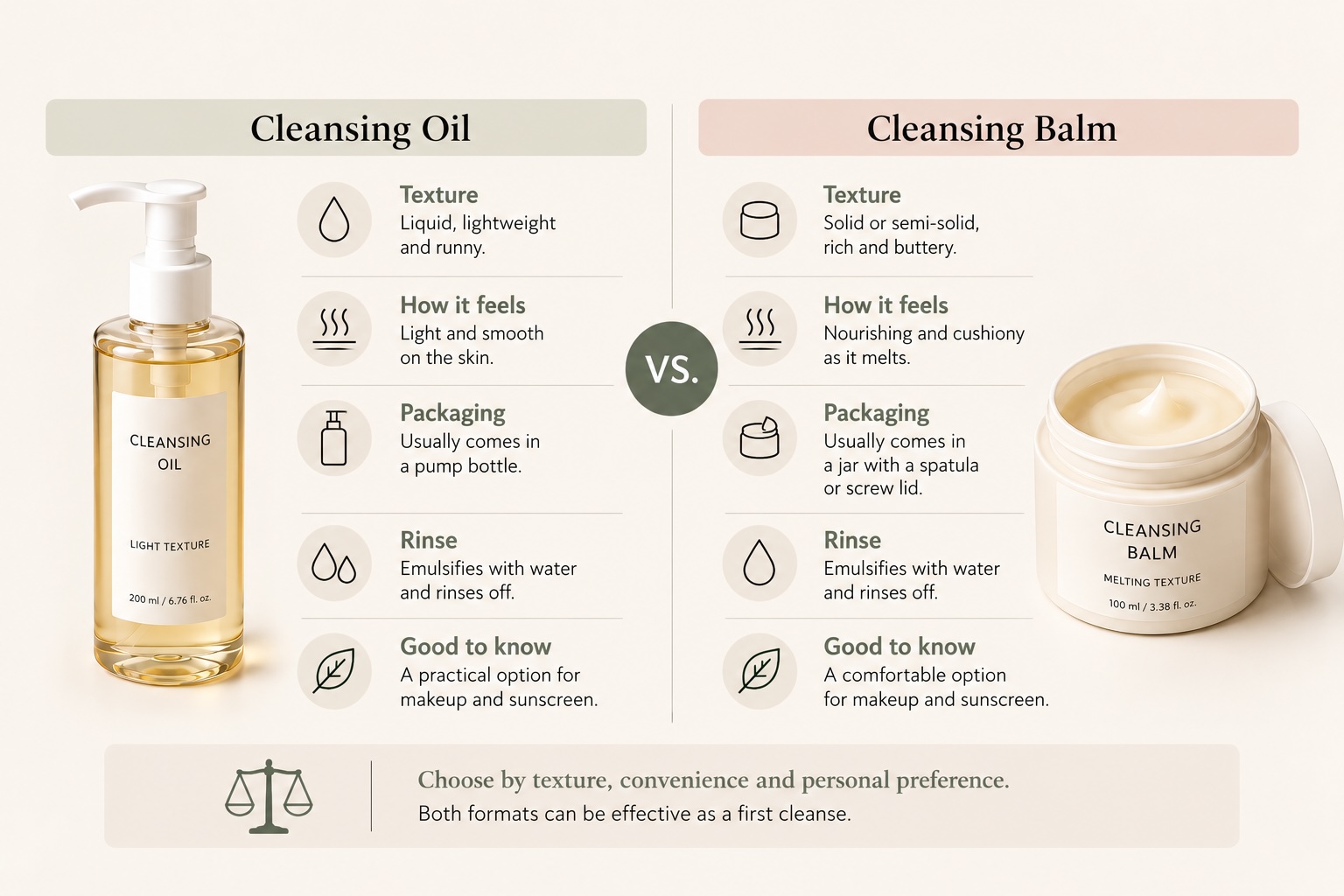
Choosing between oil and balm can come down to texture, packaging, convenience and personal preference. Some people prefer the immediate fluidity of an oil, while others prefer the more controlled texture of a balm before it melts.
Neither Format Is Automatically Better
Both formats can work well as a first-cleansing step. Product formula, individual preference and what needs removing matter more than assuming that one entire category is universally superior to the other.
The simplest approach is to choose the format that feels comfortable to use and fits naturally into the rest of the routine.